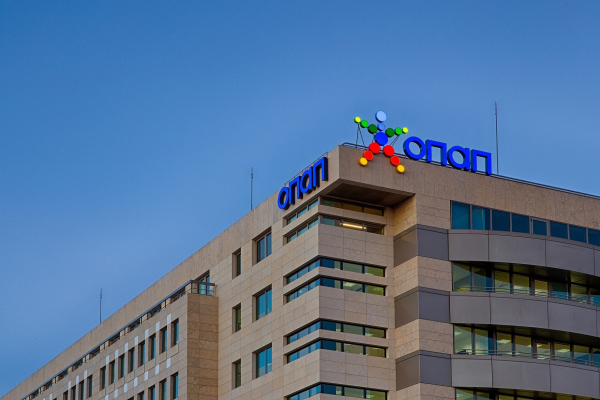
Investors on Tuesday welcomed Allwyn and OPAP’s decision to restructure their transaction, opting for a simpler and more transparent shareholding model. The removal of preferred shares with enhanced voting rights, replaced by a single class of ordinary shares, was assessed as a move that reduces structural complexity and mitigates potential corporate governance concerns at OPAP.
For investors, the central takeaway is that the company will no longer have a dual-class share structure. All shareholders will now have equal voting rights in proportion to their economic stake, a change that improves transparency and reduces the risk of concentrated control that is not matched by ownership. Such alignment between voting power and capital invested is typically viewed favorably by markets and can support a more positive valuation.
Importantly, despite the change in structure, Allwyn’s ownership stake remains unchanged at 78.5%, removing any uncertainty about control or the broader ownership framework. This continuity provides reassurance to investors and allows for a clearer assessment of OPAP’s strategic direction and future prospects.
The development is also significant for OPAP’s standing with international institutional investors. Many global funds are cautious about investing in companies with complex voting arrangements or preferred shares, which are often seen as less protective of minority shareholders. By adopting a straightforward, single-class structure, OPAP becomes more accessible and attractive to international capital, supporting both the retention of existing investors and the potential inflow of new funds.
Finally, the simplified share structure strengthens OPAP’s position in major global equity indices such as MSCI and FTSE. Continued inclusion in these benchmarks is crucial for demand from passive and index-tracking portfolios. Taken together, the changes are viewed as a constructive step that enhances OPAP’s investment profile and supports its broader equity market appeal.