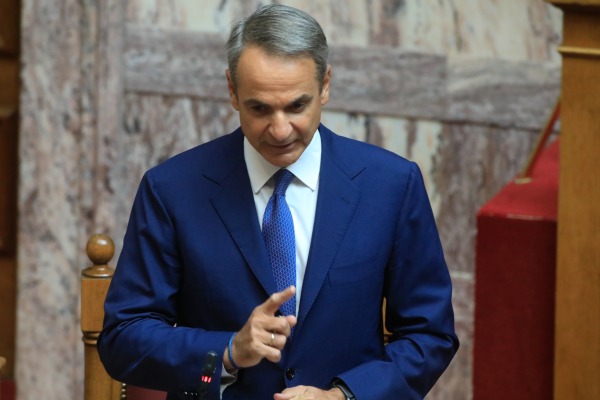


Alexis Tsipras delivered a highly charged speech at Athens’ historic Pallas Theatre on Wednesday during the presentation of his new book “Ithaca,” in what many observers interpreted as a clear signal of his political return and a prelude to the creation of a new movement. The former Greek prime minister, who resigned from Parliament earlier this year, used the occasion to issue a broad call for citizens to organize from the ground up, arguing that Greece is in urgent need of democratic renewal.
Tsipras’ remarks blended autobiographical reflection with sharp political critique, positioning his own political experience as part of a broader narrative about Greece’s struggle through the years of financial crisis. He dismissed accusations from the current government and its supporters as a “barrage of lies,” insisting that his book can defend both itself and the historical record. Looking back at his time in office, he expressed pride in steering Greece out of the bailout programs, restoring fiscal credibility and, as he put it, leading “the most honest government in modern Greek political history.”\
He contrasted that period with what he described as today’s “swamp” of corruption, inequality and institutional decay. Tsipras painted a stark picture of a society grappling with soaring living costs, stagnant wages and a weakened welfare state, while wealth accumulates in ever fewer hands. He accused the government of mismanaging public funds, undermining the rule of law and contributing to a widespread loss of trust in democratic institutions. “We do not have a government that simply makes mistakes,” he said. “We have the wrong government.”
Beyond attacking the status quo, Tsipras urged a fundamental reshaping of Greece’s political landscape. He argued that the country needs what he called a “political Big Bang”—a sweeping reconfiguration of political forces capable of restoring public confidence and offering a credible alternative to the current administration. He lamented the fragmentation and infighting among Greece’s progressive parties, describing them as preoccupied with internal rivalries rather than producing solutions to the country’s problems. This, he warned, leaves the government dominant not because of its strength, but because it faces no unified opposition.
Tsipras also outlined elements of a new national strategy, calling for a fairer distribution of wealth, stronger public services, and a long-term plan to revitalize Greece’s productive base, from agriculture and manufacturing to technology and innovation. He proposed a “patriotic contribution” tax on very high incomes—both individual and corporate—to support younger generations, particularly through affordable housing initiatives. On foreign policy, he urged Greece to act as a force for peace rather than a participant in great-power conflicts, calling for the recognition of a Palestinian state and criticizing Europe’s rising military spending at the expense of social programs.
Throughout the speech, Tsipras returned repeatedly to the theme of citizen participation. Real change, he insisted, cannot come from political elites or top-down decision-making, but must be driven by ordinary people who have lost faith in institutions yet still hope for a fairer society. He called for grassroots initiatives in every city, neighborhood and workplace to rebuild what he described as a progressive, democratic front capable of contesting power in future elections. “There will be invitations for everyone,” he said, “but no reserved seats in first class for anyone.”
Tsipras concluded with an implicit promise that he intends to play an active role in this new political chapter. The audience, he suggested, had gathered not only for a book presentation but to signal their desire for an alternative path for the country. Drawing on the metaphor of “Ithaca,” which echoes both Homeric journey and national recovery, he said that Greece had once reached its destination under extremely difficult circumstances—and could do so again.
“I assure you,” he said, “we will walk this path together. We deserve a better Greece. And we can achieve it.”