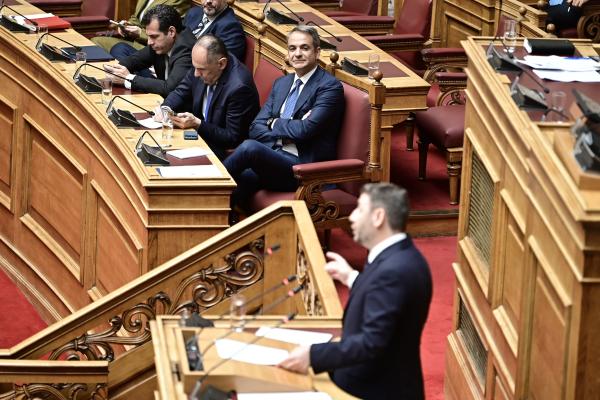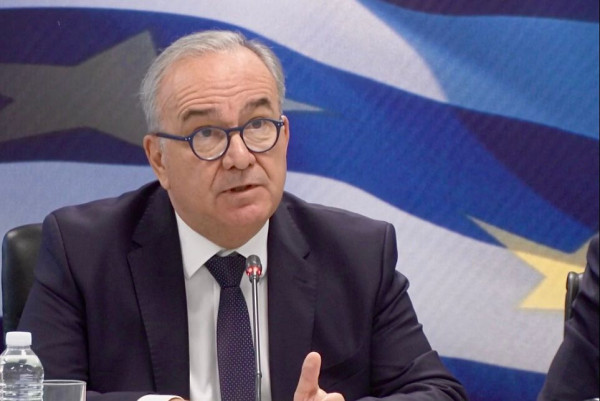
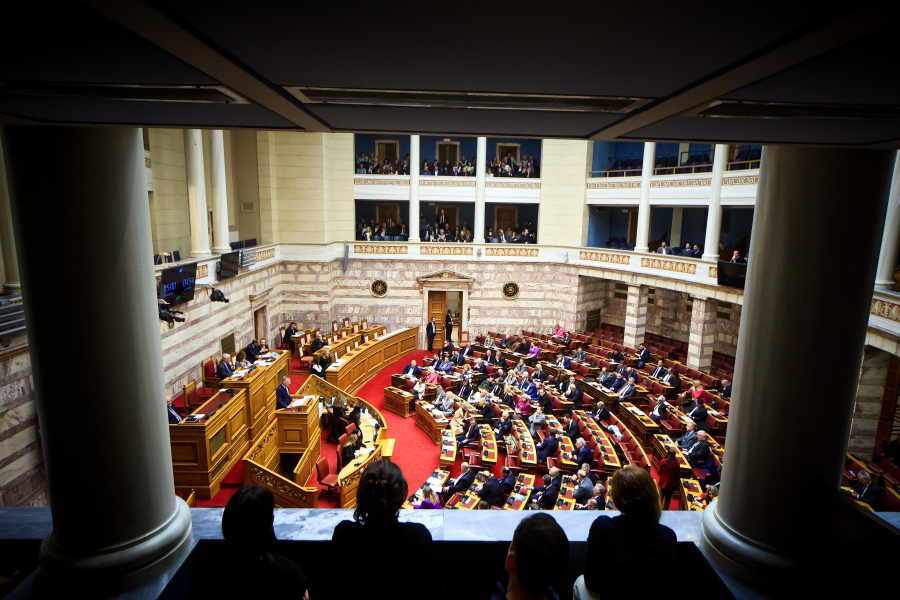
Tensions are rising in Athens as Greece’s progressive opposition moves to summon Stamatis Trimpalis, the former legal representative of the technology contractor Krikel, to Parliament for questioning. Trimpalis reportedly testified in court that, during a 2022 parliamentary inquiry into the wiretapping scandal, he had received New Democracy’s questions in advance and was fully aware of their content before appearing as a witness.
The issue was first brought forward last week by Alexis Haritsis, who raised it with the Speaker of Parliament and requested that the Committee on Institutions and Transparency be convened to hear from Trimpalis directly. Haritsis later contacted PASOK leader Nikos Androulakis and SYRIZA’s parliamentary chief Sokratis Famellos, both of whom expressed support for his initiative.
SYRIZA officials told Dnews that the proposal is a significant one, arguing that Trimpalis — who admitted to acting as a “front man” for businessman Giannis Lavranos, currently facing charges — must answer for what appears to have been a coordinated and staged appearance before the 2022 inquiry. According to the opposition, the witness arrived equipped with pre-prepared answers supplied by governing-party MPs.
Opposition parties have linked the episode to developments in another ongoing parliamentary inquiry, this one concerning the agricultural payments agency OPEKEPE. Since the recent revelations, minority MPs have repeatedly asked witnesses whether they have been coached by the government majority before testifying, suggesting the possibility of a broader pattern. Whether Trimpalis will ultimately be called to Parliament remains uncertain. Deputy Speaker Nikitas Kaklamanis has forwarded the request to the relevant committee, which alone is empowered to decide. Parliamentary officials meanwhile stress that the Speaker does not intervene in committee matters or bring such issues before the Conference of Presidents.
New Democracy has shown no appetite for reopening the controversy. Nevertheless, parliamentary rules allow the opposition to force the issue if they can secure the support of two-fifths of the committee’s members — a threshold they can reach if they coordinate their votes, even without government consent. A senior ND source with legal expertise told Dnews that, by long-standing parliamentary practice, witnesses involved in open court cases are not summoned to Parliament to discuss testimony given before the judiciary. Although not formally forbidden, such a move could be interpreted as interference in judicial proceedings and would touch on the principle of separation of powers.
The opposition rejects that argument, insisting that the two matters are distinct. A senior SYRIZA official noted that questioning Trimpalis would not affect the ongoing wiretapping trial, saying the committee needs to determine whether the 2022 parliamentary inquiry was conducted lawfully and credibly.
If the committee ultimately votes to summon him, a new question arises: whether Trimpalis will agree to testify, or invoke his right to remain silent. Parliament’s rulebook does, however, allow the Committee on Institutions and Transparency to be elevated — with approval from the full chamber — into a formal investigative committee with pre-prosecutorial powers. In that case, it would even have the authority to request his compulsory appearance.