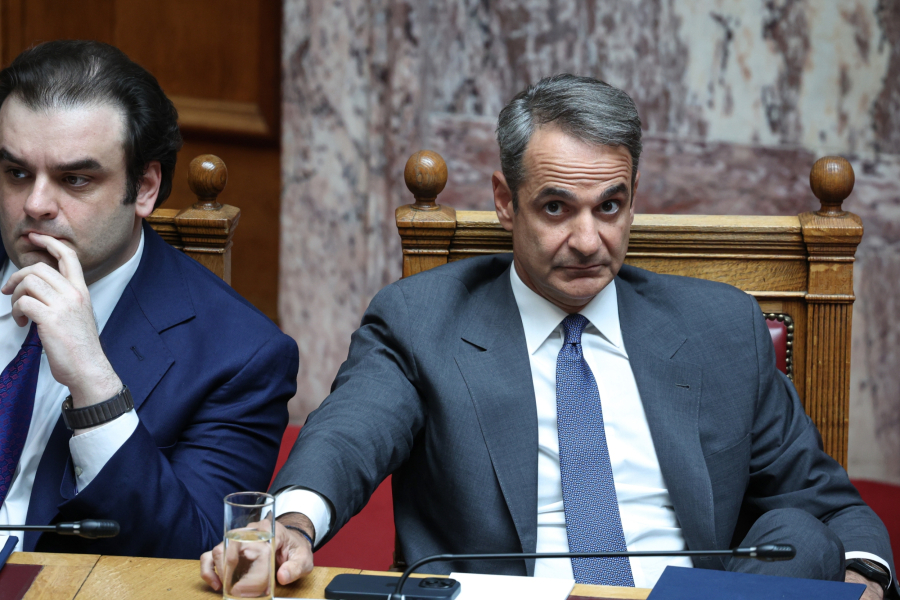
As Greece marks the six-year anniversary of Kyriakos Mitsotakis’ rise to power, a flurry of critical retrospectives in the national media paints a stark picture of his time in office. Far from the reformist vision he championed in 2019, the Mitsotakis administration is now being scrutinized for its entanglement in a string of high-profile scandals—many of which, journalists and analysts suggest, were not only mishandled but deliberately concealed.
Mitsotakis came to power promising to modernize Greece, bring transparency to governance, and dismantle the deeply rooted clientelist networks that had long defined the country’s political landscape. Today, however, his legacy appears increasingly defined by a reversal of that narrative. Instead of ushering in a new era of accountability and institutional renewal, critics argue that his government has become a symbol of the very dysfunction and opacity it once pledged to eliminate.
At the midpoint of his second term, Mitsotakis’ political capital is in freefall. His party, New Democracy (ND), which won 41% of the vote in the 2023 general elections, now polls below 25%. The government’s promise of a "well-governed state" has collapsed under the weight of corruption allegations, nepotism, media manipulation, and what international observers now label a deep erosion of institutional credibility.
A defining feature of Mitsotakis’ tenure has been his government’s handling of a wide array of scandals—many of which were dismissed, covered up, or spun as the result of historical dysfunctions or external factors. The Prime Minister’s pattern of distancing himself from wrongdoing, often by claiming ignorance, has worn thin. A recent poll revealed that over half of Greek citizens view his public apologies as disingenuous. Even a significant portion of ND voters—over 23%—believe that his attempt to portray himself as uninformed about key scandals lacks credibility.
One of the most damaging episodes of the Mitsotakis era was the surveillance scandal that erupted in 2022, when it was revealed that journalists, opposition leaders, ministers, and even high-ranking security officials were under state surveillance. Central to the controversy was the use of Predator spyware, sold by the firm Intellexa. Investigations linked the Prime Minister’s own office to the operation. Mitsotakis had placed Greece’s National Intelligence Service (EYP) under his direct oversight shortly after taking office, with his nephew and top aide, Grigoris Dimitriadis, overseeing the agency. When links between Dimitriadis, Intellexa, and senior government officials were revealed, both Dimitriadis and the head of EYP resigned. Despite the uproar and international scrutiny, Mitsotakis insisted he was unaware of the surveillance activities.
Equally devastating to the government's image was the 2023 train disaster in Tempi, which claimed the lives of 57 people. The crash, widely attributed to outdated infrastructure and mismanagement, exposed serious gaps in public safety and crisis response. Although the Prime Minister publicly apologized and the Minister of Transport resigned, subsequent efforts by the government to frame the disaster as a “human error” rather than a political failure sparked outrage. Revelations later emerged that evidence from the crash site had been tampered with—soil was removed, and the area was backfilled shortly after the accident. Prosecutors have since indicted several officials, including a regional governor from ND, for attempting to conceal evidence.
Beyond these headline-grabbing incidents, the government has faced accusations of manipulating public funds to cultivate political support. One such case was the so-called “Petsas List,” in which the government distributed millions of euros in state advertising to select media outlets during the COVID-19 pandemic. Critics claimed the program was designed to bolster pro-government media and silence dissent.
Transparency and the rule of law have also come under fire from international institutions. The European Commission’s annual Rule of Law report has repeatedly raised red flags about judicial delays and the politicization of the judiciary in Greece. Transparency International’s 2024 Corruption Perception Index placed Greece near the bottom among EU countries, while a 2025 Eurobarometer survey showed that 97% of Greeks believe corruption is widespread in their country—far above the EU average.
These scandals have led to a wave of resignations across the Mitsotakis administration. More than 30 high-ranking officials—including ministers, deputy ministers, and party executives—have stepped down amid allegations of misconduct, incompetence, or conflicts of interest. Yet even after resignations, many politicians have returned to public life with little accountability. One notable example is the former Transport Minister, who resigned after the Tempi crash but was re-elected to parliament just months later.
What makes these developments particularly striking is the contrast with Mitsotakis’ original campaign messaging. In 2019, he promised to restore trust in government through accountability, institutional reform, and a break with the clientelist politics of the past. In his first speech to parliament, he pledged to uphold the separation of powers, promote meritocracy, and introduce digital tools to modernize the judiciary. The reality, however, has unfolded differently. Rather than dismantling the clientelist state, critics argue that the Mitsotakis government has simply reconfigured it—with power increasingly centralized in the Prime Minister’s office, opaque ties between party, government, and media, and a political culture that shields its own from scrutiny.
The administration’s reluctance to confront its failures head-on has only deepened public cynicism. Public apologies, when offered, have often been followed by deflections: past governments, meteorologists, even vague “systemic enemies” have all been blamed for the administration’s missteps. In July 2025, Mitsotakis addressed parliament and blamed an ongoing “war on the system” for the government’s difficulties—a statement that left many observers questioning whether he grasped the scale of institutional distrust facing his administration.
Despite enjoying six years without the oversight of international creditors, Mitsotakis’ government failed to enact the institutional transformation it promised. Instead of building a leaner, more responsive public sector, it entrenched old power dynamics under new branding. The so-called “executive state” proved, in many cases, to be an apparatus of centralized control, surveillance, and evasion of accountability.