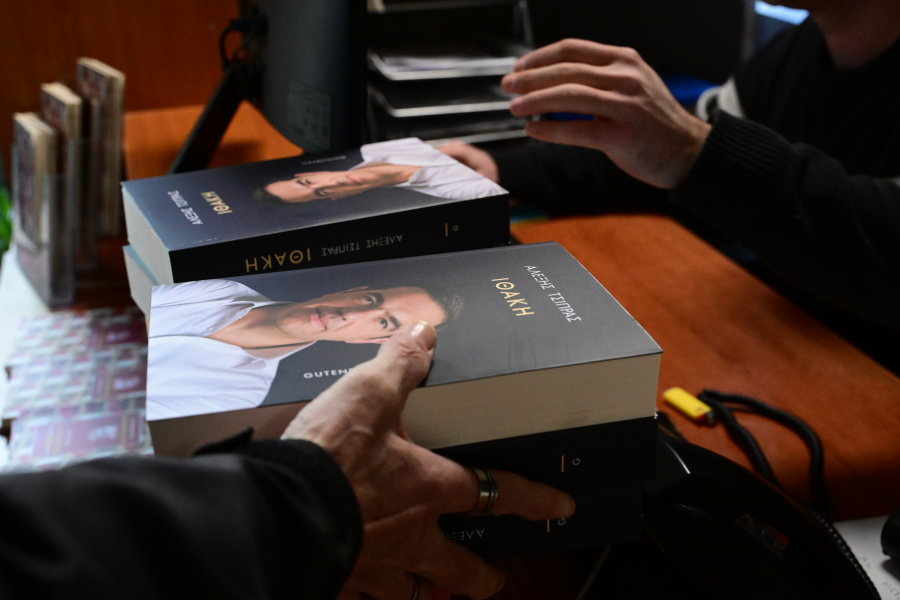
In his new book “Ithaca,” Alexis Tsipras offers an unprecedented look into the inner turmoil of SYRIZA, openly turning on two of his closest and most outspoken associates from his years in power: Pavlos Polakis and Nikos Pappas. Tsipras depicts a party drifting into internal decay, where organized factions increasingly overshadowed collective decision-making and, at times, even overruled the party leader himself. According to his account, these dynamics decisively shaped key choices — and ultimately the fate of the main figures of Greece’s first left-wing government.
Tsipras acknowledges that Pavlos Polakis was responsible for electoral damage on four separate occasions. He insists that the problems did not arise from government policy but from “mistakes” made under pressure. The most telling example, he writes, was Polakis’s public attack on a New Democracy candidate with disabilities, Stelios Kympouropoulos, shortly before the European elections. Tsipras now admits the incident forced his own government into the awkward position of turning a no-confidence motion into a confidence vote.
Polakis resurfaced as a liability during the COVID-19 pandemic, when he publicly questioned vaccines and scientific authorities. Tsipras says these statements severely undercut SYRIZA’s ability to present a credible opposition line, reinforcing the government’s narrative that the Left was acting hypocritically. He reveals that he seriously considered expelling Polakis at the time, but party factions intervened to block any move in that direction.
Internal tension reached its peak before the 2023 national elections. Polakis openly pressured the leadership over candidate selections in his home region of Chania, prompting Tsipras to contemplate removing him from the ballot. Instead, he encountered what he describes as a cross-factional “wail of protest,” which cut across rival camps and implicitly challenged his authority as party leader. Matters escalated further when Polakis published an online “blacklist” of judges and journalists — a move that led Tsipras to publicly announce his exclusion from the party’s electoral lists. Even that decision was ultimately reversed after intense internal pushback and only later reinstated following the Tempi train disaster, which shook Greek politics.
Tsipras also turns his criticism toward Nikos Pappas, one of his most trusted advisers during his premiership. He writes that he expected Pappas to demonstrate at least a minimum sense of political responsibility after being convicted in a case involving television-licensing procedures. Instead, Pappas “showed no inclination whatsoever to raise the issue of resignation” just weeks before the national vote. With the benefit of distance, Tsipras now says he should have insisted that Pappas withdraw his candidacy, accusing him of “unacceptable recklessness” that damaged the party at a pivotal moment.