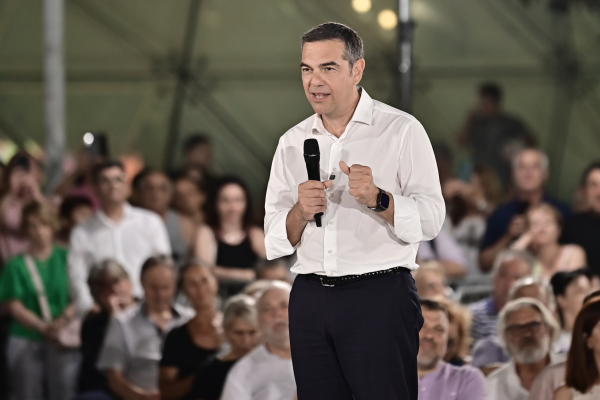
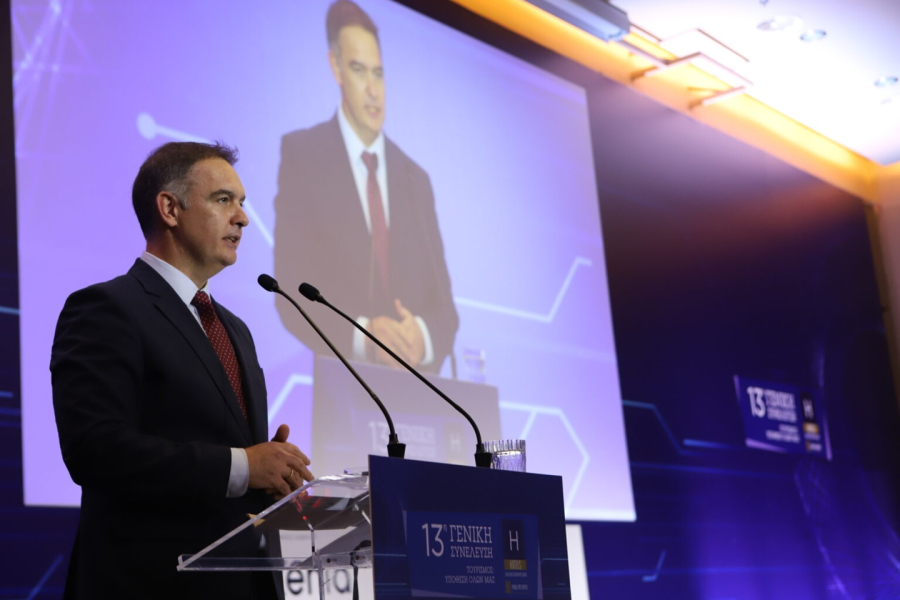

Speaking at an event on Saturday celebrating the Hellenic Chamber of Hotels’ 90th anniversary, president Alexandros Vassilikos cautioned that Greek tourism, though thriving globally, has reached a “critical crossroads” and must not assume its current success will continue.
Speaking at the Chamber’s 13th General Assembly at the Metropolitan Expo in Athens, held alongside the XENIA tourism fair, Vassilikos said that the years of strong performance following the pandemic should not lull the industry into a false sense of security. “It is neither certain nor self-evident that things will continue as they have in recent years,” he cautioned, emphasising that the global environment is undergoing profound and unpredictable change.
He argued that Greece must shed the “model of the previous century” and make decisive choices if it wants to maintain its competitive edge. Hospitality, he said, is one of the few sectors where Greece can claim genuine global distinction—but only if the industry acts now. “Hospitality is our future, provided we make the right decisions,” he said. “This is the moment of big decisions.”
At the heart of his address was a clear message: doing nothing is the biggest risk. Vassilikos warned against treating tourism as an automatic success story or downplaying its significance for the national economy. He described as “paradoxical” the notion that Greece should question whether it wants tourism, noting that countries with far greater financial power, such as Saudi Arabia, are turning to hospitality as a long-term driver of income and prosperity.
Another warning centered on sustainability. While Greece has introduced a globally pioneering Environmental Classification system for hotels, Vassilikos said that without strong state support—particularly financial incentives for smaller businesses—the initiative will not achieve its goals. He argued that the tourism sector must position itself firmly “on the right side of history” as environmental pressures intensify worldwide.
He also raised concerns about the destabilising effects of unregulated short-term rentals, an issue he said the Chamber flagged long before it gained momentum at the European level. Housing pressures, he stressed, will only worsen without tougher regulation, making the need for immediate political action all the more urgent.
Digital transformation was another area of alarm. Vassilikos criticised the “unfair practices” of large online platforms that dominate bookings and exert disproportionate power over small and medium-sized hotels—the backbone of both Greek and European hospitality. He warned that unless Europe protects these smaller players, it risks undermining the very foundations of its tourism identity.
Despite the cautions, Vassilikos also highlighted areas where Greece is ahead of the curve. He pointed to the success of CapsuleT, the first startup accelerator in Europe dedicated solely to tourism technology, as evidence that the sector knows how to innovate when it chooses to. But he stressed that innovation must become the rule, not the exception.
Ultimately, Vassilikos framed the future of Greek tourism as a matter of strategic responsibility rather than optimism. “Tomorrow will not come on its own,” he said. “It is in our hands, and we are the ones who must bring it.”
He closed by saying that these challenges were the reason he sought another term as president, adding that he could not be absent “at such a historic moment.” He pledged that the Chamber would continue pushing for the structural changes needed to safeguard the industry’s future, insisting that only bold decision-making now can prevent the sector from losing the advantage that has made Greece one of the world’s leading tourism destinations.