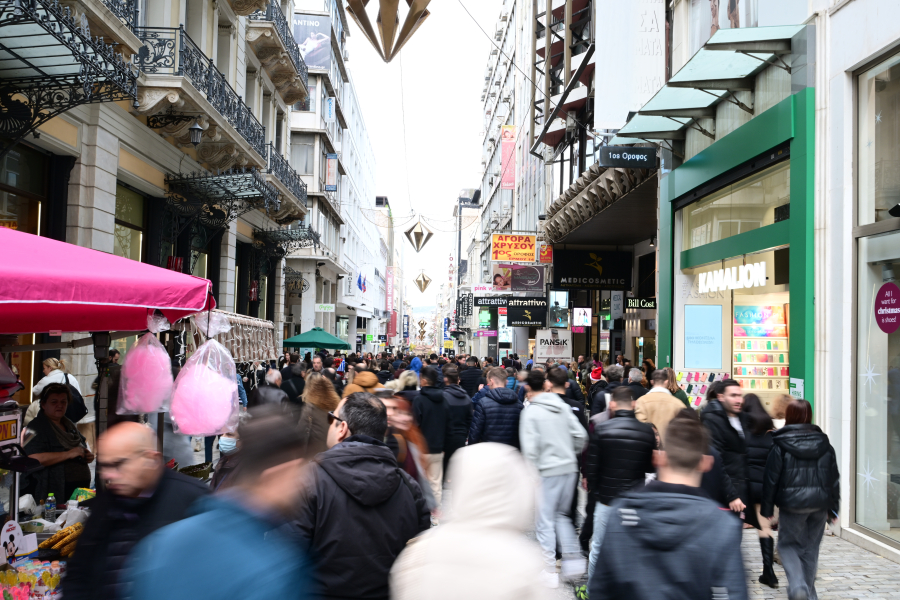

A new study titled “Mapping Youth,” conducted by research firm Prorata on behalf of the Left Group in the European Parliament and the Nicos Poulantzas Institute, offers a rare, ground-level portrait of what it means to be young in Greece today. Unlike conventional opinion polls, the research is qualitative, based on focus groups, and reads less like a set of statistics than a lived narrative of contemporary youth.
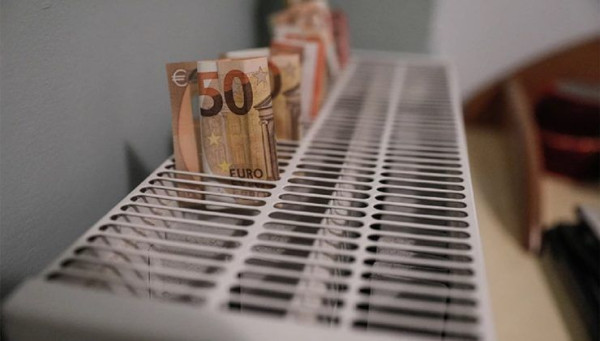
The study involved four focus groups of young people aged 17 to 35, evenly split by gender, and was carried out in November 2025. Its findings point to a generation experiencing youth not as a period of freedom, exploration, or experimentation, but as a prolonged struggle to manage insecurity. Participants describe daily life as shaped by low or unstable wages, rising living costs, an acute housing crisis, and the near-impossibility of becoming financially independent from their families.
One of the most striking conclusions is the sense of social isolation expressed by participants. At an age traditionally associated with building friendships, collective experiences, and a sense of belonging, many young people instead report loneliness, weakened social ties, and difficulty connecting with others—a trend exacerbated in the years following the pandemic.
Researchers describe Greek youth as a “trapped generation,” caught in an extended transitional phase between dependence and adulthood. While delayed transitions to adulthood are not unique to Greece, the study argues that in this case they have become structurally blocked. Young people feel neither like children nor fully like adults, suspended between the family they come from and the family they are unable to form.
This sense of stagnation contrasts sharply with previous generations. Participants repeatedly compare their situation to that of their parents, who were often able to support a household on a single income, rent or buy a home early, and start families at a younger age. Today, even full-time employment often does not allow young Greeks to move out of the parental home. According to recent Eurostat data, nearly seven in ten Greeks aged 18 to 34 still live with their parents or rely on family income—one of the highest rates in the European Union.
Yet the picture is not uniformly bleak. Culturally and socially, participants describe their generation as more open, more educated, and more progressive than the one before it. With access to global culture through the internet and the ability to study or work abroad, many feel closer in outlook to their peers in other countries than to older generations at home. At the same time, those who remain in or return to Greece often find themselves forced to lower expectations and scale back life plans.
The study concludes that this tension—between accelerated social awareness and stalled economic independence—produces a double burden. Young people mature early, becoming pragmatic or cynical, while simultaneously fearing a future in which they grow older without ever moving forward. For many, youth in Greece is no longer a promise, but a prolonged waiting room.