
According to a recent study, roughly 11,000 businesses are currently operating across Greece in various branches of handicraft production. The sector is dominated by very small enterprises, most of them family-run or single-person businesses, reflecting its deeply local and personal character.
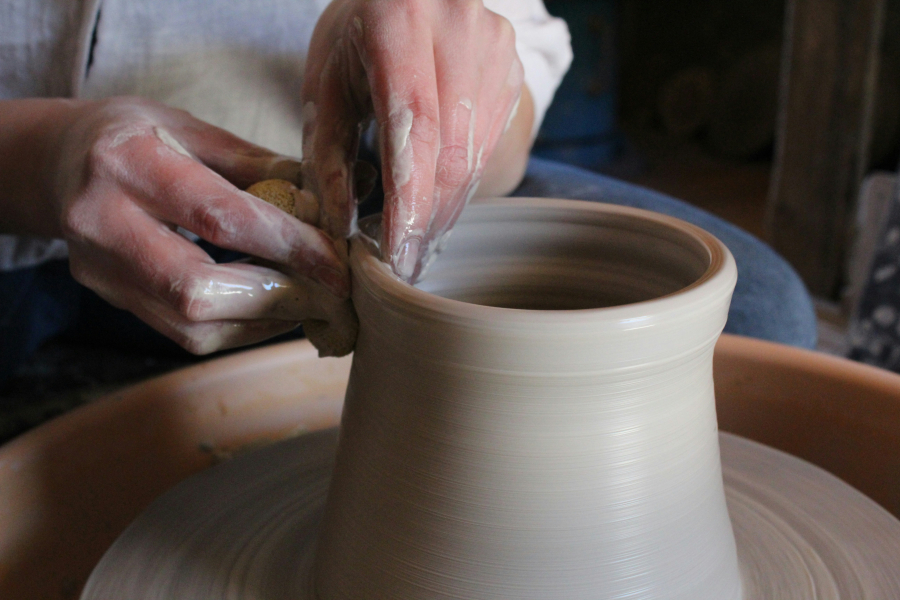
Handicrafts in Greece remain closely tied to everyday life and collective memory. Ceramics from the island of Sifnos, silk scarves produced in the northern town of Soufli, wooden toys made in Agiasos on the island of Lesvos, or handmade kilims from the village of Geraki in southern Greece are just a few examples. While such products rarely enjoy large-scale international exposure, they are widely recognised for their craftsmanship, quality and distinctive aesthetic.
Against this backdrop, the Greek Ministry of Education recently announced the introduction of knitting, embroidery and ceramics classes in primary schools, alongside an expansion of a broader cultural education programme focused on creative workshops and handicrafts. The initiative was met with scepticism by parts of the public, largely because public schools continue to face serious shortages in infrastructure and staff. Even so, the policy reflects a wider European and global shift that increasingly views handicrafts as a pathway to sustainable development, local revitalisation and the preservation of cultural identity.
This shift accelerated in the aftermath of the pandemic, when consumers began turning away from mass-produced goods in favour of more personal and authentic products.
Many handicraft activities can be carried out in small, home-based workshops, lowering entry barriers for new entrepreneurs. Digital platforms such as Etsy, Pinterest and Instagram have played a crucial role in this transformation, functioning as global storefronts, while a growing number of artisans have also invested in their own online shops.
The European Union has also moved to strengthen the sector’s position. Regulation (EU) 2023/2411, which introduces geographical indications for craft and industrial products, is set to enter into force in December 2025. The regulation aims to safeguard the authenticity and origin of such products while enhancing their visibility and competitiveness in international markets.
In Greece, woodworking accounts for around one third of handicraft businesses, followed by jewellery making, costume jewellery, marble carving and ceramics. Smaller but still significant segments include leatherworking, weaving, basketry, fur processing and the construction of musical instruments. Most businesses are concentrated in the regions of Attica, Central Macedonia and Crete. Their overwhelming reliance on self-employment, however, leaves them particularly exposed to economic shocks.
The sector suffered a major setback after 2012, when the Hellenic Organisation of Small and Medium-Sized Enterprises was abolished as part of austerity measures. The closure of specialised institutions, including ceramic and weaving centres, resulted in the loss of critical infrastructure and expertise, creating gaps that have yet to be fully addressed.
A recent study by Greece’s Institute of Small Enterprises argues that the revival of handicrafts now depends on the development of a coherent national strategy.
Proposed measures include the creation of a national registry and coordinating body for handicrafts, the introduction of a recognised national label, professional certification, investment in digital tools, improved access to financing, and closer links with design, museums and tourism. Coupled with the new European regulatory framework, these steps could mark a turning point for Greek handicrafts, positioning them once again as a dynamic and culturally significant sector.