
More than half of Greece’s pensioners receive less than €1,000 a month before taxes, highlighting a growing retirement-income problem as low wages, undeclared employment and inadequate contributions leave workers facing financial hardship in old age.
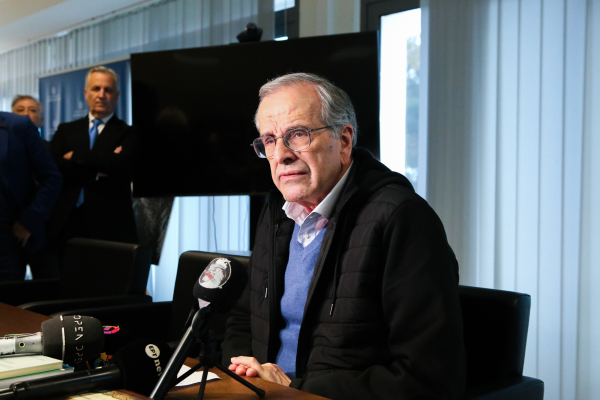
According to June 2026 government pension data analyzed by economists Savvas Robolis and Vassilis Betsis, 1.37 million retirees, or 53.8% of the total, receive monthly pensions below €1,000. Eight in 10 collect less than €1,500, while the average primary pension stands at €998. The figures expose a structural weakness in Greece’s pension system: workers struggling to make ends meet today often accumulate insufficient contributions to secure adequate retirement income decades later.
The problem is particularly acute among the self-employed. More than 650,000 workers contribute at the lowest available pension-insurance level, while another 163,500 select the second-lowest category. Together, nearly 90% of self-employed contributors fall into the two cheapest brackets.
ΔΙΑΒΑΣΤΕ ΕΠΙΣΗΣ



In 2026, the lowest category requires monthly payments of €250.77, including €185.09 toward the main pension. For someone contributing at that level over 38 years, the estimated monthly pension is just €862. By comparison, a worker consistently paying into the highest contribution category could receive approximately €1,788.
Employment gaps and undeclared work further undermine retirement security, reducing the number of recognized contribution years and, consequently, future benefits. The consequences extend beyond individual finances. European pension-adequacy data show that 25.8% of elderly Greeks experienced material and social deprivation in 2022, compared with 11.1% across the European Union. Nearly one-quarter faced housing costs exceeding 40% of disposable income. Greece’s pension system nevertheless provides an important buffer through redistribution.
Robolis and Betsis estimate that approximately €6 billion annually is redistributed through the system, equivalent to 17.7% of total pension spending. Without that mechanism, they calculate, the average primary pension would fall to €798 from €998.
Their modeling also suggests that elderly poverty could reach 43% under a purely individual funded-account system, compared with an estimated 27.7% under existing arrangements in 2025.