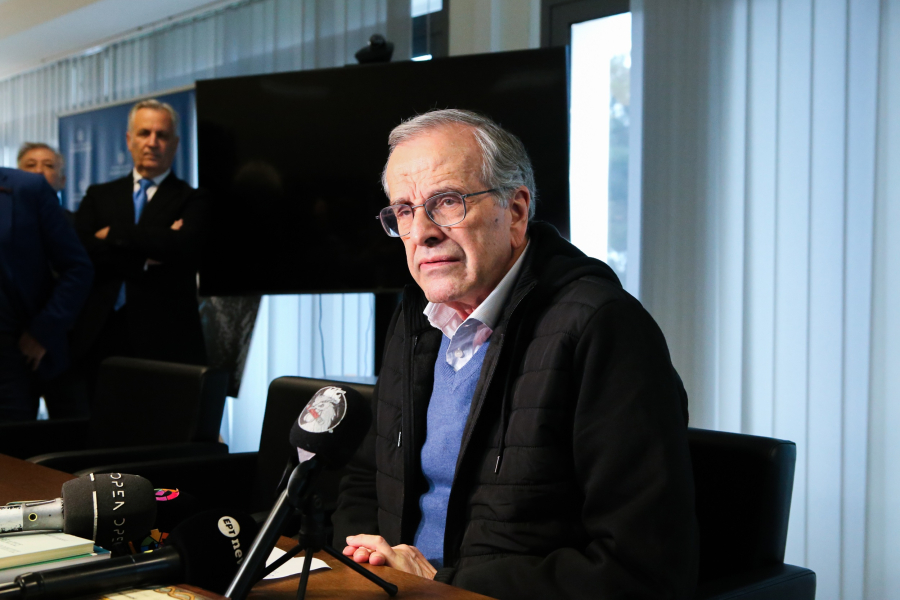
Former Greek Prime Minister Antonis Samaras sharply criticized the government over its handling of disaster recovery in Thessaly, the country’s agricultural heartland, warning that years of delays and mounting economic hardship are pushing residents to abandon the region.
Samaras, who served as prime minister from 2012 to 2015, described widespread economic and social distress following a series of natural disasters that devastated central Greece, including catastrophic flooding caused by Storm Daniel in September 2023.
«Thessaly is clearly still suffering», Samaras said, describing what he called economic, social and family devastation.
ΔΙΑΒΑΣΤΕ ΕΠΙΣΗΣ


He said conditions have deteriorated to the point that local law firms are receiving inquiries from residents, particularly livestock farmers, seeking to emigrate as far as Australia in search of employment.
The former premier accused authorities of failing to deliver critical flood-protection infrastructure nearly three years after the disaster. Agricultural land remains covered with debris, he said, even as pressure mounts to convert some properties into solar-energy installations.
Samaras also criticized the departure of Dutch consultants involved in flood-management planning, arguing that valuable time had been lost and regional authorities were effectively restarting the process.
In Damasi, a village struck by a powerful earthquake in 2021, some residents are still living in temporary container housing, he said, questioning the government's commitment to reconstruction.
Samaras warned that the deterioration of Greece’s agricultural sector poses broader risks
The criticism carries political significance because Samaras, a former leader of the center-right New Democracy party, has increasingly challenged the administration of Prime Minister Kyriakos Mitsotakis, whose government has faced scrutiny over disaster management and infrastructure failures.
Samaras also highlighted disruptions to rail services around Larissa, the region’s largest city, following Greece’s deadly 2023 Tempi train collision, as well as the impact of livestock disease outbreaks on farmers already struggling with financial pressures.
He warned that the deterioration of Greece’s agricultural sector poses broader risks to the country’s economic resilience and food security.
«A country that cannot adequately feed its population is condemned to face national dead ends», Samaras said.
His remarks underscore the political and economic challenges facing Greece as it seeks to rebuild disaster-hit regions while maintaining investment in infrastructure and renewable energy.
Samaras called for a coordinated recovery strategy that transcends party divisions, arguing that Thessaly needs stability, serious planning and tangible improvements in living conditions.