Greece, four regional partners and the European Union declared a controversial maritime agreement between Turkey and Libya legally invalid on Monday, escalating a diplomatic dispute over territorial rights and energy interests in the eastern Mediterranean.
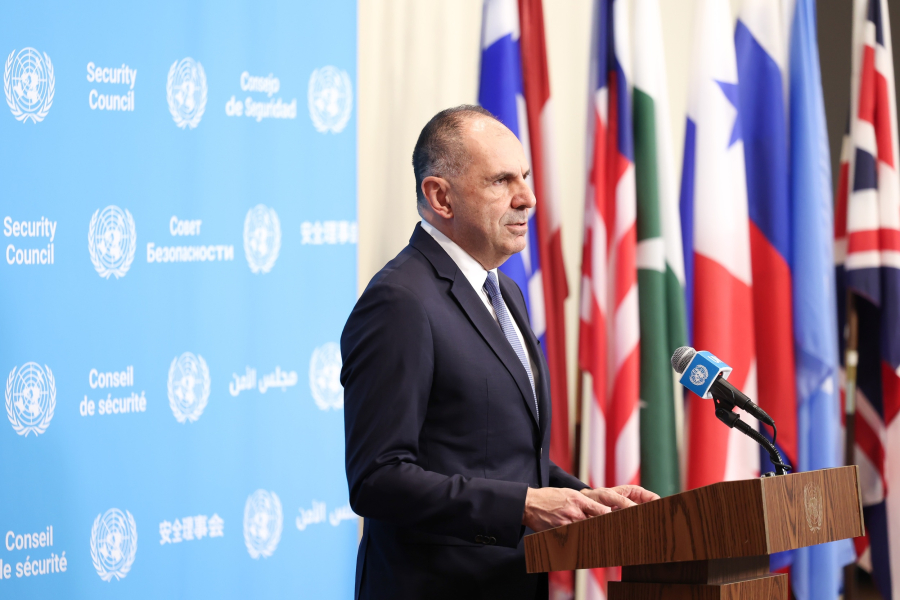
The joint statement, delivered by Greek Foreign Minister George Gerapetritis at the United Nations Security Council, followed a recent decision by Libya’s House of Representatives to ratify a 2019 agreement with Ankara establishing maritime jurisdiction boundaries.
Greece, Cyprus, Egypt, the United Arab Emirates, Bahrain and the EU said the agreement violated international law and couldn't establish legitimate maritime boundaries or affect the rights of third countries.
ΔΙΑΒΑΣΤΕ ΕΠΙΣΗΣ


«The memorandum remains null and void», Gerapetritis said, warning that recognizing bilateral agreements that disregard established legal principles would create a «dangerous precedent» for the international rules-based order.
The dispute centers on competing claims over maritime boundaries in the eastern Mediterranean, a strategically important region containing potential offshore energy resources and major shipping routes.
The 2019 Turkey-Libya agreement has long drawn objections from Greece and other regional governments because its proposed maritime boundaries disregard what Athens considers the legitimate maritime rights of Greek islands, including Crete.
Turkey, which disputes Greece’s interpretation of maritime jurisdiction, has defended the agreement as consistent with its own understanding of international law.
Libya’s parliamentary ratification couldn't change the agreement’s underlying legal deficiencies
Monday’s statement argued that maritime boundaries must be determined according to the United Nations Convention on the Law of the Sea and customary international law, including provisions governing the maritime entitlements of islands.
The signatories said Libya’s parliamentary ratification couldn't change the agreement’s underlying legal deficiencies.
They also warned that allowing countries to establish maritime boundaries without respecting the rights of neighboring states could undermine regional security and weaken internationally recognized mechanisms for resolving territorial disputes.
Despite their objections, the five countries and the EU reaffirmed their support for Libya’s political reunification and institutional stability, describing a unified and prosperous Libya as essential to Mediterranean security.
The statement also highlighted ongoing efforts by Greece and Libya to negotiate maritime boundaries through bilateral discussions.
Athens has conducted those talks in good faith and remains willing to continue them, Gerapetritis said.
The coordinated diplomatic intervention underscores the broader regional stakes surrounding the Turkey-Libya agreement, as Mediterranean governments seek to protect competing maritime claims while avoiding further tensions.
«Respect for international law is an essential prerequisite for regional stability», Gerapetritis said.