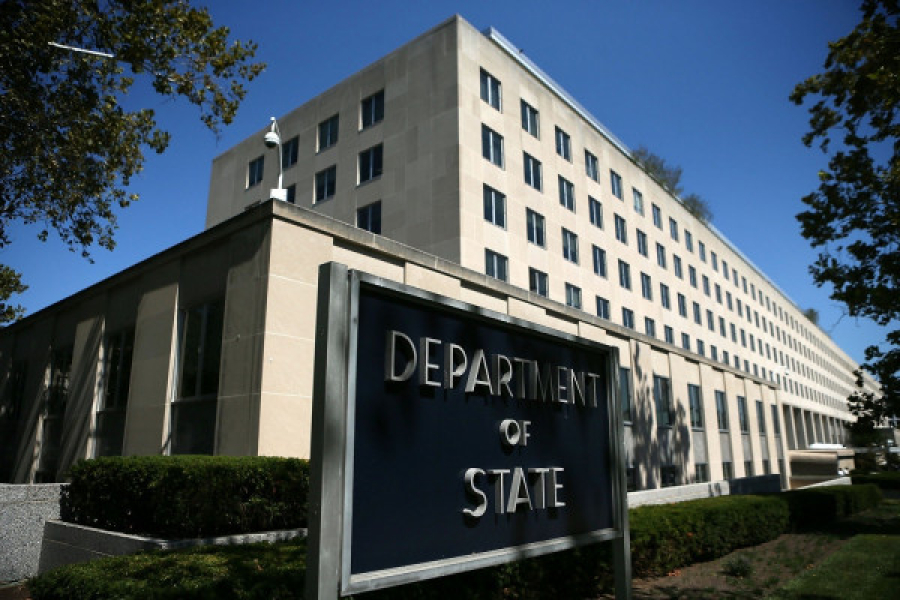
The U.S. State Department has reaffirmed its opposition to a controversial maritime-boundary agreement between Turkey and Libya, describing its ratification as a provocative development that has heightened tensions in the Eastern Mediterranean.
In a statement to Greek newspaper Kathimerini on Sunday, the State Department said the announcement of the agreement’s ratification was an unconstructive and provocative development, stressing that Washington’s position on the issue remained unchanged.
The clarification followed an earlier U.S. statement on Oct. 21 that prompted concern in Athens because it avoided directly addressing the disputed agreement, instead emphasizing dialogue between the countries involved.
ΔΙΑΒΑΣΤΕ ΕΠΙΣΗΣ



Washington reiterated its call for governments in the Eastern Mediterranean to resolve maritime disputes through good-faith negotiations and avoid provocative actions.
The State Department also emphasized that Greece and Turkey are NATO allies and encouraged bilateral discussions to address their disagreements.
The dispute centers on a 2019 agreement between Ankara and Libya’s internationally recognized government that establishes maritime boundaries across parts of the Mediterranean claimed by Greece.
Athens argues that the agreement disregards the maritime rights of Greek islands, particularly Crete, and violates international law. Turkey maintains that its maritime claims are legitimate.
The latest U.S. clarification followed diplomatic efforts by Greece’s embassy in Washington and Greek-American advocacy organizations, which sought a more explicit statement of American policy.
The issue carries broader strategic and economic implications for the United States.
American energy companies, have interests in offshore exploration in the Eastern Mediterranean, while the U.S. maintains a significant military presence at Souda Bay on Crete.
Unresolved maritime claims could complicate energy exploration and undermine the regulatory certainty required for major offshore investments.
Washington previously criticized the Turkey-Libya agreement in December 2019, describing it as provocative and warning that it increased regional tensions.
In 2020, U.S. officials also emphasized that maritime agreements between two countries couldn't legally undermine the rights of third countries, including Greece.
The State Department has repeatedly supported peaceful maritime delimitation consistent with international law, while encouraging regional cooperation.
Sunday’s clarification signals continuity with Washington’s earlier criticism of the agreement, although it stops short of outlining specific measures against Ankara or Tripoli.