Greek households and businesses face another potential energy-price shock ahead of winter, as European natural-gas prices surge, electricity costs climb and proposed increases in gas-distribution charges threaten to push utility bills higher.
Natural-gas prices at Europe's benchmark Dutch TTF trading hub reached €93.85 per megawatt-hour on Friday, while Greece's average wholesale electricity price rose to €230.22 per megawatt-hour for Saturday, according to market figures.
The increases have revived concerns about a repeat of the 2022 European energy crisis, when soaring fuel prices drove up electricity bills and strained household budgets.
ΔΙΑΒΑΣΤΕ ΕΠΙΣΗΣ

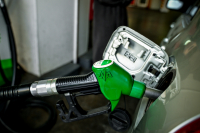

Despite Greece's expanding renewable-energy capacity, natural gas remains critical to electricity generation, accounting for as much as 40% of the country's power mix during certain periods.
Higher gas prices therefore feed directly into electricity-production costs, potentially resulting in more expensive utility bills in coming months.
The pressure comes as winter heating demand approaches, while geopolitical tensions in the Middle East and disruptions to liquefied-natural-gas markets add uncertainty to European energy prices.
Greek consumers could face another increase beginning Jan. 1, 2027.
Gas-distribution operator Enaon EDA has proposed a weighted-average 6.9% increase in network charges to Greece's energy regulator, RAAEY.
If approved, the increases would take effect during peak heating season, adding to costs for households relying on natural gas.
The proposed adjustments vary by region. In Athens and the surrounding Attica region, average distribution charges would rise 9.2% to €13 per megawatt-hour, compared with €11.90 under a scenario excluding new investments.
Proposed increases reach 12.2% in Thessaloniki, Greece's second-largest city, and 13.5% in the central region of Thessaly.
The tariff proposal forms part of Enaon's investment program for 2027-2030, which aims to expand its distribution network and increase customer connections by 22.5%.
The company has also proposed eliminating connection fees for nonindustrial customers and offering €1,000 subsidies for internal installations in areas with limited gas-network penetration.
For businesses, sustained high energy prices threaten profit margins and competitiveness, potentially forcing companies to pass higher operating costs on to consumers.
Attention is turning to the Nov. 9 meeting of eurozone finance ministers, where pressure for coordinated European intervention and additional energy-support measures is expected to intensify.