Greece is grappling with one of Europe’s most severe housing shortages, as limited construction, rising property prices and a decade of underinvestment make homeownership increasingly unaffordable for households.
The country has just 316 homes per 1,000 residents, compared with a European average of 475, according to a new Deloitte report. That puts Greece roughly 33% below the continental benchmark and at the bottom of the European ranking.
By comparison, Bulgaria has 679 homes per 1,000 residents and France has 556. Even Britain and Ireland, which face housing shortages of their own, have higher ratios, at 379 and 405, respectively.
ΔΙΑΒΑΣΤΕ ΕΠΙΣΗΣ



The supply crunch continues to push property prices higher, although the pace of increases is moderating.
Average asking prices for residential properties rose 5.7% year-over-year in the third quarter of 2026, slowing from a 10% increase a year earlier, according to property platform Spitogatos.
National asking rents were unchanged from a year earlier, following a 7.2% increase in the comparable period of 2025. But pressure remains intense in Greece’s largest cities.
In the Athens metropolitan area, home prices and rents both increased 5%. In Thessaloniki, the country’s second-largest city, asking prices climbed 6.7%, while rents rose 5.3%.
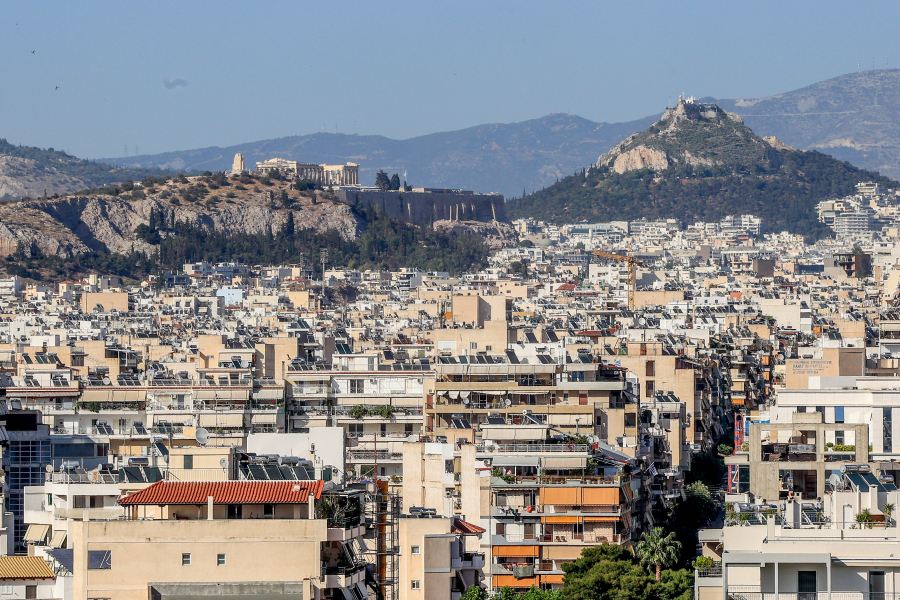
Athens’ southern suburbs remain the country’s most expensive residential market, with average asking prices reaching €4,257 a square meter. In the affluent coastal district of Vouliagmeni, prices average €7,442 a square meter, while rents reach €22.40.
New construction offers little immediate relief.
Only about 30,000 homes received building permits in 2025, equivalent to 2.88 units per 1,000 residents, placing Greece among Europe’s five weakest markets for residential development, Deloitte said.
The shortage reflects the lasting consequences of Greece’s sovereign-debt crisis, which devastated construction activity.
In the greater Athens region, 303,876 homes were built between 2001 and 2011, compared with just 48,622 during the following decade—an 84% collapse.
Rising prices are also forcing buyers to rely more heavily on mortgages.
According to mortgage-data provider IMS-FC, the average loan-to-value ratio for mortgages between €100,000 and €150,000 increased to 81.6%, from 72.6% a year earlier.
The figures underscore a widening affordability challenge: Even as price growth slows, Greece’s limited housing supply and growing dependence on borrowing leave prospective homeowners facing increasingly difficult financial choices.