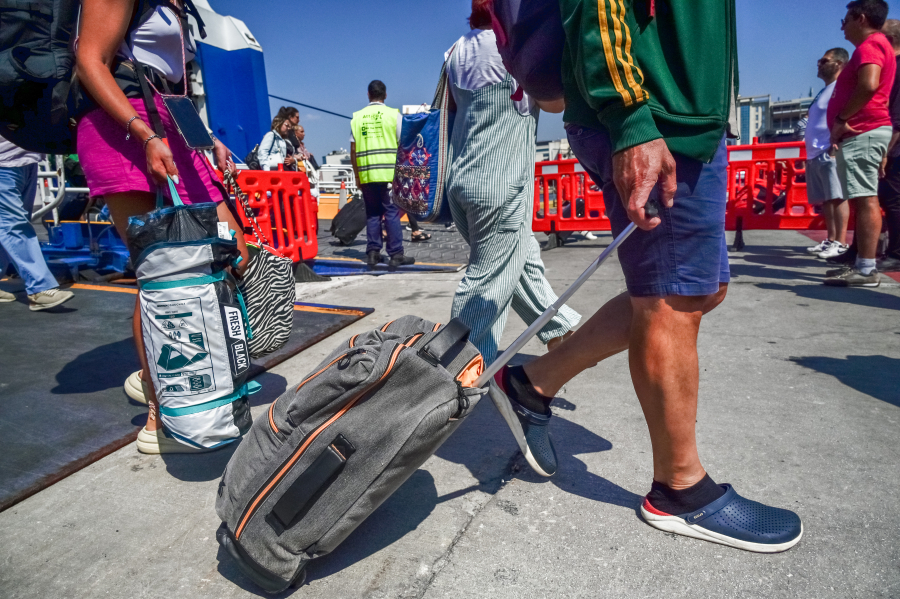
Greece’s tourism industry is entering a new phase of expansion, but inadequate infrastructure, high taxation and mounting environmental pressures threaten its long-term competitiveness, according to a study by tourism research institute INSETE.
Tourism contributed €32.4 billion directly to the Greek economy in 2025, equivalent to 13% of gross domestic product. The sector’s nominal growth reached 7.3%, outpacing the broader economy’s 4.9% expansion.
Including its indirect impact on other industries, tourism generated between €71.3 billion and €85.9 billion, representing as much as 34.6% of GDP.
ΔΙΑΒΑΣΤΕ ΕΠΙΣΗΣ


Despite its economic importance, the industry faces structural weaknesses that could undermine future growth.
Greece ranks 21st globally in the World Economic Forum’s tourism competitiveness index, trailing European rivals Spain, ranked second, and Portugal, ranked 12th.
A major challenge is the concentration of tourism activity in relatively few destinations.
Five Greek regions account for 83% of visitor arrivals and 90% of tourism receipts, while five islands attract 47% of international arrivals. More than half of annual tourist traffic remains concentrated in the third quarter.
Meanwhile, average spending per overnight stay rose 27.5% from 2019 to €97 in 2025, but shorter visits limited average spending per traveler to €595.
Private tourism investment reached €5 billion in 2025, yet public infrastructure has struggled to keep pace.
The report calls for airport modernization, improved ferry connections, better destination management and investment in local infrastructure.
Taxation presents another obstacle. Greece ranks fifth among seven Mediterranean countries in tourism tax competitiveness, while revenue from its climate-resilience accommodation levy reached €588 million in 2025.
Labor shortages also threaten service quality. Employment in accommodation and food services reached 475,200 in the third quarter of 2025, although job vacancies stood at 14%.
Climate change poses additional risks, potentially reducing overnight stays by as much as 7.3%. Yet only 8% of hotels hold environmental certifications.
The study also identifies digital modernization and expansion into Asian markets as opportunities for future growth.
The central challenge is shifting from attracting more visitors to generating greater economic value, while improving infrastructure, reducing seasonal pressures and ensuring tourism growth benefits local communities.
Without coordinated reforms, the industry risks seeing its strong international position weakened by rising costs, environmental constraints and intensifying competition from other Mediterranean destinations.