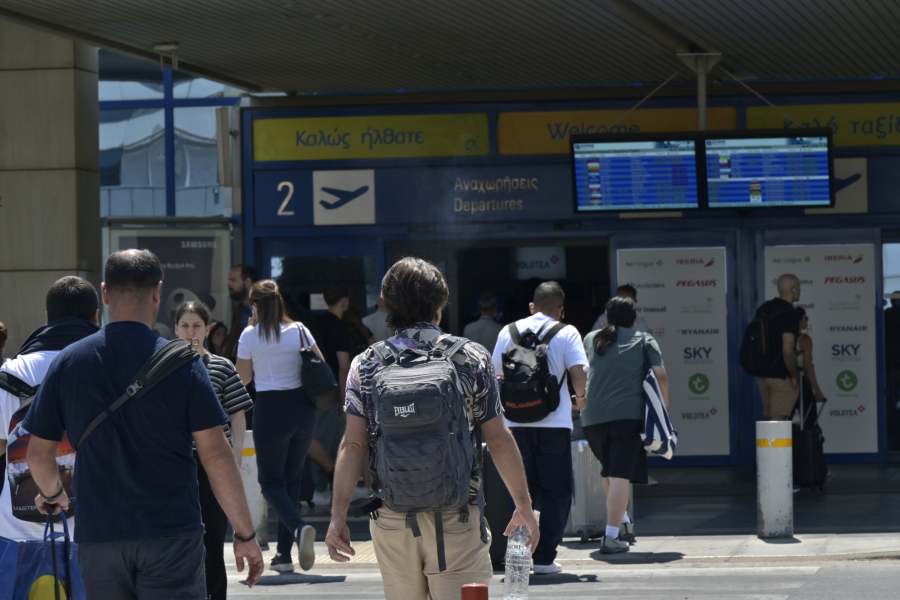
Athens International Airport is emerging as a distinctive player among Europe’s biggest aviation hubs, as air traffic across the European Union returns to levels last seen before the pandemic.
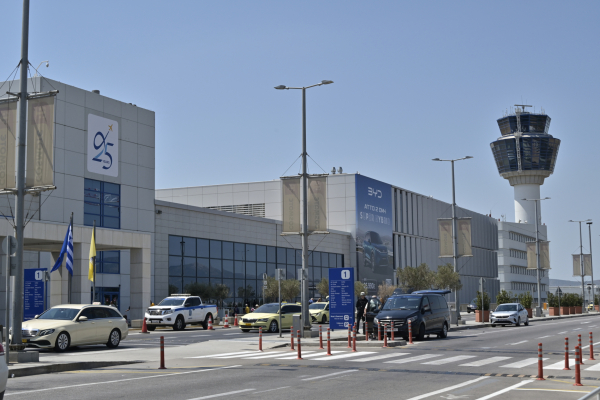
The airport, officially named “Eleftherios Venizelos” after the prominent Greek statesman, recorded the highest proportion of non-scheduled commercial flights among the EU’s 10 busiest airports in 2025, according to Eurostat data.
Non-scheduled services accounted for 5.2% of commercial flights at Athens, a category that includes charter operations and other special flights. That put the Greek capital ahead of Madrid’s Adolfo Suárez Madrid-Barajas Airport, where the corresponding share was 4.8%, and Copenhagen’s Kastrup Airport, at 4.1%.
ΔΙΑΒΑΣΤΕ ΕΠΙΣΗΣ

The figures underline the unusual dynamics of the Greek aviation market, where tourism plays an outsized role and demand rises sharply during the summer. Athens serves both as Greece’s primary international gateway and as a major transfer point for travelers heading to the country’s islands and other popular destinations.
The performance comes against the backdrop of a broader recovery in European aviation. Airports across the EU handled 6.9 million commercial flights in 2025, up 3.8% from 6.7 million in 2024. Traffic has risen steadily since 2021 and is now effectively back at pre-Covid levels. In 2019, around 7 million commercial flights were recorded across the bloc.
Europe’s summer travel boomremains particularly visible in the numbers. Commercial flights increased from 648,707 in June to 690,855 in July before reaching a 2025 peak of 693,046 in August. Non-scheduled flights represented 11.2%, 12.3% and 11.4% of total traffic in those three months, respectively.
Athens didn’t take the crown for overall flight volume. That distinction went to Amsterdam’s Schiphol Airport, which handled about 488,000 commercial flights during 2025. Paris Charles de Gaulle followed with roughly 476,000, while Frankfurt ranked third with 457,000.
Still, Athens’ position stands out. Its relatively large share of non-scheduled traffic illustrates how the capital’s airport is tied not only to conventional European business and leisure travel but also to the seasonal flows generated by Greece’s tourism industry.