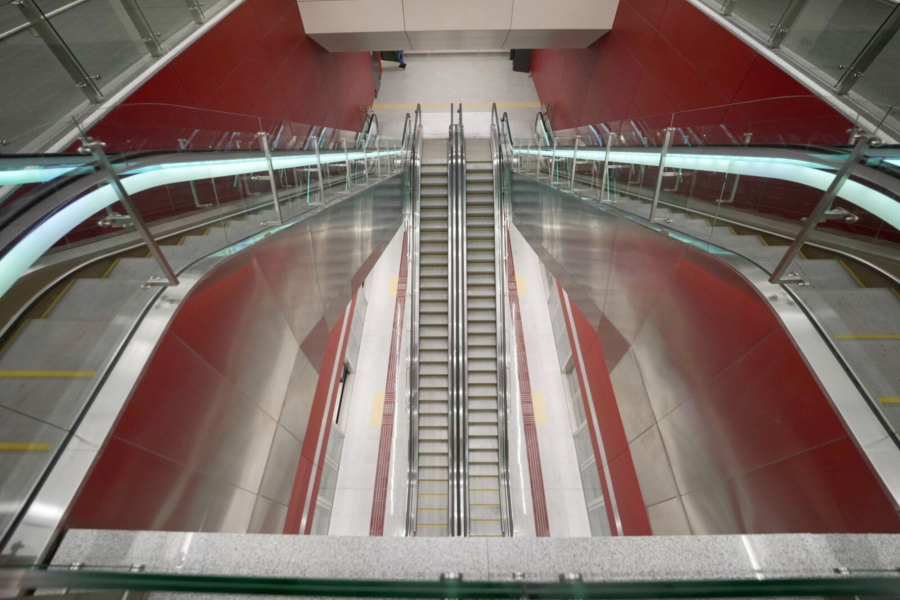
Thessaloniki is expanding its metro system on Thursday with the opening of a five-station extension to Kalamaria, a densely populated municipality southeast of the city center, in one of the most significant additions to the northern Greek city’s transport network.
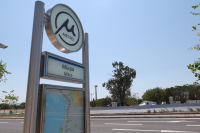
The extension will bring the Thessaloniki Metro to 18 stations across 14.4 kilometers, according to Greece’s Infrastructure and Transport Minister Christos Dimas. The five new stations - Nomarchia, Kalamaria, Aretsou, Nea Krini and Mikra- will connect neighborhoods in eastern and southeastern Thessaloniki directly with the city center.
The project is expected to have an impact well beyond the new stations themselves. Authorities forecast about 63,000 passenger boardings a day on the extension and estimate that it could remove roughly 12,000 private cars from Thessaloniki’s roads daily, easing congestion in a city where traffic has long been a persistent problem.
ΔΙΑΒΑΣΤΕ ΕΠΙΣΗΣ
Reduction of road traffic
The reduction in road traffic is projected to cut carbon-dioxide emissions by around 25 metric tons a day.
The extension also significantly expands the geographic reach of a metro system that was built to reshape public transportation in Greece’s second-largest city. A trip from Thessaloniki’s New Railway Station, at the western end of the main line, to Mikra will take about 25 minutes, providing Kalamaria with a fast connection both to the center and the city’s western gateway.
The five stations serve several important administrative, commercial and cultural destinations, including the offices of the Central Macedonia regional government, the Thessaloniki Cultural Center, Kalamaria’s commercial and municipal center and the Mikra sports complex.
Mikra, the new terminus, is also expected to serve as a transfer point for passengers traveling to and from Thessaloniki’s international airport. The metro doesn’t yet extend directly to the airport, but the station brings the rail network closer to one of the region’s most important transport hubs.
The Kalamaria extension operates as a branch of the existing metro rather than as a separate line. It connects with the main route around 25 Martiou station. From there, trains will continue either toward Mikra on the new branch or toward Nea Elvetia, the existing eastern terminus.
The entire network will be supervised from a common operations-control center. Under the initial operating plan, two of every three trains traveling through the shared central section will continue toward Mikra, while the third will head toward Nea Elvetia. Planned intervals between trains can be as short as 90 seconds on the common section of the network, about 2½ minutes on the Mikra branch and four minutes on the Nea Elvetia branch.
The extension was constructed with two separate single-track tunnels and includes three ventilation and electromechanical shafts, three rail crossovers and a train stabling facility.
15 new trains
The expansion will also add 15 fully automated, air-conditioned trains to Thessaloniki’s fleet. Each four-car train can carry as many as 450 passengers. Together with the 18 trains acquired for the original line, the metro will now have a fleet of 33.
The opening marks another step in the transformation of urban transportation in Thessaloniki, a metropolitan area that for decades depended heavily on buses and private cars. For Kalamaria in particular, the extension provides something the municipality has lacked: a direct, high-capacity rail connection to central Thessaloniki.
The bigger test begins after Thursday’s inauguration. If passenger demand reaches official projections and thousands of commuters switch from cars to trains, the five-station extension could have an effect on daily life in Thessaloniki that extends considerably beyond the additional 4.8 kilometers of metro infrastructure.