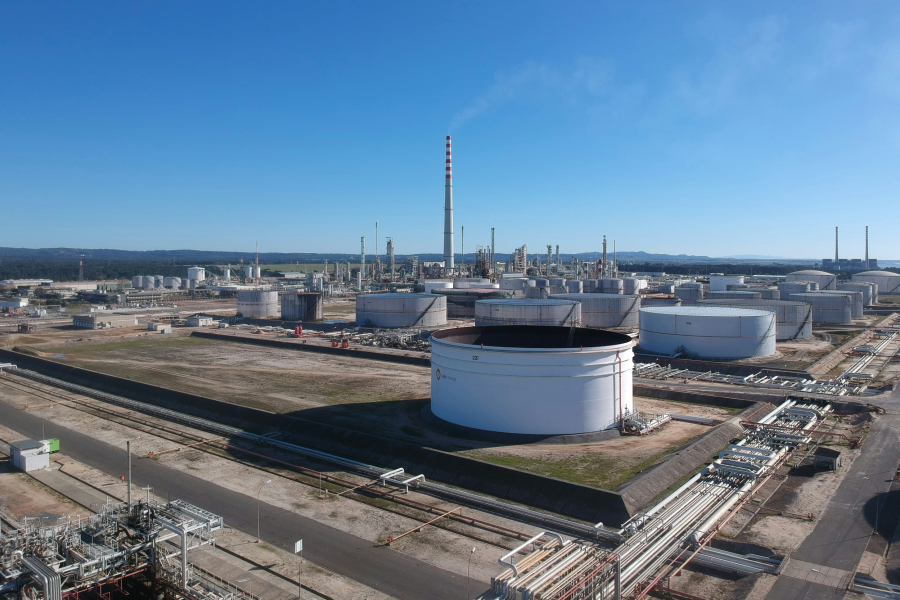
Greece’s two major oil refiners are approaching a decision on whether to extend an emergency fuel discount into September, a move that has offered motorists some relief at the pump but is carrying a significant financial cost for the companies.
Motor Oil and Helleniq Energy have yet to say whether the temporary measure, currently applied to fuel sold in the Greek market, will continue beyond August. A decision is expected within days, before the start of the new month.
The stakes are tangible for Greek consumers. The discount translates into roughly 10 euro cents a liter for gasoline and 5 cents a liter for diesel, cushioning retail prices at a time when fuel costs remain a closely watched component of household spending. For the refiners, however, the intervention is proving expensive.
ΔΙΑΒΑΣΤΕ ΕΠΙΣΗΣ


Petros Tzannetakis, a senior Motor Oil executive, told analysts that the discount is expected to cost the company about €20 million in August alone. He said no decision had yet been made on extending the measure, adding that the picture should become clearer in the coming days.
The size of that bill underscores the trade-off facingthe refiners. Extending the discount would continue to provide motorists with a buffer against fuel prices, but another month would also represent a substantial financial commitment for companies absorbing part of the cost before fuel reaches the retail market.
Motor Oil and Helleniq Energy introduced the extraordinary discount for fuel-marketing companies, with the measure applying exclusively to sales in Greece. The reduction has flowed through to prices at filling stations, lowering the amount ultimately paid by drivers.
The companies’ refinery prices show little difference between the two suppliers
Thecompanies’ refinery prices show little difference between the two suppliers. On Wednesday, Aug. 26, the refinery price for 95-octane unleaded gasoline, including taxes and duties but excluding value-added tax, stood at €1,491.396 per cubic meter at Helleniq Energy and €1,490.624 at Motor Oil. For premium 100-octane gasoline, the corresponding prices were €1,644.038 per cubic meter at Helleniq Energy and €1,643.946 at Motor Oil.
Diesel showed a similarly narrow spread. Helleniq Energy priced road diesel at €1,435.726 per cubic meter, compared with €1,435.126 at Motor Oil, highlighting how closely aligned wholesale prices remain across Greece’s two principal refiners. Prices for liquefied petroleum gas also showed only modest differences. Automotive LPG stood at €1,065.841 per metric ton at Helleniq Energy and €1,067.214 at Motor Oil. Heating LPG was priced at €691.357 and €691.794 per metric ton, respectively.
Attention is now shifting from the daily price sheets to the boardrooms of the two energy groups. An extension into September would preserve a reduction at the pump, particularly for gasoline users. Ending the program, by contrast, would remove one of the factors currently suppressing retail prices, potentially exposing motorists more directly to prevailing wholesale-market conditions.
The decision comes as energy companies across Europe continue to navigate the tension between volatile commodity markets, refining economics and political and consumer pressure over the cost of energy. In Greece, where fuel taxes make up a substantial portion of the price motorists pay, even relatively small changes in the underlying cost can be highly visible to consumers.