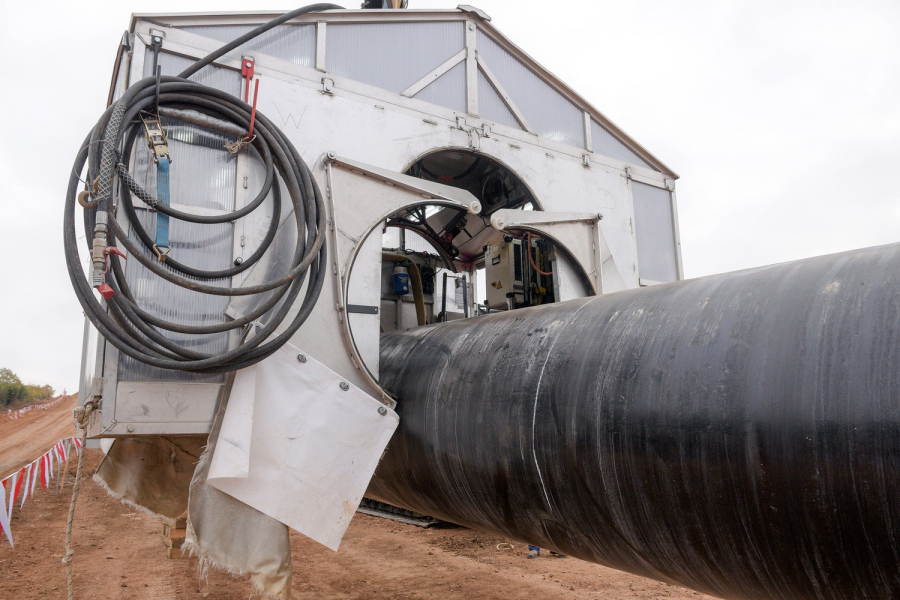

The oil pipeline linking Thessaloniki in northern Greece with Skopje, the capital of North Macedonia, has resumed operations after remaining inactive for 13 years, according to an announcement by the pipeline operator Vardax.
The company said the restart follows the completion and verification of all necessary technical, operational and regulatory requirements. Vardax also invited specialized trading companies interested in using the pipeline to review the relevant procedures through its official website.
Following a major upgrade, the pipeline is now capable of transporting up to 2.5 million tonnes of crude oil and refined petroleum products per year, including diesel, kerosene and gasoline. Industry sources expect the infrastructure to be used primarily for the transport of diesel.
The pipeline was originally built in 2002 by Vardax, a company in which Greece’s HELLENiQ ENERGY holds an 80% stake, while the government of North Macedonia owns the remaining 20%. Its purpose was to connect the refineries of Thessaloniki with the refinery operated by OKTA — a subsidiary of HELLENiQ ENERGY — located near Skopje.
In 2013, the continued operation of the OKTA refinery was deemed commercially unviable. Similar smaller refineries across the region, many of which had been built under different economic and strategic conditions during the Cold War, faced the same challenge. As a result, the facility was converted into a regional fuel distribution hub for the Western Balkans, while the pipeline’s role was redesigned to transport refined petroleum products rather than crude oil.
Although the OKTA facilities were adapted for their new function and significant modernization investments were carried out, the pipeline itself remained unused for years due to unresolved administrative and financial issues.
Stretching approximately 213 kilometers, the pipeline runs from Thessaloniki to Skopje, with around 70 kilometers located within Greek territory.
Energy analysts believe the pipeline’s reactivation could strengthen energy security in the Balkans by improving fuel supply routes and potentially positioning North Macedonia as a regional energy hub. At the same time, the development is expected to expand the economic footprint of HELLENiQ ENERGY in the country.