
Greece's Ministry of Social Cohesion and Family has launched a public consultation on its new National Housing Strategy 2026-2035, which aspires to become the country's first comprehensive decade-long plan to address the housing crisis.
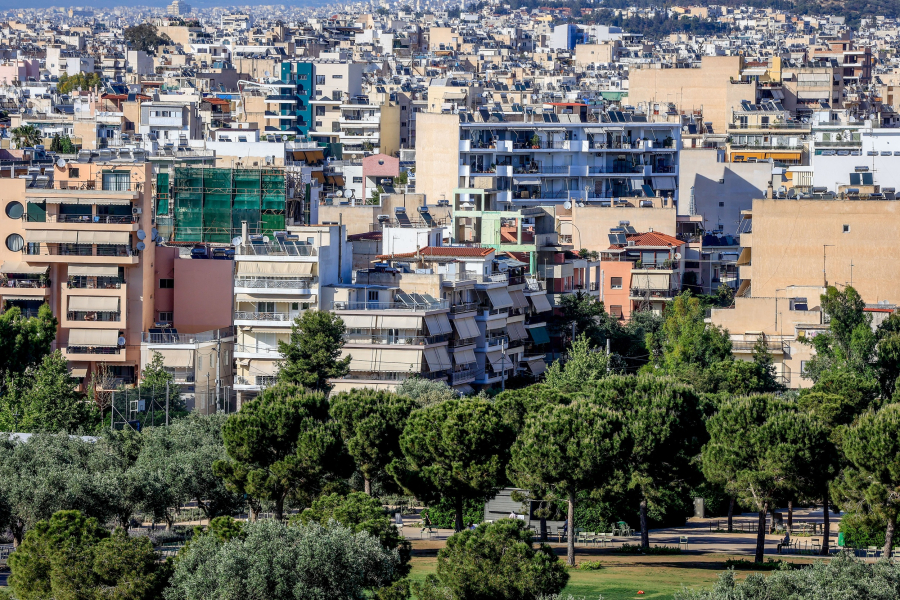
The strategy acknowledges that the Greek housing market's central challenge is the imbalance between supply and demand. According to figures included in the document, Greece has approximately 6.6 million housing units, yet nearly 800,000 remain vacant, excluding holiday homes and secondary residences. The government's primary objective is to bring a significant share of this dormant housing stock back into use through renovation incentives, energy-efficiency upgrades, and measures aimed at returning properties to the long-term rental market.
Τhe proposed measures appear limited when compared with the scale of the housing crisis
The strategy itself concedes that property sale and rental prices have risen faster than incomes, that social housing is virtually non-existent, and that short-term rentals have absorbed a substantial portion of the available housing stock. Yet despite this clear diagnosis of the problem, the proposed measures appear limited when compared with the scale of the crisis.
ΔΙΑΒΑΣΤΕ ΕΠΙΣΗΣ

The first major intervention focuses on vacant homes. The strategy argues that a large part of the solution lies in reactivating roughly 800,000 empty apartments through renovation subsidies, tax incentives, and regulatory support. However, the document also acknowledges that most of these properties are old - often built before 1980 - with poor energy performance, extensive repair needs, and, in many cases, fragmented ownership structures. Bringing them back onto the market would therefore require investments of tens of thousands of euros per property. The strategy does not explain how owners will be incentivized on such a scale, nor does it estimate the true fiscal cost of the effort.
A second key pillar concerns social housing. The document recognizes that Greece is an outlier in Europe due to its near-total lack of social housing stock. Nevertheless, it does not include a large-scale social housing construction program or specify quantitative targets for how many units should be created by 2035. In countries such as Austria, the Netherlands, and France, social housing serves as an active market intervention tool. In Greece's case, the strategy remains largely at the level of broad policy directions.
The shortcomings are even more apparent in relation to short-term rentals. The strategy notes that Airbnb-style accommodation increased by nearly 56% between 2019 and 2025 and that in areas such as central Athens, these properties account for a significant share of the housing stock. Despite this acknowledgment, the plan does not propose a comprehensive system of quotas, caps, or geographic restrictions similar to those implemented in other European cities. Instead, the proposed regulations remain fragmented and focused on only a handful of areas.
When more buyers compete for the same number of homes, prices tend to rise
Likewise, the strategy places considerable emphasis on promoting homeownership through financing tools and housing support programs. However, experience in recent years has shown that demand-side subsidies, when not accompanied by an increase in housing supply, often contribute to further price inflation. Put simply, when more buyers compete for the same number of homes, prices tend to rise.
Another weak point is residential construction. The strategy acknowledges that Greece lost more than a decade of building activity following the financial crisis and that current levels of new housing development are insufficient to meet demand. Yet it stops short of proposing a major program to expand affordable housing supply or introducing significant reforms to construction taxation and building costs.
The measures aimed at islands and tourist destinations also appear to address symptoms rather than root causes. The document recognizes that thousands of teachers, doctors, and other public-sector workers struggle to find accommodation in popular tourist areas. However, the solutions under consideration focus primarily on temporary accommodation schemes and the use of public properties rather than a broader restructuring of local housing markets.
The overarching conclusion is that the National Housing Strategy is stronger on identifying problems than on transforming the conditions that created Greece's housing crisis. It does not provide for large-scale public investment, establish binding targets for thousands of new social housing units, take a decisive stance against distortions caused by short-term rentals, or present a supply-expansion plan commensurate with the magnitude of the challenge.