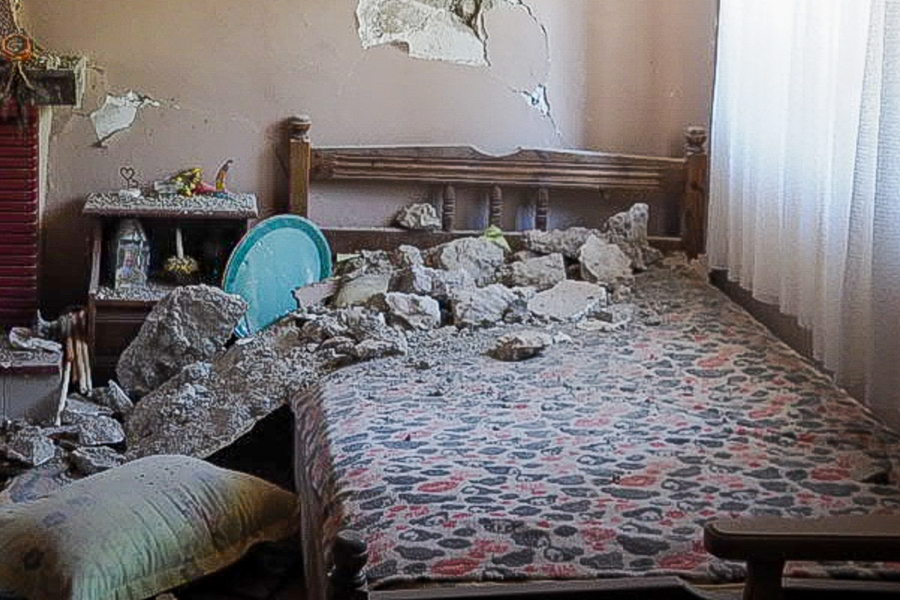
A series of moderate earthquakes rattled central Greece on Sunday, damaging older buildings and triggering landslides in parts of Evia, an island east of the Greek mainland, while prompting authorities to place emergency services on heightened alert.
The strongest tremor, measuring 5.2 magnitude, was among several earthquakes that struck the area around the town of Prokopi in northern Evia shortly before and after 1 p.m. local time. The initial quake, recorded at 4.8 magnitude, occurred at a shallow depth of 14 kilometers, making it widely felt across the wider Athens metropolitan area, roughly 100 kilometers away.
Despite the damage, Greek seismologists moved quickly to calm fears of a larger seismic event.
"Based on the seismic history of the region, we do not expect a significantly stronger earthquake," Efthymios Lekkas, head of Greece's Earthquake Planning and Protection Organization, told local media. He noted that the area regularly experiences earthquakes in the magnitude 5 range, often followed by several days of aftershocks.
Athanasios Ganas, research director at the National Observatory of Athens' Geodynamic Institute, echoed that assessment, saying historical data suggests the fault system near Prokopi has not produced earthquakes exceeding magnitude 5.5.
"We have entered an aftershock sequence, which we will monitor closely over the next 48 hours," Ganas said. "This is not a region associated with the major fault zones found elsewhere in Greece."
Preliminary inspections identified cracks in several homes, the partial collapse of a wall in one residence and small landslides affecting sections of the local road network. Most of the damage was concentrated in older structures. No injuries have been reported.
The Greek Fire Service said all Civil Protection agencies were mobilized immediately following the earthquakes. Fire departments in both Attica, the region surrounding Athens, and Evia have been placed on increased readiness, while search-and-rescue units were deployed to the area as a precaution.
Twenty fire service vehicles have been conducting patrols and inspections in cooperation with police, focusing particularly on roads affected by rockfalls and landslides.
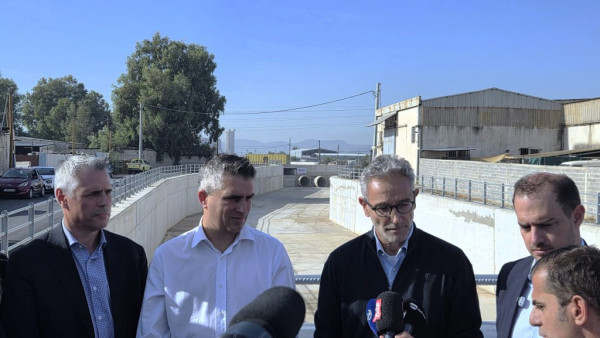
Climate Crisis and Civil Protection Minister Evangelos Tournas traveled to northern Evia on Sunday alongside senior disaster recovery officials to assess the situation on the ground and coordinate response efforts with local authorities.
Greece is one of Europe's most seismically active countries, sitting at the convergence of the African and Eurasian tectonic plates. While earthquakes are common across much of the country, Sunday's tremors renewed concerns among residents in central Greece, particularly after the shaking was felt across Athens and surrounding areas.
Authorities said damage assessments remain ongoing, but stressed that no serious injuries or major structural failures have been reported so far.