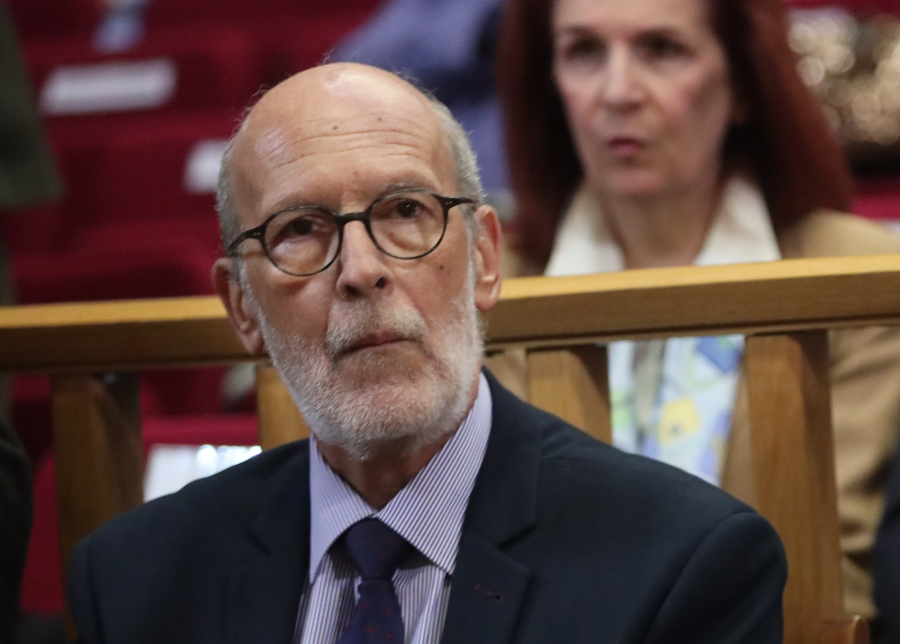

Greece’s top prosecutor is under mounting scrutiny after a report revealed he approved surveillance of 11 individuals who were also targeted by the illegal Predator spyware, intensifying a political and institutional crisis over the country’s wiretapping scandal.
According to an investigation by the news outlet in, Konstantinos Tzavellas — now serving as Greece’s top prosecutor at the Supreme Court — signed off on lawful monitoring requests by the National Intelligence Service (Greece) that coincided in time with spyware attacks carried out using Predator. The overlap is said to have occurred during the roughly one-year period up to November 2020, when Tzavellas was responsible for overseeing the intelligence service.
The report also reveals details of Tzavellas’s previously undisclosed testimony before parliament’s Hellenic Parliament Committee on Institutions and Transparency in September 2022. In that appearance, he declined to answer questions about the surveillance operations, citing legal obligations of confidentiality tied to national security. His refusal to engage substantively has since drawn sharp criticism from opposition parties and legal bodies.
Among those reportedly placed under surveillance were high-profile political and public figures, including deputy prime minister Kostis Hatzidakis, senior government official Giorgos Mylonakis and journalist Thanasis Koukakis, who has been central to uncovering the scandal. Several business figures and state officials were also named.
Particular concern has focused on the case of Koukakis. According to the report, his phone was under state surveillance from June to August 2020. On the same day he contacted Greece’s independent communications watchdog, Hellenic Authority for Communication Security and Privacy, to inquire whether he was being monitored, the surveillance order was lifted. The timing has raised suspicions of possible interference.
Tzavellas, in his 2022 testimony, in the Greek Parliament insisted that he had full awareness of the reasons behind each surveillance order he approved. He stated that he maintained direct contact with intelligence officers handling the cases and had “internal knowledge” of why each interception was deemed necessary for reasons such as national security or criminal investigations. However, he declined to provide further details, invoking statutory secrecy provisions.
The controversy has been further inflamed by the fact that the same prosecutor who oversaw the surveillance operations later moved, in 2026, to shelve the wiretapping case referred to him by the Athens misdemeanours court. The decision has triggered a storm of reactions, with legal experts and opposition politicians accusing him of a cover-up and alleging that it served to shield Prime Minister Kyriakos Mitsotakis, who at the time held direct oversight of the National Intelligence Service.
The controversy has triggered calls for his resignation from the Athens Bar Association, which said he had failed in his institutional role. Legal representatives of alleged surveillance victims have gone further, arguing that Tzavellas should have recused himself from any involvement in investigating the scandal, given his prior role in approving surveillance requests.
“The person under scrutiny chose to act as the investigator,” said lawyer Zacharias Kesses, who represents individuals claiming to have been unlawfully monitored. He added that there were grounds to believe criminal offences may have been committed and questioned the integrity of any inquiry overseen by someone potentially implicated.
Opposition parties have seized on the revelations as evidence of a broader institutional failure. The centre-left PASOK–Movement for Change described the findings as deeply troubling and accused the government of attempting to conceal the extent of the surveillance network. It has called for a parliamentary inquiry, arguing that the overlap between state-authorised monitoring and illegal spyware targeting raises serious questions about coordination or parallel operations.
The left-wing SYRIZA–Progressive Alliance was even more direct, accusing Tzavellas of effectively “clearing himself” by refusing to investigate his own actions. In a statement, the party argued that it was incompatible with the rule of law for a judicial figure to both authorise surveillance and later play a role in assessing its legality.
The Predator spyware scandal has already shaken Greece’s political landscape, drawing international attention and raising concerns about press freedom and the use of surveillance technologies within the EU. The latest revelations are likely to intensify pressure on the government of Kyriakos Mitsotakis, which has faced repeated accusations from critics of failing to fully account for the scope and oversight of intelligence operations.