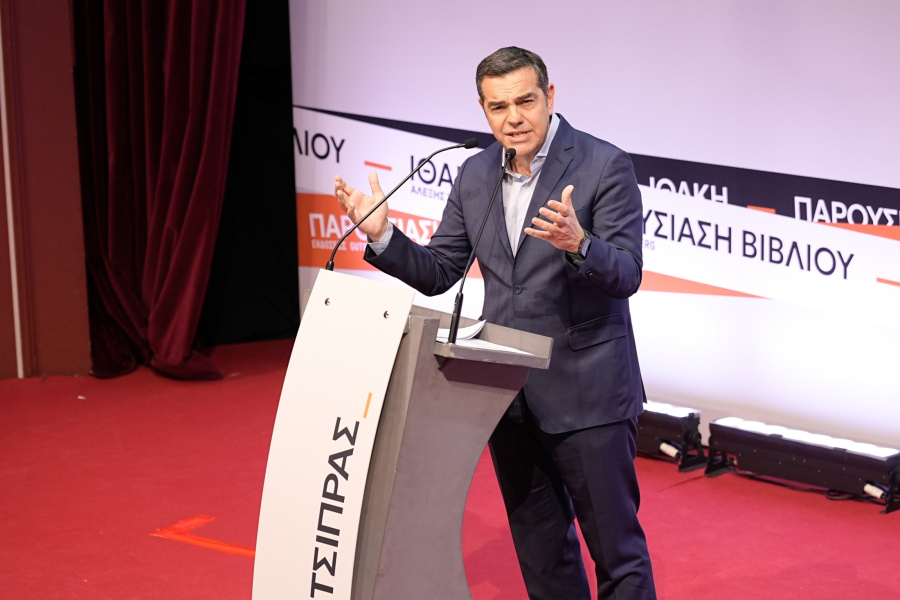

A new policy blueprint from the Alexis Tsipras Institute is reigniting debate over the future of Europe’s left, proposing an ambitious convergence of social democracy, radical left politics and green movements into a single governing project.
The document, titled “The Governing Left of a New Era,” was drafted by a working group led by Giorgos Siakantaris and is being framed by allies of former prime minister Alexis Tsipras as a strategic intervention rather than a party manifesto. Still, its timing — and its scope — are likely to fuel speculation about a broader realignment on the European center-left.
At its core, the text argues that the political and economic assumptions underpinning postwar Europe are rapidly breaking down. Rising inequality, intensifying climate pressures, geopolitical instability and the disruptive effects of artificial intelligence are described as converging crises that demand a new political response. In that context, the authors push back against claims that the traditional left-right divide has become obsolete, insisting instead that it remains central to how societies choose to respond to these challenges.
The proposal’s central idea is the need to bridge long-standing divides within progressive politics. It calls for a structured convergence between social democratic parties, the radical and reformist left, and green political forces — currents that have often operated separately or in competition. According to the authors, this fragmentation has weakened the left’s ability to govern effectively at a time when public trust in political institutions is already under strain.
Rather than revisiting old ideological battles, the document explicitly rejects the historic split between reform and revolution that defined much of the 20th-century left. It argues that modern political strategy must combine incremental reforms with more decisive structural interventions, particularly where economic and institutional systems are seen to perpetuate inequality.
The policy direction outlined in the text centers on strengthening labor protections, reducing income disparities and reinforcing public goods, including energy systems, water resources and environmental assets. It also emphasizes the role of public services such as healthcare and education, alongside calls for greater transparency, accountability and progressive taxation.
Beyond policy, the manifesto reflects a broader concern with the social mood across Europe. It points to a pervasive sense of insecurity — affecting not only lower-income groups but also middle classes and younger generations — driven by concerns over housing, employment and long-term economic stability. This climate of uncertainty, the authors argue, is reshaping political behavior and creating fertile ground for both disengagement and more extreme political responses.
To counter this trend, the document introduces the concept of a “new patriotism,” framed as inclusive, democratic and rooted in social solidarity rather than nationalism. The aim is to re-engage citizens as active participants in political life, while maintaining a strong commitment to European integration.
A significant part of the proposal focuses on the role of the state. The authors argue for a more assertive public sector capable of ensuring social fairness and long-term development, while rejecting both minimalist “night-watchman” models and overly centralized governance structures. Instead, they advocate a more decentralized and cooperative state, with stronger local institutions and a clearer role in safeguarding essential resources and economic security.
Democracy itself is treated as a central battleground. The text argues that political systems risk becoming hollow if they fail to deliver substantive equality, social protection and meaningful citizen participation — warning that formal freedoms alone are not enough to sustain public trust.
While the institute stops short of outlining a concrete political vehicle, the document’s concluding message is clear: a unified progressive force to the left of the political center is both necessary and achievable. Such a coalition, it argues, should draw on the governing experience of social democracy, the critical edge of the radical left and the policy priorities of green movements — with the aim not just of managing existing systems, but of reshaping them.
Whether that vision translates into political action remains to be seen. But the intervention underscores a broader debate playing out across Europe, as left-leaning parties grapple with how to rebuild electoral strength and respond to a rapidly shifting political landscape.