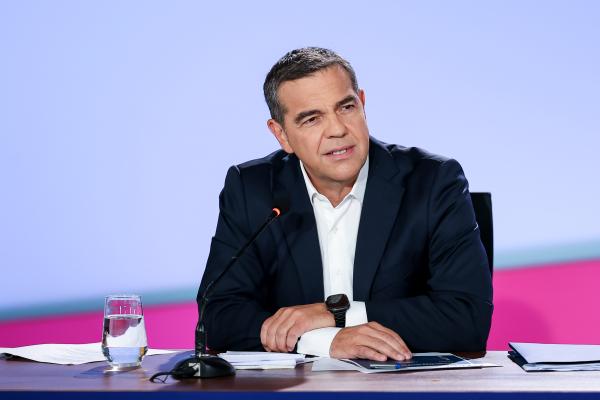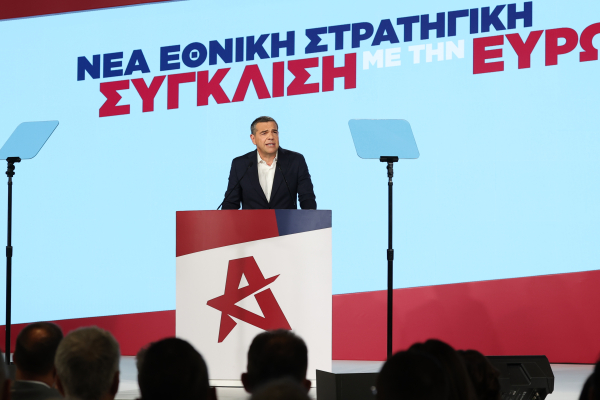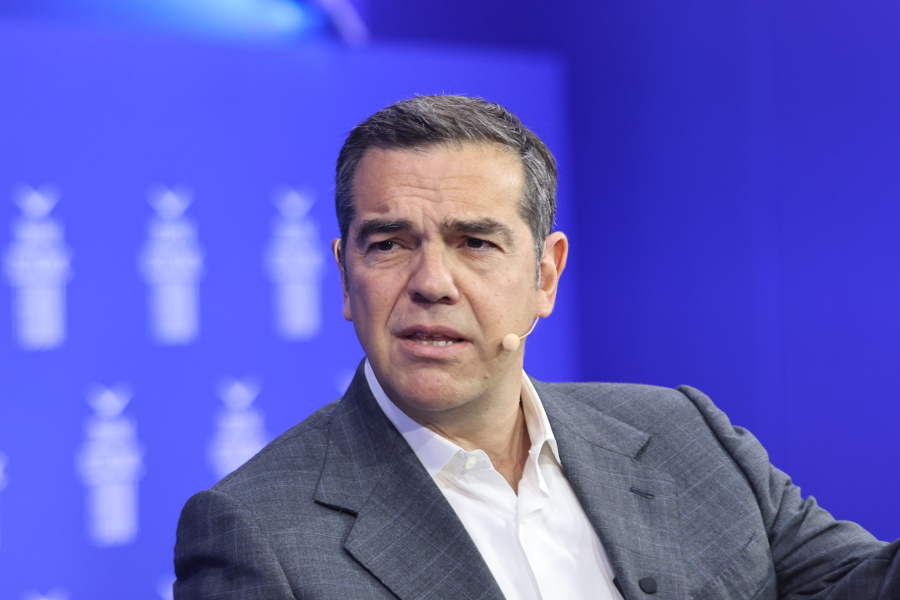

Alexis Tsipras used a high-profile appearance at the Delphi Economic Forum on Thursday to deliver one of his sharpest critiques yet of Greece’s conservative government, declaring that the country has drifted away from democratic normality and suggesting Prime Minister Kyriakos Mitsotakis should have already stepped down.
“We no longer live in a normal country,” the former prime minister said, in remarks that underscored both his growing political activity and mounting speculation about his return to frontline politics. Referencing recent comments by European Chief Prosecutor Laura Kövesi, Tsipras argued that under comparable circumstances, “a typical European prime minister would have resigned.”
The speech marked Tsipras’ clearest signal yet that he is preparing a political comeback, after months of increasingly frequent interventions. He framed his return as a response to what he described as rising inequality, entrenched corruption, and a political system under strain. “I cannot remain in comfortable silence,” he said. “I have a responsibility to contribute to restoring normality and stability.”
While stopping short of announcing a new party, Tsipras made clear he is ready to move quickly if political developments accelerate, saying he could act “even next week” if necessary. He declined to offer details on timing, citing uncertainty about whether the current government will complete its term. Much of his address focused on the economy, where he accused the government of fostering what he called a “grab-and-go” model reliant on subsidies and short-term fixes rather than structural reform.
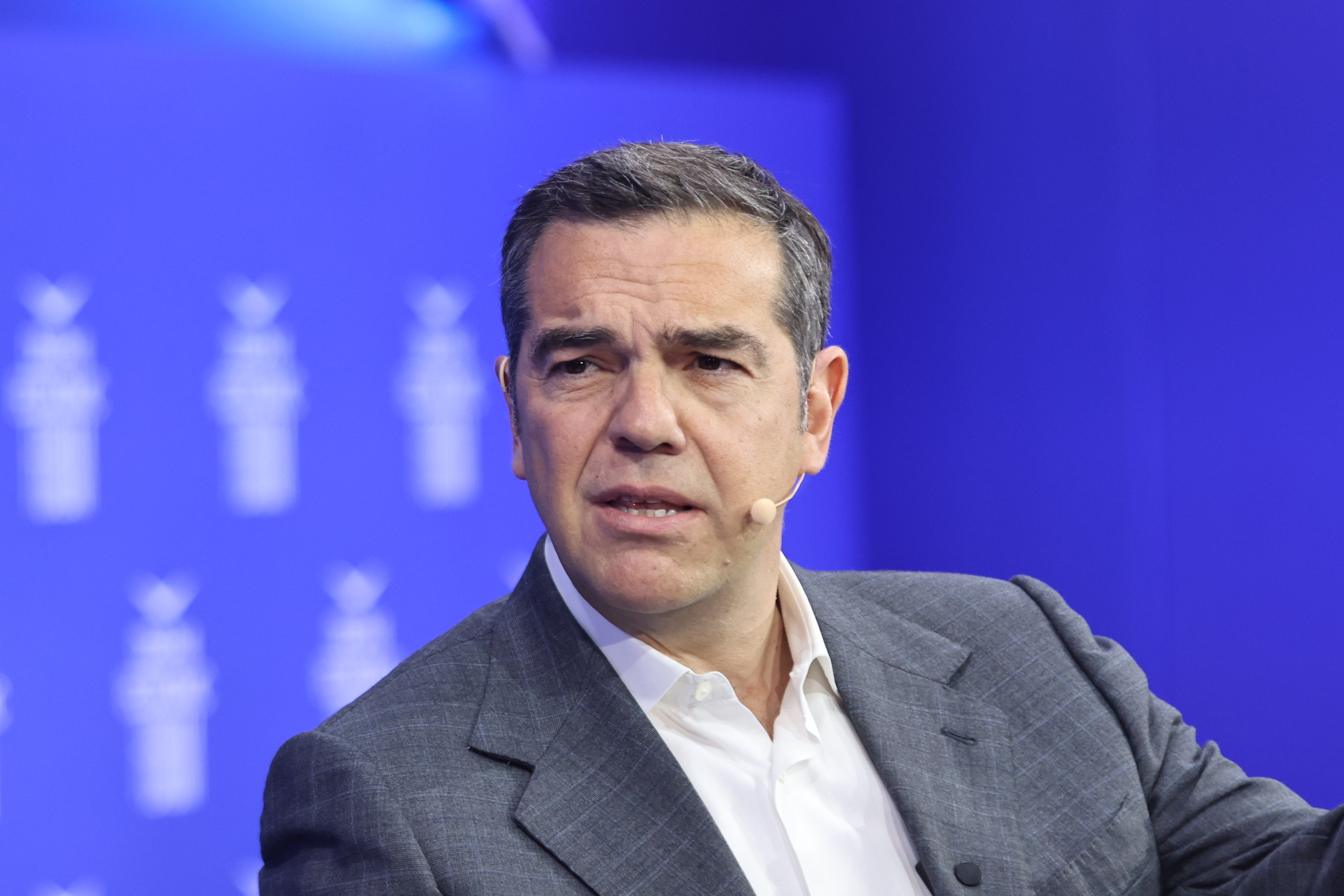
He argued that policies appropriate during Greece’s bailout years have become a political crutch, used to shore up support rather than address underlying weaknesses.
Tsipras called for a shift toward a more productive economic model, warning that Greece risks “serious trouble” if it continues on its current path. He proposed the creation of a national investment mechanism to channel funds into key sectors, alongside a “patriotic contribution” from large businesses. At the same time, he sought to draw a distinction between supporting entrepreneurship and tolerating what he described as profiteering and unfair practices.
On taxation, he advocated reducing the burden on salaried workers while making the system more equitable overall, including changes to how capital is taxed. He also pointed to the need for deeper institutional reforms, emphasizing faster justice, stronger transparency safeguards, and more effective anti-corruption mechanisms.
Beyond economics, Tsipras used the platform to argue for a broader political reset. He warned that Greece’s political system is entering a period of instability but insisted that the emergence of new political forces should not come at the expense of core democratic values. Positioning himself within that debate, he made the case for a “governing Left” capable of delivering policy, rather than one limited to opposition.
He also touched on foreign policy, calling for a return to Greece’s traditionally more balanced, multi-vector approach. In a pointed remark, he said Athens should apply consistent standards internationally, arguing that if it seeks sanctions against Turkey, it should also be willing to criticize Israel under similar conditions. On migration, Tsipras struck a more pragmatic tone, supporting tighter control of irregular flows while advocating for more coherent integration policies. He linked the issue to Greece’s demographic challenges, describing it as a long-term strategic concern for the country.
Taken together, Tsipras’ intervention amounted to more than a policy speech. It was a calculated re-entry into the political arena, combining a direct challenge to the government with a broader appeal to voters uneasy about inequality, governance, and the direction of the country.