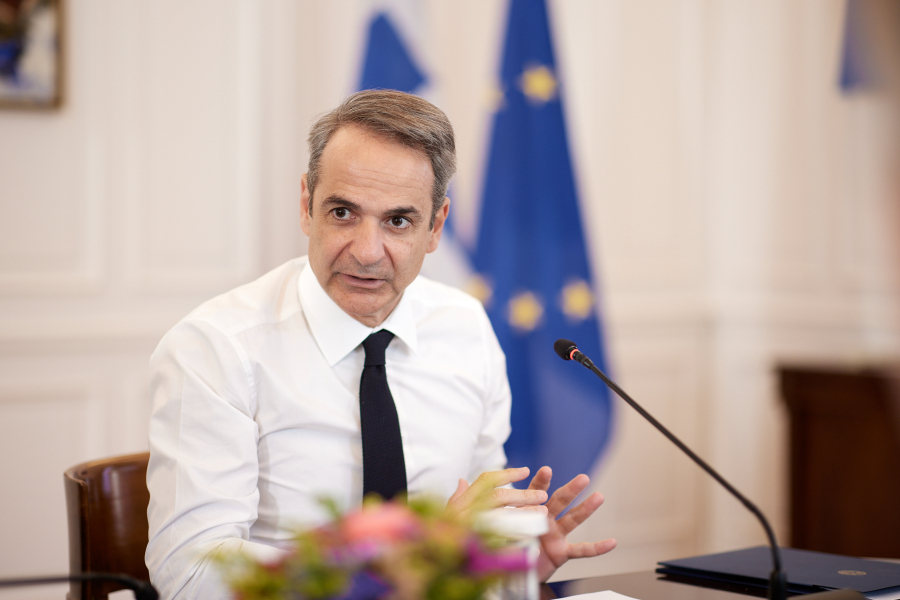
Greek Prime Minister Kyriakos Mitsotakis warned that a prolonged disruption in the Strait of Hormuz could trigger a far-reaching economic and energy shock, urging Europe to prepare a contingency plan as instability in the Middle East deepens.
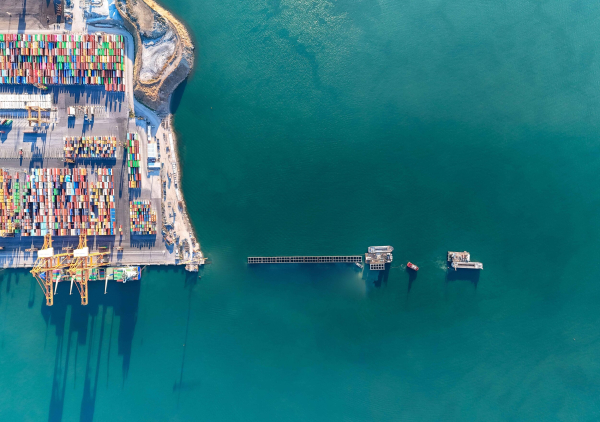
Speaking on Wednesday at the Delphi Economic Forum alongside European Council President António Costa, Mitsotakis said the risk of a sustained blockade in the critical shipping lane would have immediate global repercussions, from oil supply disruptions to surging inflation and slower growth.
“This is potentially a crisis of significant magnitude,” Mitsotakis said, warning that continued restrictions in the Hormuz corridor would likely lead to sharp increases in energy prices, shortages in key inputs such as fertilizers, and broader supply chain disruptions affecting economies worldwide.
Framing the conflict as external to Europe’s direct strategic interests, he added: “This is not Europe’s war,” while stressing that the continent cannot afford complacency. He called on EU leaders to remain “realistic” and to prepare for worst-case scenarios if the crisis escalates or drags on. “We need a Plan B,” he said, arguing that no member state would be able to weather such a shock without coordinated European support.
Mitsotakis used the moment to push for a broader rethink of Europe’s energy strategy, arguing that the bloc’s focus on green transition must be balanced with questions of supply security. He pointed to Germany as a cautionary example, criticizing Berlin’s phase-out of nuclear power and its continued reliance on coal. “We lost years debating nuclear energy,” he said. “Now Germany is burning coal until 2036. That is both an environmental and economic mistake.”
The Greek leader also linked the unfolding crisis to Europe’s long-standing ambition for greater strategic autonomy, suggesting that recent shocks — from Russia’s invasion of Ukraine to instability in the Middle East — underline the need for more resilient energy systems and coordinated crisis planning.
On security, Mitsotakis said Greece had prioritized safeguarding Cyprus amid rising tensions involving British military bases on the island, noting that the EU’s mutual defense clause had been tested in practice for the first time. He also emphasized the importance of maritime security, an issue Athens is expected to highlight in its role at the United Nations Security Council. Greece, he said, would be ready to contribute to any multinational effort aimed at securing navigation routes or enforcing a ceasefire, pointing to its leadership in the EU’s Red Sea mission against Houthi attacks as precedent.
At the same time, Mitsotakis signaled frustration with what he sees as uneven burden-sharing within the bloc. If Europe is serious about acting as a geopolitical player, he argued, member states will need to commit more resources. “It is one thing to have ten countries contributing naval assets and another to have only three,” he said.
Despite his emphasis on European coordination, Mitsotakis reaffirmed his support for strong transatlantic ties, arguing that cooperation between Europe and the United States remains indispensable in an increasingly unstable global environment.
Looking ahead, he suggested that Europe’s response to future crises is likely to rely less on full consensus among all 27 member states and more on flexible coalitions of willing countries. Such arrangements, he argued, have already emerged in both Ukraine and maritime security operations and may become the norm as the EU navigates a more fragmented geopolitical landscape.
“Nice statements from Brussels are not enough,” Mitsotakis said. “If Europe wants a seat at the table, it needs to show it can act.”