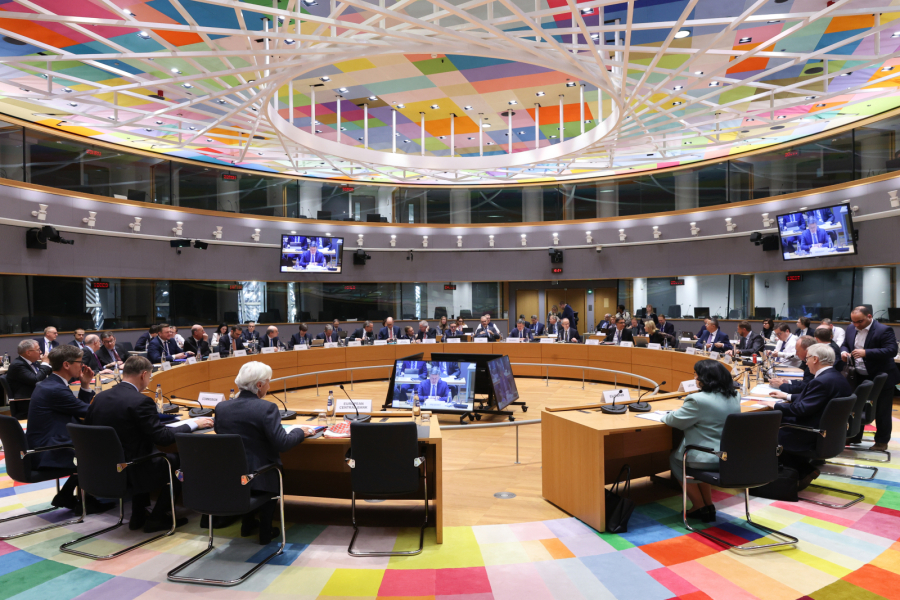
European Union finance ministers are set to debate on Thursday whether a proposed fiscal escape clause for energy should be used exclusively to accelerate investment or also allow governments to fund emergency relief for households and businesses grappling with high energy costs.
The discussion at the Eurogroup meeting is expected to expose a growing divide between member states with sufficient fiscal room to finance long-term projects and those arguing that immediate economic support should take priority amid continuing energy market pressures.
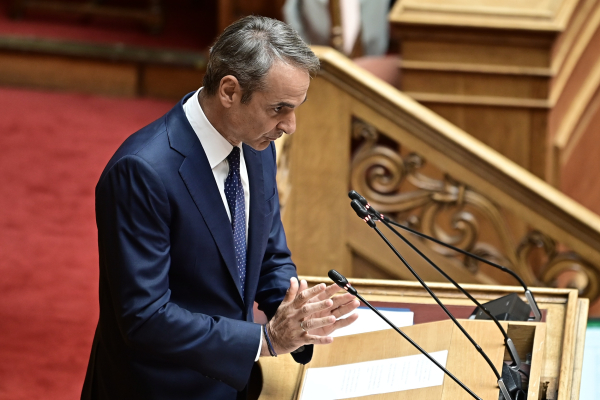
Greece has emerged as one of the strongest advocates for using the mechanism solely to boost investment. Finance Minister Kyriakos Pierrakakis, who also chairs the Eurogroup, has argued that the temporary fiscal flexibility should strengthen Europe’s long-term economic resilience rather than finance short-term consumption measures.
Speaking this week, Pierrakakis estimated that Greece could spend the equivalent of 0.6% of its gross domestic product—around €1.6 billion—on investment projects between 2026 and 2028 without those expenditures being counted toward the country’s budget deficit under the proposed framework.
He acknowledged that such spending would not provide immediate relief to households facing elevated energy bills but argued that investments in infrastructure and productive capacity would make European economies more resilient to future shocks while supporting employment and wage growth.
Not all governments share that view. Several countries constrained by high deficits and the European Union’s recently reinstated fiscal rules are expected to push for greater flexibility, arguing that they lack the budgetary space to support businesses and consumers unless the escape clause also covers emergency aid.
For those governments, the proposal announced last week risks benefiting only countries already in relatively strong fiscal positions. While nations such as Greece could use the exemption to expand investment without breaching deficit targets, more indebted members would remain unable to provide either substantial investment or direct economic support.
Supporters of a broader interpretation contend that fiscal relaxation should address exceptional circumstances rather than finance expenditures with permanent characteristics. They point to the EU’s separate defense spending exemption, which allows increases in military expenditure to be excluded from deficit calculations in order to accelerate the bloc’s rearmament.
Under the same logic, they argue, countries should be free to tailor the energy escape clause to their own needs. Governments with fiscal capacity could channel the flexibility into investment projects, while those under greater financial strain should be permitted to use it for temporary measures that cushion households and businesses from the effects of the energy crisis.
The outcome of Thursday’s discussions could shape not only how member states respond to persistent energy challenges but also whether the European Union can maintain a unified economic strategy. Without a compromise, officials warn, the bloc risks operating at two different fiscal speeds, potentially widening economic disparities and weighing on growth prospects through 2026 and 2027.