A Greek government-backed agreement to cut supermarket prices is at risk of unraveling before it takes effect, as renewed tensions in the Middle East threaten to push up energy, transportation and raw-material costs.
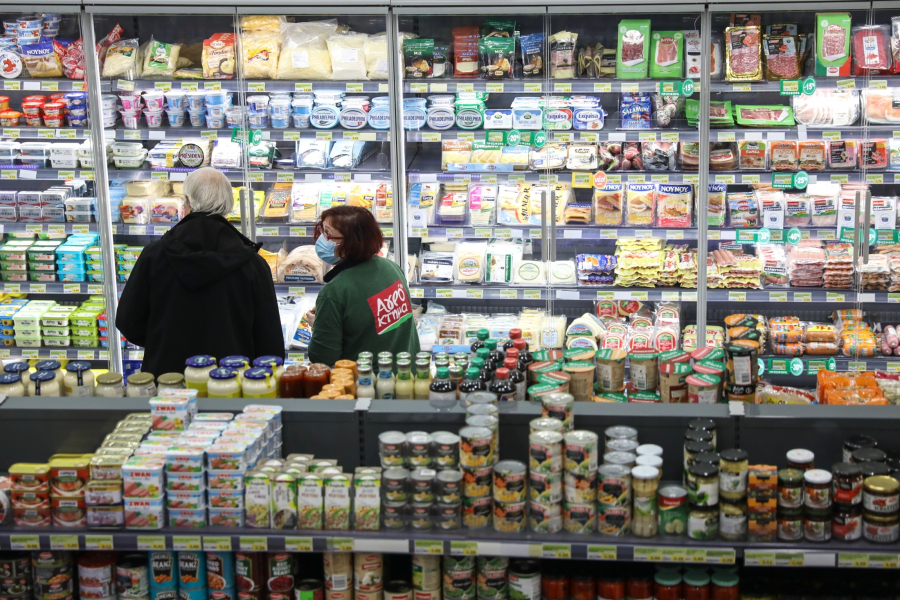
Until recently, the plan was presented as the government’s main response to persistent food inflation and the broader cost-of-living squeeze. It called for manufacturers and major supermarket chains to make voluntary price reductions of at least 5% on selected essential goods from Aug. 31.
But industry executives say the assumptions underpinning the agreement have already been overtaken by events. Growing uncertainty over global oil prices has altered the economic backdrop, leaving companies reluctant to commit to reductions that could prove difficult to sustain.
ΔΙΑΒΑΣΤΕ ΕΠΙΣΗΣ



The original arrangement was reached after discussions among the government, food producers and organized retailers. Executives involved in the market say the talks were difficult, with disagreements centering less on whether companies would participate than on the scale of the reductions.
A five-percent cut carries a substantial cost for producers and retailers operating on thin margins, they say, while deeper reductions would be considerably harder to absorb. That calculation has become more challenging as businesses confront the possibility of higher fuel, logistics and production expenses.
Some industry officials now describe the agreement as effectively outdated before its implementation. They say the earlier projections were based on a more stable international environment, while companies can no longer forecast operating costs with confidence.
Oil prices are expected to be the decisive factor in determining whether the initiative goes ahead, how large the reductions will be and how long they can remain in place.
Even executives who still believe the plan can be implemented have become more cautious. Market estimates suggest that average reductions are unlikely to exceed 6% to 7%, with the size of the discount varying across product categories depending on energy costs and conditions in international commodity markets.
The duration of the program is also uncertain. Retail executives say lower prices will be difficult to maintain unless production and operating costs ease. They also argue that, without reductions in Greece’s value-added tax or other charges, any relief offered at the checkout is likely to be temporary.
The issue is politically sensitive in Greece, where households have faced sharp increases in food and energy costs in recent years. The government has sought to demonstrate that it can secure visible reductions in the prices of everyday goods without imposing broad price controls.
Regulators, meanwhile, are continuing inspections across the retail market. Further fines are expected in the coming weeks in cases where authorities find violations of pricing or consumer-protection rules.
Government officials say the initiative will be judged by actual, measurable reductions in the prices of essential goods, rather than by corporate pledges or promotional announcements.
Whether the original agreement will be revised or adapted to the new conditions is expected to become clearer in the coming weeks. For now, retailers and manufacturers say the international outlook has already changed the terms of the debate, leaving in doubt a plan that only days ago appeared settled.