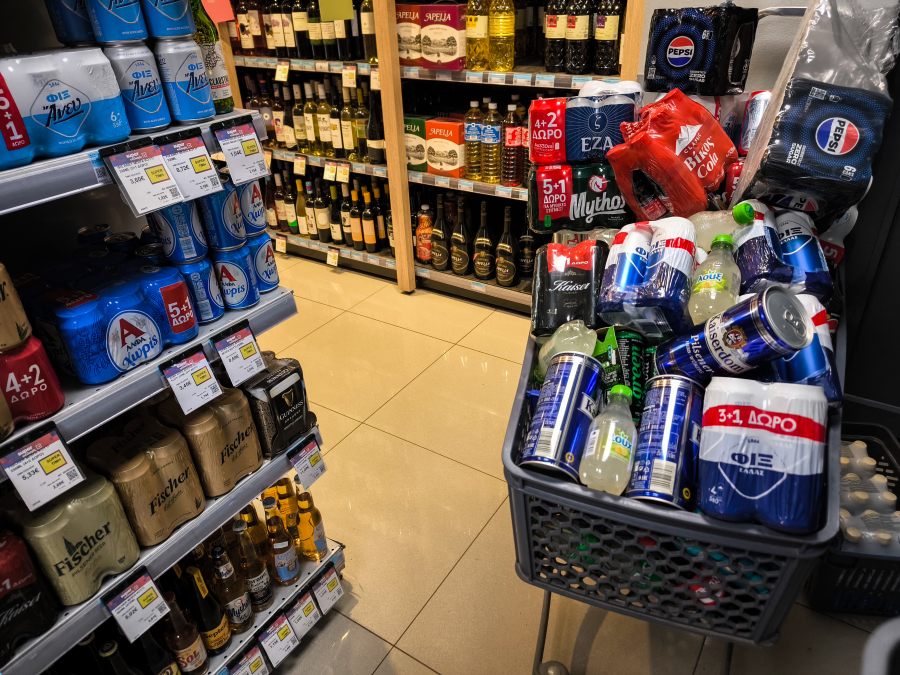
Greece is rolling out price cuts on roughly 1,500 supermarket products in its latest effort to ease a prolonged cost-of-living squeeze, though the reductions consumers ultimately see in their weekly grocery bills may prove more modest than the headline numbers suggest.
The second and main phase of the government-backed National Initiative for Price Reductions takes effect Monday, bringing together manufacturers, suppliers and supermarket chains in a voluntary effort to lower prices on everyday goods.
Participation has exceeded the initial target of 1,000 product codes, with the final number expected to approach 1,500. But the key question for Greek households is how much those reductions will actually save them at the checkout.
So far, the average price cut is around 7%, near the lower end of the targets set for the initiative.
About 800 of the participating codes are branded products supplied by 70 companies, excluding meat and school supplies. They include packaged foods, personal-care and hygiene products and household essentials. Their average price reduction is about 7%.
Private-label products offer somewhat bigger savings. Around 200 were initially included, with more expected to join, and their average price reduction stands at roughly 10%. That could make supermarket own-brand goods increasingly attractive to households looking to stretch their budgets.
Meat is another focus of the program after sharp price increases over the past two years, particularly for beef, lamb and goat. Thirty meat products have been included with an average reduction of 6%, while supermarket chains are expected to contribute additional discounts.
The initiative also covers roughly 350 school-supply products, with prices falling by an average of 7% as families prepare for the new school year.
Under the agreement, each participating product must remain at its reduced price for at least two months. The overall program will run through Dec. 31, 2026, with the product list eligible to be refreshed after the first two months.
Products will carry special labels in stores, while consumers will also be able to track them through Greece’s “Poso Kanei,” or “How Much Does It Cost,” digital price-comparison platform. The service allows shoppers to examine previous price movements, an important tool for determining whether a discount represents a genuine reduction or simply reverses an earlier increase.
That distinction will be central to judging the program’s effectiveness. A 7% average reduction on participating products doesn't mean a household’s total supermarket bill will fall by the same amount. The initiative covers only part of a typical shopping basket, and the savings will vary depending on what each household buys.
For Athens, the coming months will test whether voluntary cooperation with retailers and suppliers can provide tangible relief without broader price controls.
For consumers, the calculation is simpler. The success of the initiative won't be determined by whether 1,500 products carry lower price tags, but by whether those reductions are large and widespread enough to make a visible difference on supermarket receipts.