Finance officials are settling the main elements of the package while leaving several decisions open until shortly before the prime minister’s speech. The measures are expected to have a fiscal cost of roughly €1.5 billion in 2027. Including additional investment in energy infrastructure, the broader package could exceed €2 billion.
The plan comes as the Mitsotakis government seeks to translate Greece’s improved fiscal position into more tangible gains for households and businesses, while preserving the budget discipline that has helped restore the country’s standing with investors after the sovereign-debt crisis of the previous decade.
The package is taking shape around six main measures, with two additional areas—housing and energy—where the final scope has yet to be determined.
One of the most consequential changes concerns Greece’s system for taxing self-employed workers based on a presumed minimum income. Rather than abolishing the framework, the government is considering targeted relief for taxpayers who demonstrate consistent compliance.
Under the proposal, authorities could take into account the use of digital tax-reporting tools, connections between businesses and point-of-sale terminals, participation in the myDATA electronic bookkeeping system, electronic invoicing and the timely payment of tax and social-security obligations. Greece’s Independent Authority for Public Revenue, known by its Greek acronym AADE, has increasingly relied on such digital systems as part of a broader effort to curb tax evasion.
The presumed-income regime currently generates about €500 million a year for the state. Following the planned adjustments, annual revenue could fall to between €300 million and €350 million, according to current estimates.
A second measure under consideration would reduce advance tax payments required from the self-employed and businesses. Greece requires taxpayers to prepay part of their expected tax liability for the following year, a mechanism that has long been criticized by businesses for weighing on liquidity.
Officials are considering a further reduction in the rate for self-employed workers, while businesses could receive relief gradually over several years. More ambitious proposals, including cutting the corporate income-tax rate to 20% from 22% and eliminating the annual business levy for legal entities, don’t currently appear to be part of the core package.
The government is also preparing another reduction in social-security contributions, this time by half a percentage point. The remaining question is who receives the benefit. One option would divide the reduction equally between employers and employees. Another would allocate the entire cut to workers, providing a more immediate increase in take-home pay.
Wages represent another central part of the package. The government is preparing a further increase in the statutory minimum wage, which is expected to move toward €950 a month and could rise above that level. Because Greece has established a mechanism linking minimum-wage increases to public-sector pay, the decision would have implications beyond private-sector workers.
Officials are also considering raising the daily ceiling for tax-advantaged meal vouchers, another measure aimed at increasing employees’ disposable income.
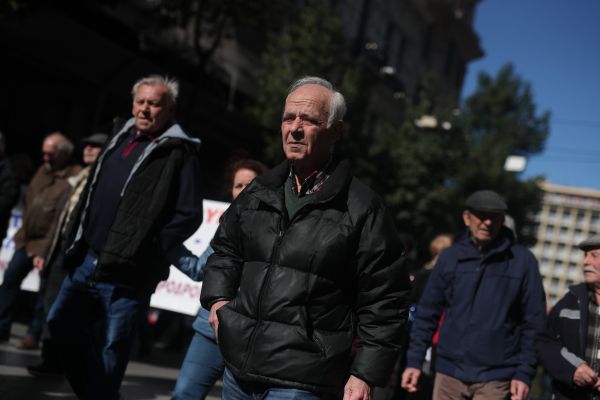
Pensioners are expected to receive a separate set of benefits. The government’s annual November payment is regarded as certain to continue, while officials are considering either increasing the amount or loosening eligibility criteria to bring more retirees into the program.
Changes are also being examined to Greece’s Pensioners’ Solidarity Contribution, a levy on higher pensions. The objective would be to address distortions in the current system that can leave some retirees facing disproportionately large deductions as their pension income crosses certain thresholds.
Families and farmers make up the sixth major component of the plan. For households, the government is examining additional tax relief, with particular emphasis on families with three children, as well as income-tested support linked to the number of children. A reduction in value-added tax on selected baby products has also been discussed.
Farmers, meanwhile, are expected to receive a separate tax intervention. The government is also seeking to accelerate the distribution of agricultural subsidies and ensure a smoother flow of payments, an increasingly sensitive issue for the sector.
Beyond those six measures, housing remains one of the biggest unresolved pieces of the package. Greece has experienced mounting affordability pressures as rents and property prices have risen sharply, particularly in Athens and other areas with strong tourism or investment demand.
Officials are considering another housing program modeled on the government’s “My Home” initiative, which has sought to help younger households purchase property through subsidized financing. Athens is also weighing extensions to tax incentives designed to bring vacant homes back onto the market, encourage long-term rentals and support new residential construction.
Energy investment forms the other major area still under discussion—and potentially one of the largest in financial terms.
Using additional fiscal flexibility available under European Union rules, the government plans to channel more than €1 billion through 2028 into electricity networks, energy-storage facilities, cross-border and domestic interconnections, renewable-energy projects and improvements to the energy efficiency of buildings.