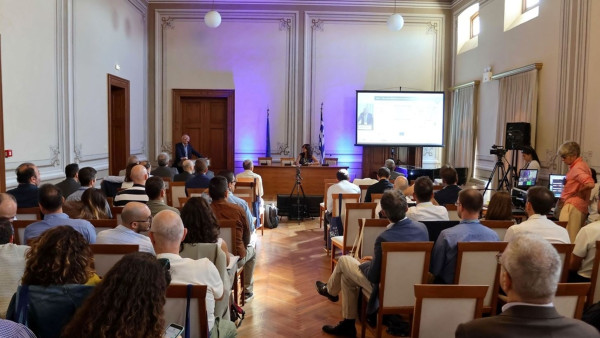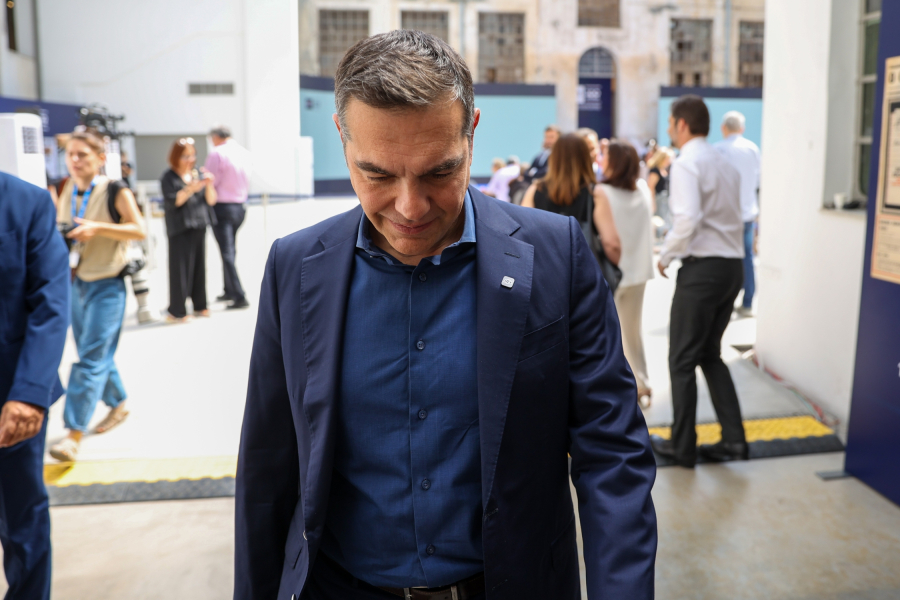

Speaking at the 7th OT Forum in Athens on Friday, Tsipras said the choice facing voters was “not stability or chaos, but stagnation or progress, corruption or honesty,” sharpening his criticism of Mitsotakis as speculation grows over the shape of the country’s next electoral battle.
“I’m pleased by the arrogance with which Mr. Mitsotakis treats me,” Tsipras said, referring to comments made by the prime minister in a recent interview. “Fortunately, there is no honesty meter, because the prime minister would have reduced it to zero.”
Tsipras argued that public frustration with corruption has become as significant as concerns over inflation and living standards, claiming that for the first time since Greece’s return to democracy in 1974, the quality of democratic institutions will weigh alongside economic issues in voters’ decisions.
The former premier outlined what he described as five priorities for a future government, placing the cost-of-living crisis and high energy prices at the top of the agenda. He also proposed measures to tackle Greece’s housing shortage, including the creation of a public agency that would acquire distressed mortgage loans from investment funds and allow borrowers to repurchase them at prices closer to what the funds originally paid.
Among his proposals were free public transportation in major urban areas, the abolition of Greece’s nationwide university entrance examinations in favor of a new admissions model, and substantial pay increases for doctors, nurses and teachers.
Tsipras dismissed government claims that the Greek economy represents a success story, arguing that growth has disproportionately benefited wealthier groups while investment has flowed primarily into speculative real estate rather than productive sectors.
“Tax cuts have benefited an elite,” he said, adding that much of the investment entering the country seeks short-term returns instead of strengthening the broader economy.
Reflecting on his own political career, Tsipras acknowledged defeats in the 2019 and 2023 elections but said he had stepped aside voluntarily after leaving office and had no interest in revisiting past battles. Instead, he said his focus was on presenting an alternative to Mitsotakis after seven years of New Democracy rule.
“The greatest mistake is believing that by following the same recipe you can produce different results,” he said.
He also called for greater transparency in public procurement, proposing the use of interconnected digital platforms and artificial intelligence to automatically identify suspicious government contracts and make potential irregularities visible to the public.
Despite criticism that has followed his own time in office, Tsipras defended his personal record, insisting that politicians should not all be viewed through the same lens.
“I grew up in a working-class neighborhood. I entered politics because I believed it could change things,” he said. “Those who say we are all the same are often those engaged in wrongdoing. We are not all the same.”
Looking ahead, Tsipras argued that Greece’s fragmented opposition must broaden its appeal if it hopes to challenge the governing conservatives. He predicted that the next election would be far more competitive than the government expects, saying Mitsotakis “knows he will lose the second ballot” and pledging that his movement would also fight to defeat him in the first.