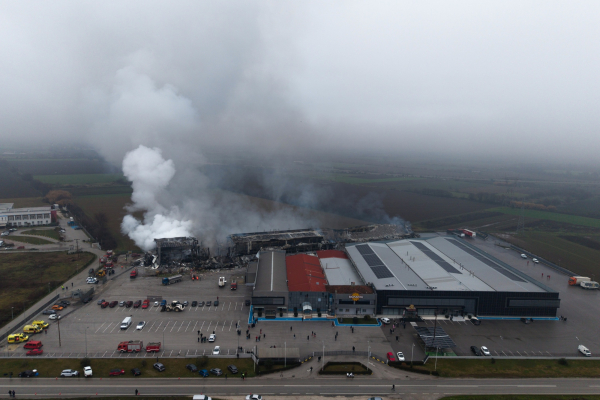
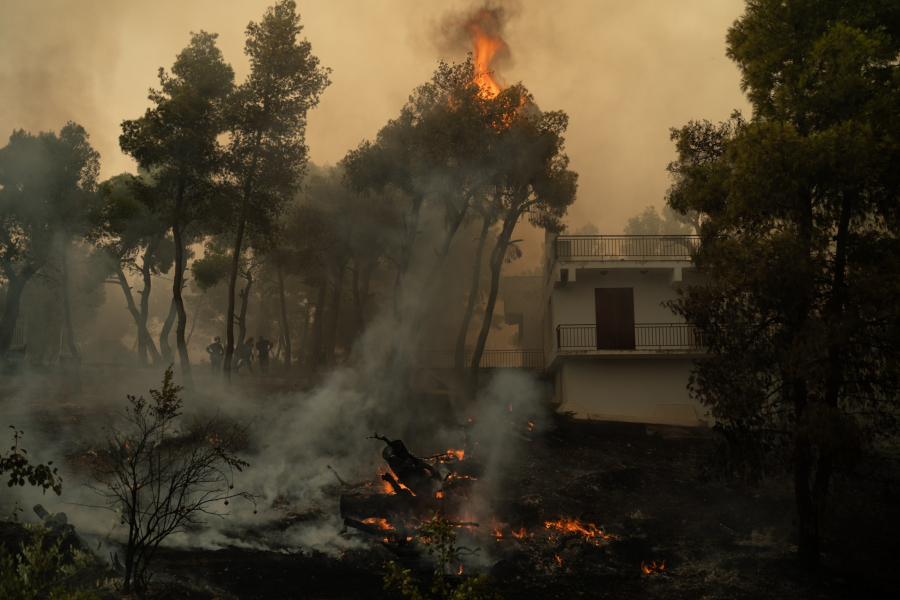

Deadly wildfires sweeping Greece have reignited a long-running debate over whether the country has moved too slowly to place electricity distribution networks underground, as pressure mounts for greater investment in infrastructure designed to withstand increasingly severe climate conditions.
Municipal leaders, engineers and residents argue that a faster rollout of underground power lines over the past decade could have reduced the risk of fires linked to faults in overhead electricity networks while also limiting the widespread power outages that often accompany wildfires and extreme weather.
The renewed scrutiny comes as Greece faces another destructive fire season, bringing fresh attention to the pace of infrastructure upgrades and the level of public investment directed toward modernizing the country's electricity distribution system.
ΔΙΑΒΑΣΤΕ ΕΠΙΣΗΣ


Data compiled from Greece's Central Electronic Public Procurement Registry show that the Hellenic Electricity Distribution Network Operator (HEDNO, known locally as DEDDIE) has signed 53 contracts for underground electricity network projects with a combined contractual value of nearly €14 million, excluding VAT. The projects primarily involve replacing overhead distribution lines with underground infrastructure, improving the appearance of urban areas, supporting broader urban redevelopment initiatives and strengthening the resilience of the electricity network.
The projects are spread across both mainland Greece and the country's islands. Contracts have been awarded in northern regions including Edessa, Veria, Pella and Kastoria, while western Greece has seen projects in Patras, Western Achaia, Trifylia, Kalamata and Sicyon. Additional works have been contracted in Ioannina and Parga, as well as in the Athens metropolitan area, where several projects are underway in the municipality of Koropi.
Crete accounts for a significant share of the investment. Undergrounding projects have been commissioned in Archanes-Asterousia, Chania, Rethymno, Agios Nikolaos and Phaistos, as well as in Atsipopoulo, Matala and the Lenikos area, combining network upgrades with urban improvement initiatives. Other projects are located in Xiromero, while island interventions also include Paros, through the Paros-Antiparos Municipal Port Fund, and Platanias in Chania. References to Kashgar that appeared in earlier material are not reflected in the official procurement records and are not part of the contracted projects.
HEDNO rejects claims that the electricity distribution network is a major driver of Greece's wildfire outbreaks. The operator says its crews have been deployed to every major fire front, assisting emergency services while restoring electricity supply to affected communities. It also argues that public allegations linking the network to wildfires are frequently made without supporting evidence, creating a misleading picture of the causes of the fires.
The company points to data from Greece's National Coordination Center for Operations and Crisis Management, which indicate that only about 1% of wildfire incidents recorded in 2025 were attributed to the electricity network. HEDNO says that figure compares favorably with international benchmarks, citing the United States, where roughly 3% of wildfires are linked to electrical infrastructure.