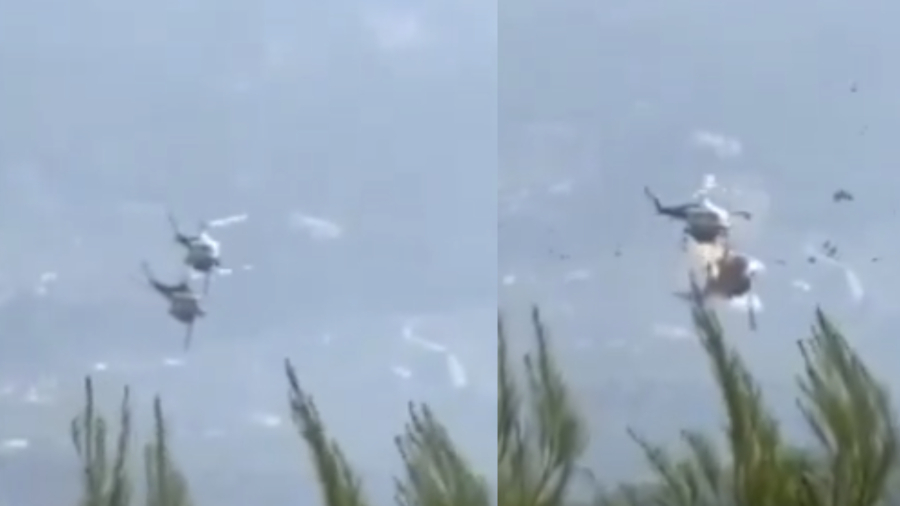

The crash, which killed the two crew members aboard one of the helicopters, has drawn renewed scrutiny to the agreement between Greece's Ministry of Climate Crisis and Civil Protection and AK Aviation Support, the contractor responsible for supplying the firefighting aircraft.
The contract devotes significant attention to insurance requirements, reflecting the risks inherent in aerial firefighting. Under its terms, the contractor was required to maintain insurance covering death, bodily injury and damage to third parties arising from flight operations. Proof of coverage was submitted to the General Secretariat for Civil Protection when the agreement was executed, and the contract specifies that the scope of the insurance could not be reduced or otherwise modified for the duration of the lease.
The agreement also outlines the allocation of liability should an accident be found to have resulted from negligence or other acts giving rise to civil liability. If an official investigation concludes that such circumstances existed, the Greek state reserves the right to seek compensation from the contractor or any subcontractor for injuries, fatalities or property damage, in accordance with the contract and applicable law.
ΔΙΑΒΑΣΤΕ ΕΠΙΣΗΣ



Insurance coverage was required to remain in force throughout the lease period for both those aboard the aircraft and third parties. The helicopters also had to maintain valid certificates of airworthiness, while pilots and maintenance personnel were required to hold all licenses and certifications mandated under applicable aviation regulations.
Operational responsibility rested with the air operator flying the helicopters, which was obligated to ensure compliance with all regulatory requirements governing licensing, certification and flight operations. Beyond its insurance obligations, the contractor also committed to implementing prescribed safety measures and accident-prevention procedures to protect its own employees, members of the Hellenic Fire Service and others participating in firefighting missions.
The agreement does not, however, contain a provision specifically addressing the possibility of two leased helicopters colliding during the same operation. Instead, it relies on broader contractual obligations related to flight safety, insurance and civil liability rather than establishing a dedicated framework for such an exceptional scenario.
While the contract requires comprehensive insurance coverage, it does not disclose policy limits or the compensation available to flight crews or their beneficiaries. Those terms are governed by the underlying insurance agreements and are likely to become public only through the official investigation or any subsequent legal proceedings.