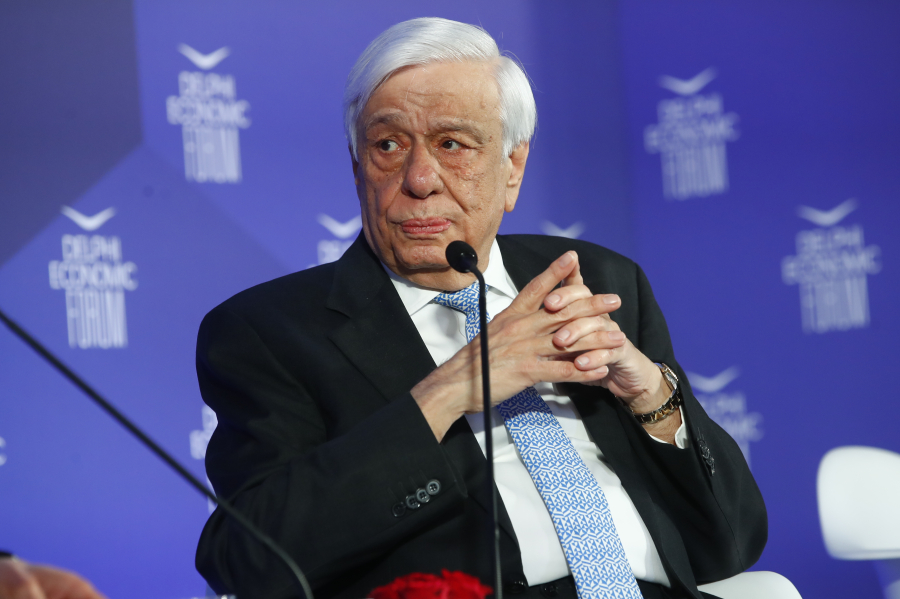
Former President of Greece, Prokopis Pavlopoulos, delivered an address at a public event in Athens organized by two professional bodies representing constitutional law scholars and public administration experts. The discussion focused on the need for sweeping reforms in the structure and functioning of the Greek state.
In his remarks, Pavlopoulos placed particular emphasis on what he يرى as an increasing concentration of power in central government in recent years. He argued that reforms introduced under the so-called “executive state” model, established by a 2019 law, have further weakened local governance and decentralization—areas that had already been significantly reduced by earlier reforms a decade ago.
He concluded by turning to concerns about the rule of law in Greece, citing the handling of a major wiretapping scandal that has dominated public debate. The case involves allegations that politicians, journalists, and other public figures were placed under surveillance. Pavlopoulos criticized both the government and elements of the judiciary, following a decision by prosecutors not to reopen the case. He argued that, even if mistakes were made unintentionally, the outcome risks leaving serious violations—particularly of the constitutional right to privacy of communications—effectively unaddressed. He added that the issue is especially troubling because it touches the core of democratic institutions, given that elected officials and media figures were among those reportedly monitored.
At the same time, opposition leader Nikos Androulakis announced that his party, PASOK, plans to formally request a parliamentary investigation into the affair in early May. Speaking in a television interview, he expressed hope that other political parties would support the initiative.
Androulakis also said that, if the inquiry proceeds, it will seek testimony from Tal Dilian, the businessman linked to the Predator spyware allegedly used in the surveillance operations. He argued that, since prosecutors have not pursued key questions—including claims made by Dilian—the responsibility now lies with parliament to investigate. According to Androulakis, the inquiry will aim to determine whether the spyware was sold to or used by the Greek state. He further accused Prime Minister Kyriakos Mitsotakis of undermining institutional safeguards and the balance of powers in the country.