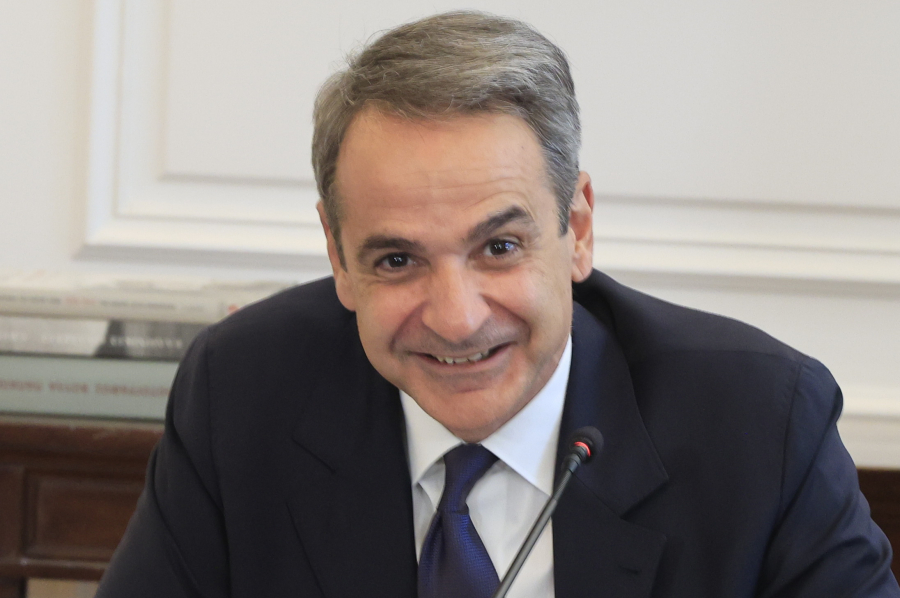
Greece’s ruling New Democracy is facing a sharp drop in support as voters grow increasingly frustrated with the economy and a string of political scandals, according to a new opinion poll that underscores a broader crisis of confidence in Prime Minister Kyriakos Mitsotakis’s government.
The survey, conducted by Metron Analysis and broadcast on MEGA television, paints a picture of a country turning decisively pessimistic. Two-thirds of respondents say Greece is heading in the wrong direction, while nearly half report their personal financial situation has worsened — a stark contradiction to government claims that economic conditions are improving after years of crisis and recovery.
The findings suggest that economic pressures, particularly the cost-of-living crisis, remain the dominant concern for voters. But they also point to mounting unease over governance and institutional integrity, following repeated allegations of corruption involving senior figures linked to the ruling party. Together, these factors appear to be eroding the government’s legitimacy in the eyes of the public.
That erosion is reflected in strikingly negative approval ratings: 71 percent of respondents express an unfavorable view of the government, and 69 percent hold a negative opinion of Mitsotakis himself. While his administration still performs relatively better in foreign policy, voters give it poor marks across most other areas, and confidence in the economy continues to decline.
The political opposition has yet to capitalize decisively on the government’s troubles. The center-left PASOK, led by Nikos Androulakis, remains viewed skeptically by much of the electorate, although the poll records a modest uptick in positive sentiment. Still, no opposition force has emerged as a clear alternative, leaving Greece in what analysts describe as a transitional political moment.
Voters appear broadly supportive of Greece’s participation in European institutions, including the European Public Prosecutor’s Office, despite criticism from some government officials such as Health Minister Adonis Georgiadis.
On foreign policy, respondents show a strong preference for closer ties with France and maintain relatively favorable views of China, while attitudes toward the United States are more negative. A majority also opposes recent U.S. and Israeli military actions against Iran.
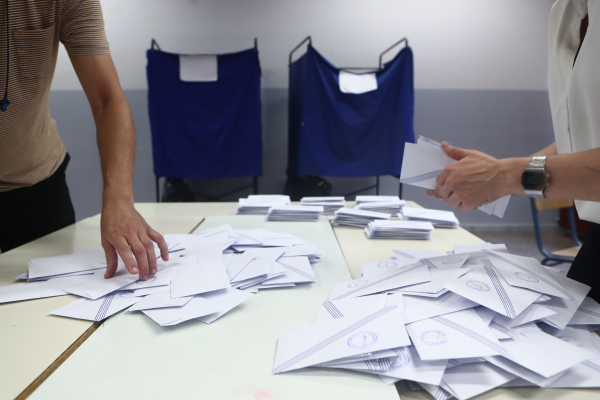
At home, dissatisfaction is translating into fluid and fragmented political preferences. New Democracy’s support has slipped to just over 21 percent in voting intention, with projections suggesting it would struggle to surpass 28 percent in an election — far below the level needed for a single-party majority. Smaller parties on both the left and right are gaining ground, while the share of undecided voters is rising.
The poll also highlights an appetite for political change that cuts across ideological lines. Significant portions of the electorate favor early elections and coalition governments, particularly among centrist and left-leaning voters. At the same time, many Greeks express a sense of exclusion from the political and economic system, especially among working-class, rural and small-business communities.
Complicating the picture further is the potential emergence of new political actors. A hypothetical new party led by former prime minister Alexis Tsipras could attract notable support, particularly from left-wing voters, while a possible movement associated with public figure Maria Karystianou shows even broader appeal across the political spectrum, according to the survey.