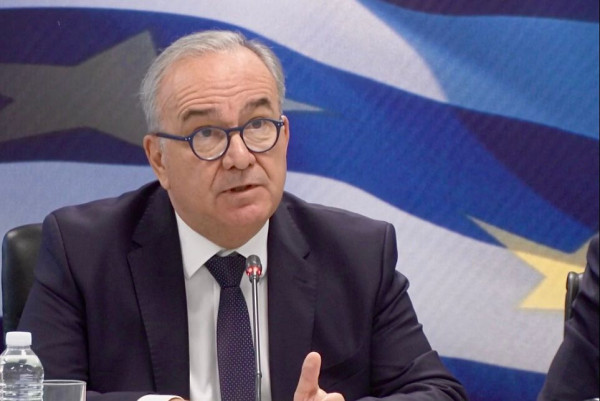
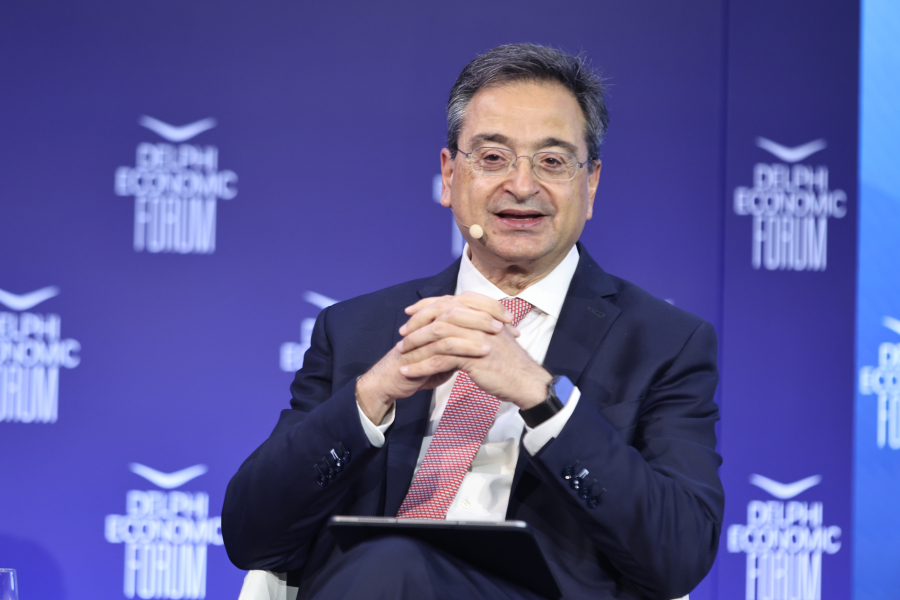
Speaking at the bank’s annual general meeting, Fokion Karavias framed Greece’s recent economic progress as the product of deliberate policy choices rather than favorable circumstances. He stressed that fiscal restraint and strict banking oversight remain essential, pushing back against calls for looser policies at a time when geopolitical tensions and inflation risks are reshaping the global outlook.
“Resilience in times of crisis is built during periods of stability,” Karavias said, arguing that criticism of Greece’s fiscal and banking framework appears increasingly misplaced under current conditions. Any retreat from discipline, he suggested, would prove short-lived and potentially risky.
His remarks come as the international environment grows more volatile. Karavias pointed to ongoing conflict in the Middle East as a key driver of higher energy prices, which in turn are weighing on global growth while stoking inflation. The combined effect, he warned, raises the specter of stagflation—a particularly difficult scenario for central banks. In that context, Europe appears more exposed than the United States, he added.
Against this backdrop, Eurobank reported strong financial results for 2025, with net profits reaching €1.36 billion and return on equity at 16%, exceeding internal targets. Karavias said the performance reflected a strategy focused on organic growth, diversification of income streams and continued investment in technology.
The bank has also made progress in strengthening its balance sheet. Non-performing exposures have fallen to 2.6%, supported by robust provisioning, while capital levels have improved. Karavias highlighted ongoing efforts to reduce reliance on deferred tax credits, with the aim of eliminating them sooner than initially planned.
A growing share of Eurobank’s earnings now comes from outside Greece, particularly from operations in Cyprus and Bulgaria—an indication of the group’s broader regional strategy. Karavias said this international footprint positions the bank to better absorb shocks and capitalize on opportunities beyond its home market.
Looking ahead, he outlined a three-year plan through 2028 that targets further efficiency gains and increased returns to shareholders. Investment in artificial intelligence and digital infrastructure will remain a priority, alongside financing initiatives aimed at supporting business investment.
“Increasing investment must become the guiding star of economic policy,” he said, linking higher capital spending to improvements in productivity and income growth.
George Zannias, the bank’s chairman, echoed the theme of resilience, describing uncertainty as a “new normal” for the global economy. He emphasized that tighter regulatory oversight has made the banking system more stable and credible, while also underscoring the importance of strong corporate governance and independent boards.
Despite external pressures, Zannias said Greece continues to outperform the broader eurozone, pointing to fiscal improvements and declining unemployment as signs that the country’s recovery remains on track.