
Greece’s booming maritime tourism sector is increasingly exposing a stark imbalance between environmental cost and public revenue, raising concerns that one of Europe’s most sought-after yacht destinations is failing to protect its waters while underselling their economic value.
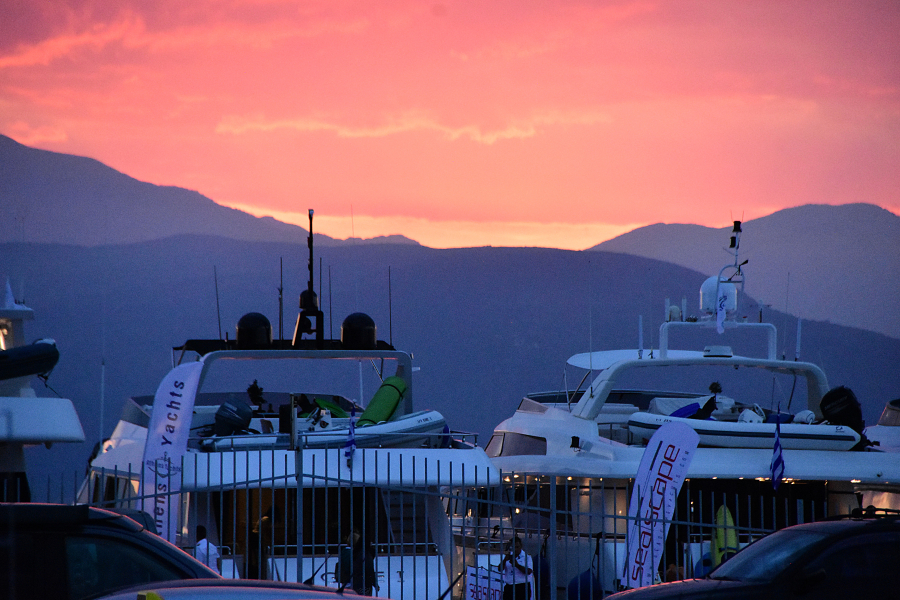
The country now attracts close to a quarter of global mega yacht traffic, a figure that underscores its appeal but also amplifies the strain on its coastal ecosystems. Nowhere is that pressure more visible than beneath the surface. Scientists have been sounding the alarm over the degradation of Posidonia seagrass meadows — a cornerstone of the
Mediterranean marine environment that plays a critical role in carbon absorption and biodiversity. The damage is largely driven by the repeated anchoring of large vessels, whose chains scrape across the seabed, uprooting vegetation and leaving behind barren patches that can take decades to regenerate.
In some of Greece’s most popular anchorages, particularly across the Cyclades and the Ionian Sea, the ecological toll is already evident. Marine experts warn that the cumulative impact of unchecked anchoring is pushing certain areas toward irreversible decline. Efforts to introduce organized mooring systems are often presented as a solution, but they come with trade-offs. By concentrating vessels in designated spots, these systems risk intensifying pollution and environmental stress at a local level rather than eliminating it.
Yet while the environmental cost is mounting, the financial returns to the Greek state remain strikingly low. Under the current framework, leasing fees for maritime areas are capped at just €20 per stremma annually — roughly equivalent to one acre — with some agreements falling to as little as €3. Compared to other Mediterranean destinations, where fees are significantly higher and often linked to operators’ revenues, Greece’s pricing structure appears outdated and fragmented.
The discrepancy is particularly evident when looking at the cost of mooring for yacht owners. In Italy, a 26-meter vessel can expect to pay up to €900 for a three-day stay at an organized anchorage. In Croatia, daily fees typically range between €45 and €75. In Greece, however, the absence of a standardized pricing system creates a murky landscape, obscuring both the true value of the activity and the potential income lost to the public purse.
Compounding the issue are concerns over how maritime concessions are awarded. Critics point to fast-track procedures that bypass competitive tenders, raising questions about transparency and whether the state is securing fair value for the use of its coastal assets. The result is a system in which high-value tourist zones are effectively leased at bargain rates, even as they absorb growing environmental damage.
For policymakers in Athens, the challenge is becoming harder to ignore. Balancing the economic benefits of a thriving yacht industry with the need to safeguard fragile marine ecosystems will require more than incremental adjustments. Without a clearer regulatory framework and a reassessment of how these waters are valued, Greece risks undermining both its environmental credibility and its long-term tourism model.