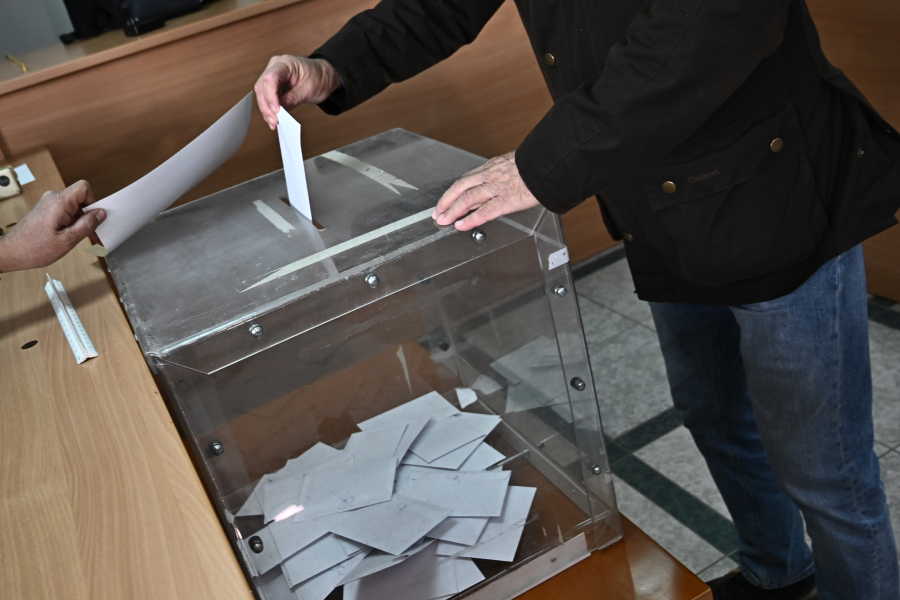

The timing of Greece’s next national election is quietly shaping not just the political calendar but the country’s fiscal strategy, determining when and how billions in surplus funds could reach households and businesses.
At the center of the debate are two competing scenarios: elections in November 2026 or a delay until early 2027. The difference is more than procedural. It affects the deployment of a €1 billion surplus generated in 2025, a sum that has become both an economic lever and a political signal.
If voters head to the polls in late 2026, the government faces a tight fiscal bind. Under European spending rules, Athens is expected to have no more than €150 million to €200 million in additional room for new measures that year. That constraint makes a sweeping package of immediate benefits unlikely. Instead, policymakers would likely split their approach, directing limited funds toward targeted relief—primarily for vulnerable households—while using the bulk of the surplus to outline future tax cuts or spending increases set to begin in 2027.
In that scenario, the annual Thessaloniki International Fair, traditionally the stage for major economic announcements, would take on outsized importance as a pre-election platform. Officials are expected to present a hybrid package: modest, near-term support paired with more ambitious pledges for the following year. The €1 billion surplus would feature prominently in those promises, even if its actual deployment remains legally constrained until after the election.
The 2027 budget, due to be submitted in October 2026, would effectively double as a campaign document. It would detail permanent measures financed by the surplus, offering voters a preview of policies that have yet to take effect. The sequencing would be clear—limited action before the vote, expansive commitments during the campaign, and implementation afterward.
A shift of the election into early 2027 would produce a different rhythm. In that case, 2026 becomes a year of preparation rather than delivery, with small-scale, targeted measures constrained by fiscal limits. The heavier economic stimulus would then be reserved for 2027, allowing the government to align policy rollout more closely with a new electoral mandate.
This alternative timeline is shaped in part by Greece’s upcoming role on the European stage. The country is set to assume the rotating presidency of the Council of the European Union in the second half of 2027, a period that requires political stability and administrative continuity. Holding elections close to—or during—that window is widely viewed as risky, raising the prospect of governance gaps at a time when Athens would be expected to coordinate sensitive negotiations among member states.
As a result, even in a 2027 election scenario, the vote would likely be held no later than early summer, with the first quarter emerging as the most probable window. That timing would allow a new government to be fully established before the European presidency begins.
Under this framework, some fiscal measures could be introduced at the start of 2027, serving as a bridge between the campaign period and the next administration. The surplus would provide room for early, targeted interventions, potentially rolled out just before or shortly after the election.
Still, a full-scale deployment of benefits is unlikely to come in one wave. The need to maintain fiscal discipline ahead of Greece’s European responsibilities points to a staggered approach. Initial measures could be launched early in the year, with a more substantial rollout deferred to the second half of 2027, smoothing the impact on public finances while preserving political flexibility.