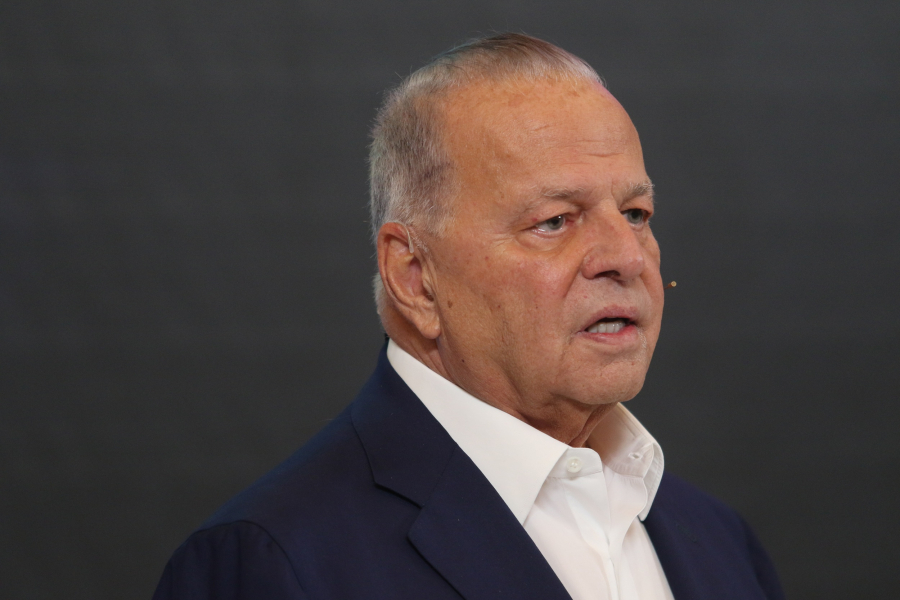

The strategic importance of closer cooperation between Greece and France, as well as the broader need for Europe to adapt to a rapidly changing geopolitical landscape, was underscored on Saturday by Evangelos Mytilineos, Executive Chairman of Metlen. Speaking at the Hellenic-French Economic Forum, titled “Together for a Stronger and More Competitive Europe,” he focused particularly on the evolving role of Europe’s defense industry.
Mytilineos emphasized that industrial collaboration between Greece and France is not a temporary alignment but the result of deep-rooted historical ties. Relations between the two countries, he noted, extend back to the early 19th century and have evolved into a strategic partnership that now carries significant geopolitical and economic weight within Europe.
Addressing the shifting security environment, he argued that Europe is entering a new phase in which it can no longer rely on the traditional framework of NATO to the same extent as in the past. The long-standing model—where the United States provided the majority of military support and equipment to European allies—is changing fundamentally. According to Mytilineos, this shift is irreversible and requires European nations to assume greater responsibility for their own defense capabilities.
In this context, he suggested that bilateral and regional partnerships will become increasingly important. Cooperation between Greece and France, he said, already offers a practical example of how such alliances can function and could serve as a blueprint for wider European defense integration.
He also pointed to developments in the Eastern Mediterranean, particularly in relation to Cyprus, as evidence of the need for stronger European coordination. The swift response by Greece and France in recent situations highlighted both the value of existing partnerships and the importance of reinforcing collective defense mechanisms within the European Union.
Mytilineos referred to ongoing collaboration with Naval Group, a major French shipbuilder, noting that while cooperation has progressed significantly—especially in preparations for an additional frigate—earlier engagement could have delivered even greater results. He indicated that there is now a solid foundation for expanding this partnership further.
Turning to submarine programs, he highlighted Greece’s industrial capabilities, recalling that a German-designed submarine was effectively constructed in the Greek city of Volos around two decades ago. These assets, he said, remain strategically important for maintaining stability in the Aegean region. He added that Greece is expected to move forward with new submarine acquisitions, although final decisions rest with government authorities.
Looking ahead, he suggested that cooperation with Naval Group could extend into next-generation systems, such as advanced Barracuda-class submarines, where Greek industry could contribute both technical expertise and manufacturing capacity. He cautioned, however, that earlier collaboration would have allowed for faster progress.
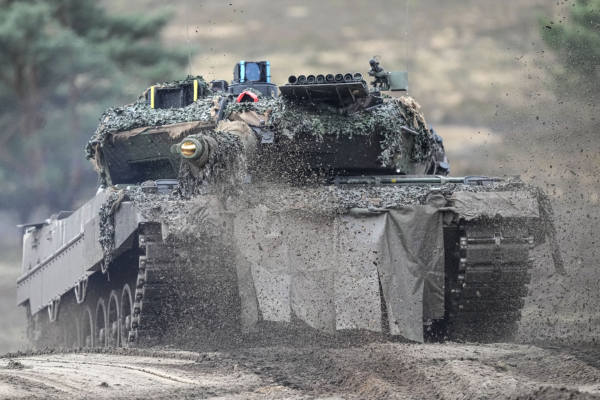
Mytilineos also highlighted a long-standing partnership with KNDS, a Franco-German defense group, which spans 25 years and proved crucial in sustaining Metlen’s defense activities during Greece’s financial crisis. He said the company is now positioned to expand its role further within Europe’s defense supply chain, working with both French and German partners.
Concluding his remarks, he stressed that while European defense companies possess strong industrial capabilities, the key challenge lies in gaining access to advanced technologies and ensuring meaningful technology transfer from major international manufacturers. Without this, he argued, cooperation risks remaining limited in scope. He added that Greece, with its skilled workforce and industrial base, is well placed to play a more significant role in Europe’s evolving defense landscape.