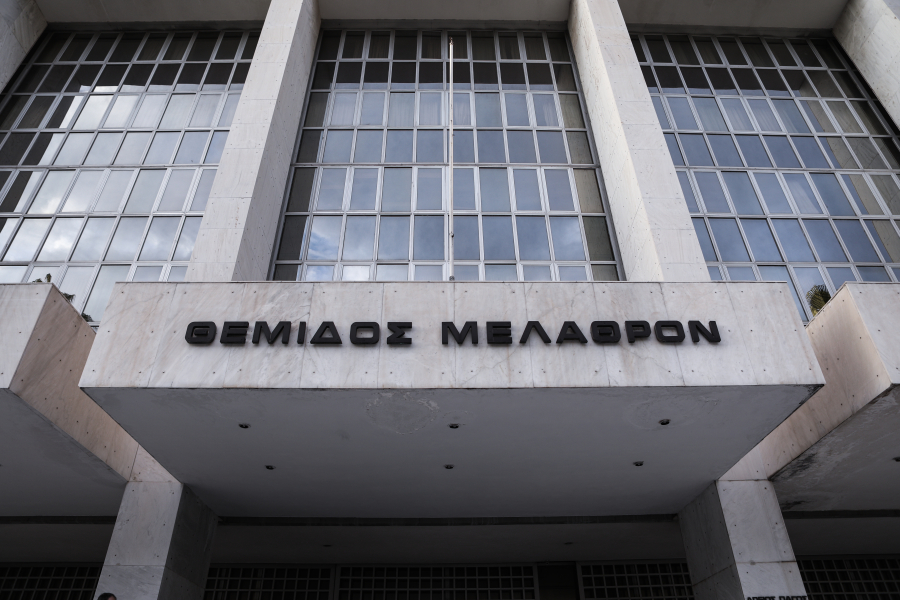
A landmark ruling by Greece’s highest civil court was expected to settle a years-long dispute over how interest should be calculated on restructured mortgage loans held by some of the country’s most financially vulnerable households. Instead, it has opened a new front in a battle between borrowers and the firms that manage billions of euros in troubled debt.
In January, the full bench of Greece’s Supreme Court, known as the Areios Pagos, issued Decision 6/2026, a ruling with potentially far-reaching implications for thousands of homeowners protected under the country’s so-called Katseli Law. Enacted during the sovereign debt crisis, the legislation was designed to shield heavily indebted households from losing their primary residences by allowing courts to impose affordable repayment plans based on borrowers’ financial circumstances.
The Supreme Court ruled that interest on court-regulated loans must be calculated on each monthly installment rather than on the total outstanding loan balance. For borrowers, the decision appeared to resolve a legal uncertainty that had persisted for years and, in many cases, dramatically reduced the amount of interest owed over the life of a restructuring plan.
ΔΙΑΒΑΣΤΕ ΕΠΙΣΗΣ


Yet banks and loan-servicing companies, including CEPAL, Intrum and doValue, are now advancing an interpretation that borrower advocates say undermines the very purpose of the ruling.
At the heart of the dispute is a deceptively simple question: What does it mean to charge interest on an installment?
The Supreme Court’s reasoning was clear. Once a court intervenes and determines the amount and timing of monthly payments, the original debt relationship is transformed. The debt is no longer treated as a single outstanding balance subject to conventional banking interest calculations. Instead, the court-created repayment plan becomes a new legal framework, designed to reflect the borrower’s actual repayment capacity while preserving the family home.
In practical terms, the court concluded that interest could no longer be charged on the entire unpaid principal.
Loan servicers acknowledge that point. But according to lawyers representing borrowers, they are now attempting to recover much of the lost interest through a different interpretation of the ruling’s treatment of time.
Servicers argue that although interest must be calculated on each monthly installment, each installment should accrue interest for the entire period that has elapsed since the beginning of the repayment plan. Under that approach, the first installment would accrue one month of interest, the twelfth installment twelve months of interest, the hundredth installment one hundred months of interest, and so on.
The distinction may sound technical. The financial consequences are anything but.
Consider a borrower with a €100,000 court-regulated mortgage repayment plan extending over 20 years at an annual interest rate of 3%.
Under a straightforward reading of the Supreme Court’s decision, the monthly payment would amount to €416.67, with interest calculated only on each individual installment for the month in which it is paid. Total interest over the entire 20-year period would amount to roughly €250, resulting in total repayments of approximately €100,250.
Under the interpretation favored by servicers, however, interest charges would grow steadily throughout the life of the plan. By the final installment, monthly payments would reach approximately €666.67. Total interest would rise to more than €30,000, pushing overall repayments to roughly €130,125.
For borrowers, the difference is profound. The alternative interpretation increases total interest costs by nearly 12,000% compared with the outcome produced by the court’s more restrictive reading.
Legal experts representing borrowers argue that the servicers’ approach effectively recreates the same economic burden that the Supreme Court sought to eliminate.
“The issue is not the interest rate itself,” said one lawyer involved in the litigation. “The issue is whether a different calculation method can be used to produce substantially the same financial outcome that the court expressly rejected.”
The dispute highlights a broader tension that has defined Greece’s post-crisis banking landscape. Following years of economic turmoil, banks transferred vast portfolios of nonperforming loans to specialized servicing companies tasked with recovering debt. Those firms have become increasingly influential players in the Greek financial system, often finding themselves at odds with borrowers seeking protection through the courts.
The latest confrontation also raises questions about legal certainty.
Thousands of households entered court-supervised repayment plans based on installment amounts deemed affordable by judges after reviewing their financial circumstances. If those same installments can later become the basis for significantly higher repayment obligations, borrower advocates argue, the protections offered by the Katseli framework risk becoming largely symbolic.
For now, the Supreme Court has settled one question but may have left another unresolved. As servicers prepare to test the limits of the ruling, Greece’s courts could soon be asked to decide whether the spirit of the decision carries as much weight as its wording.