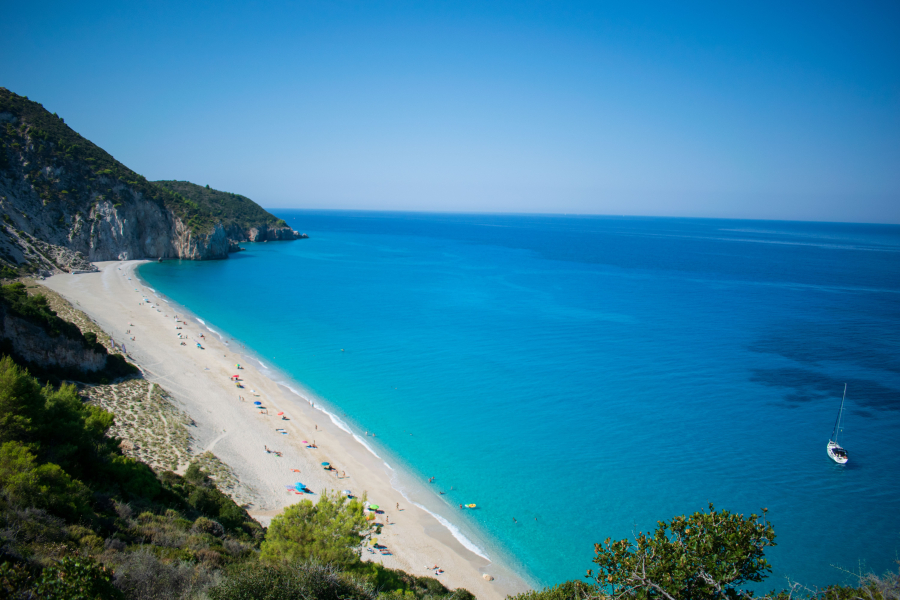

Greece has ranked second in Europe for bathing water quality, with 97.1% of its monitored swimming sites classified as “excellent,” according to the latest annual report by the European Environment Agency (EEA) and the European Commission.
The Mediterranean nation was narrowly behind Cyprus, which topped the rankings with a perfect 100% of bathing waters receiving the highest quality rating. Bulgaria and Austria also recorded more than 95% of their monitored sites in the top category.
The findings reinforce Greece’s reputation as one of Europe’s premier beach destinations, where tourism is a key pillar of the economy and coastal environments play a central role in attracting millions of international visitors each year.
ΔΙΑΒΑΣΤΕ ΕΠΙΣΗΣ


Across the European Union, 85% of bathing waters met the bloc’s strictest “excellent” quality standards in 2025, while 96% complied with at least the minimum requirements. The report also highlighted a continuing gap between coastal and inland waters, with 88% of seaside locations rated excellent compared with 78% of rivers and lakes.
Overall water quality across Europe remained broadly stable from the previous year, with only 1.5% of monitored bathing sites classified as poor. Greece was not among the countries reporting significant levels of inadequate water quality.
The EEA attributed the long-term improvement in Europe’s bathing waters to decades of investment in urban wastewater treatment, the implementation of EU environmental legislation, and stronger monitoring and management systems. For Greece, where tourism accounts for a substantial share of economic activity, maintaining high environmental standards along its extensive coastline remains an important competitive advantage.