
A decade after emerging from one of Europe’s deepest economic crises, Greece has regained growth, sharply reduced unemployment and improved several measures of income inequality. Yet for many households, the recovery remains more visible in official statistics than in everyday life.
A new study by the Foundation for Economic and Industrial Research (IOBE), one of Greece’s leading economic think tanks, suggests that the benefits of the country’s economic rebound have been unevenly distributed. While headline indicators point to progress, large segments of the population continue to face financial insecurity, limited social mobility and mounting difficulties in accessing housing, healthcare and other essential services.
The report, which examines developments between 2015 and 2025, highlights a striking disconnect between macroeconomic performance and household perceptions. Roughly 68% of Greek households say they struggle to make ends meet, compared with an average of 19% across the European Union.
That gap underscores a broader challenge facing Greece as it seeks to consolidate its post-crisis recovery. Although economic growth has returned and income inequality, as measured by the Gini coefficient, has fallen from 34.2% in 2015 to 31.6% in 2025, many Greeks have yet to experience a meaningful improvement in their economic security.
The labor market illustrates both the country’s progress and its lingering weaknesses. Unemployment has fallen dramatically, from nearly 25% a decade ago to 8.8% today, one of the most significant improvements recorded in Europe. Yet structural problems persist. Greece continues to have the highest self-employment rate in the European Union, with nearly one in four workers classified as self-employed. More than half of unemployed workers remain trapped in long-term unemployment, while overall labor-force participation remains among the lowest in the bloc.
The findings suggest that job creation has not necessarily translated into more stable or higher-quality employment opportunities. For many workers, insecurity remains a defining feature of the labor market despite the sharp decline in unemployment.
Education, traditionally viewed as a pathway to upward mobility, presents a similar picture. The share of adults holding university degrees has risen steadily over the past decade. Yet educational outcomes continue to be heavily influenced by family background. According to the study, Greece ranks among Europe’s weakest performers in intergenerational educational mobility. Only 12% of children from low-education households manage to reach the highest levels of educational attainment.
Private tutoring, a longstanding feature of the Greek education system, remains nearly essential for admission to university. Critics argue that the system reinforces socioeconomic disparities by giving wealthier families a significant advantage.
The report also identifies persistent inequalities in healthcare. Despite reforms and increased public funding, access to medical services remains closely linked to income levels. Greece continues to rank among the EU countries with the highest levels of out-of-pocket healthcare spending. Nearly one-third of individuals in the lowest income quartile report unmet healthcare needs, compared with just one in ten among higher-income groups.
Health outcomes reflect the same divide. Chronic illnesses are considerably more prevalent among lower-income households, highlighting the close relationship between economic status and overall well-being.
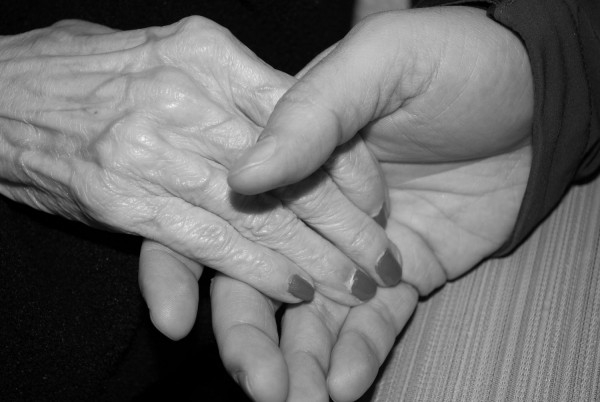
Long-term care for the elderly and people with disabilities represents another area of concern. Public spending on long-term care amounts to just 0.16% of gross domestic product, far below the European Union average of 1.71%. As a result, responsibility for care falls overwhelmingly on families, with women bearing most of the burden.
Housing, however, emerges as perhaps the clearest example of worsening inequality during Greece’s recovery. Surging rents and rising property prices since 2018 have placed increasing pressure on tenants, young households and lower-income families. Housing costs for vulnerable households remain among the highest in Europe relative to income, while homeownership rates among younger generations continue to decline.
The situation has become even more acute since 2021, when rising energy costs compounded affordability pressures. Despite a series of government support measures, many households continue to struggle to cover basic housing and utility expenses.
The findings raise broader questions about the sustainability and inclusiveness of Greece’s economic recovery. While the country has succeeded in restoring growth and stabilizing public finances after years of crisis, the study suggests that significant disparities remain embedded in key areas of economic and social life. For policymakers, the challenge may no longer be simply generating growth, but ensuring that its benefits reach a far larger share of society.