
The abrupt resignation of Makarios Lazaridis only days after taking office has laid bare the mounting political pressure on Prime Minister Kyriakos Mitsotakis, as his government grapples with overlapping scandals and a shifting public mood ahead of elections expected within the next year.
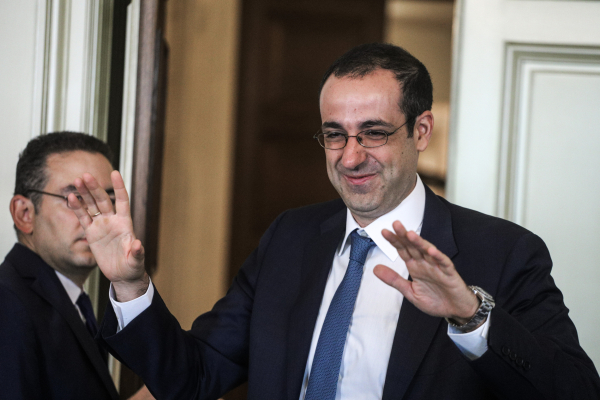
Mr. Lazaridis stepped down from his post as deputy minister of rural development after government officials concluded that a controversy dating back to 2007—when he was appointed to an advisory role without the required qualifications—was exacting an outsized political cost. Though the episode is nearly two decades old, it has resurfaced at a delicate moment, intersecting with the still-unfolding OPEKEPE scandal, an investigation into the management of European Union farm subsidies.
Senior members of the governing New Democracy party, including Dora Bakoyannis, had urged Mr. Lazaridis to step aside, arguing that his continued presence would weigh on the administration. In a statement, he defended himself against what he described as politically motivated attacks, but said he resigned to avoid distracting from the government’s work.
The episode has heightened concerns within Mr. Mitsotakis’s circle about the government’s standing with voters. Internal polling cited by officials suggests that a clear majority—between 65 and 70 percent—now holds negative views of the administration, leaving the governing party increasingly reliant on its core supporters as it approaches an election year.
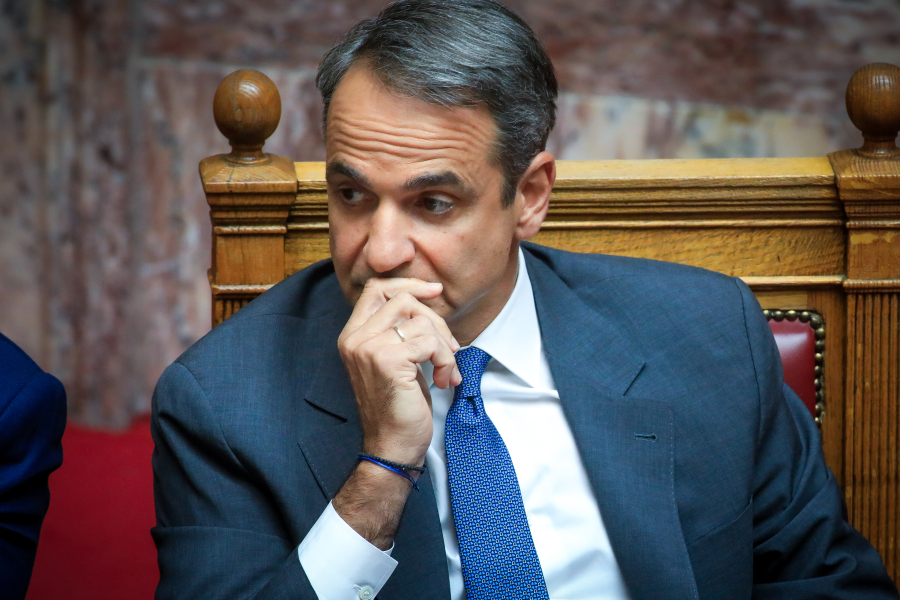
That pressure was evident in Parliament last week, during a contentious debate in which opposition leaders called on the prime minister to resign. At one point, Mr. Mitsotakis appeared to hesitate when referring to Tal Dilian, the founder of the surveillance firm Intellexa, whose name he briefly confused with that of Bob Dylan.
“Now, about Mr. Dylian — Dylan, whatever his name is,” Mr. Mitsotakis said, before insisting that neither he nor his government could be blackmailed. “We answer only to the Greek people.” Critics seized on the remark as an attempt to downplay his familiarity with a figure at the center of Greece’s surveillance controversy. The broader issue involves the use of Predator spyware, which has been linked to Intellexa and allegedly deployed against journalists, politicians and business figures in Greece. Mr. Dilian has said his company supplies such tools only to authorized government agencies, a claim that has fueled questions about the role of the state. Some opposition figures argue that overlaps between legal surveillance carried out by Greece’s intelligence service, the Hellenic National Intelligence Service, and targets of the spyware suggest coordination between official and private monitoring systems. The government has denied those allegations.
In the same parliamentary session, Mr. Mitsotakis sought to steer the discussion away from the surveillance issue, instead emphasizing proposed constitutional reforms and broader institutional changes. The shift was seen by analysts as an effort to reframe the political debate at a moment of heightened scrutiny.
At the same time, the government is contending with internal strains. Decisions on whether to lift parliamentary immunity for lawmakers implicated in the OPEKEPE investigation have effectively been postponed, as several members of the ruling party have expressed reluctance to support such measures. Publicly, figures like Stelios Petsas have signaled opposition to some immunity votes, while Makis Voridis has acknowledged uncertainty. Officials say the divisions are even more pronounced in private.
For now, the government’s approach appears to be one of delay: maintaining unity within its ranks while awaiting further developments from the European Public Prosecutor’s Office, which is examining aspects of the subsidy case. Officials concede that if the courts ultimately issue convictions, it may become difficult to defend the inclusion of implicated politicians on party lists.
Mr. Mitsotakis is also navigating a delicate relationship with European institutions. While distancing himself from criticism leveled at the European prosecutor by members of his own government, including Adonis Georgiadis, he has raised concerns about the handling of certain cases, particularly the staggered release of legal files and the public impact of unproven allegations.
He has indicated that the government will seek to accelerate judicial procedures involving elected officials, asking Justice Minister Giorgos Floridis to prepare legislation aimed at speeding up such cases. The move is intended, officials say, to demonstrate responsiveness without deepening tensions with European authorities.
A meeting of New Democracy’s parliamentary group scheduled for later this month is expected to provide a clearer indication of how the party intends to navigate the challenges ahead.