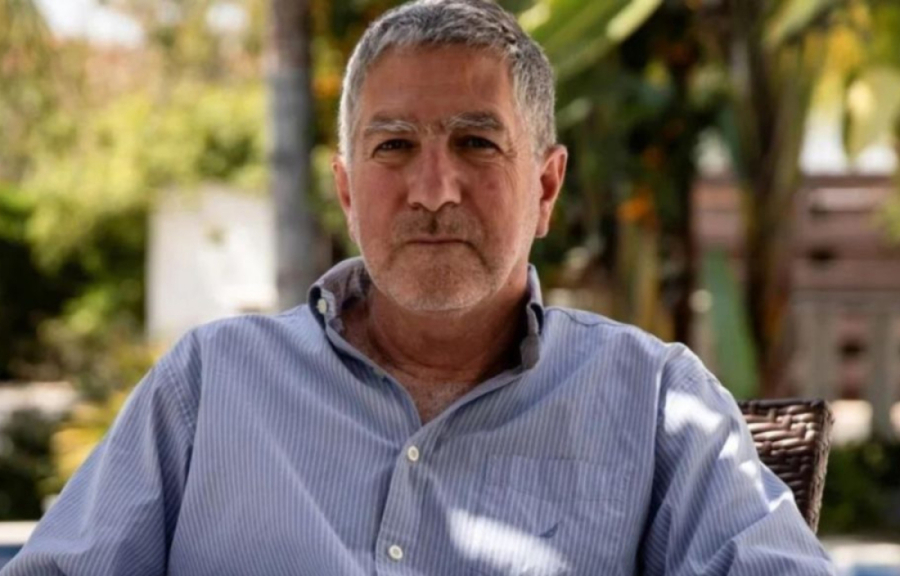
Greece's main opposition party has renewed pressure on the government over one of the country's most controversial political scandals in recent years, calling for two central figures in the spyware surveillance affair to testify before a parliamentary committee.
The center-left PASOK party announced on Tuesday that it had formally requested the appearance of Tal Dilian, the Israeli entrepreneur linked to the Predator spyware network, and Grigoris Dimitriadis, the former chief of staff and nephew of Prime Minister Kyriakos Mitsotakis, before Parliament's Committee on Institutions and Transparency.
The move follows a fresh round of allegations stemming from public comments by Dilian, whose company, Intellexa, has been at the center of investigations into the use of Predator, a powerful surveillance tool capable of infiltrating mobile phones and extracting sensitive data.
ΔΙΑΒΑΣΤΕ ΕΠΙΣΗΣ
In a statement, Dilian insisted that neither he nor his companies operated the spyware in Greece. Instead, he said, Intellexa sold the technology to state agencies in compliance with applicable regulations, a statement that opposition parties say raises new questions about who ultimately used the software and under whose authority.
The Predator affair erupted in 2022 after reports revealed that politicians, journalists and other public figures had been targeted by spyware while Greece's national intelligence service was simultaneously conducting lawful surveillance operations. The revelations triggered a political crisis, drawing scrutiny from European institutions and prompting accusations that the government had undermined democratic safeguards and the rule of law.
The Mitsotakis government has repeatedly denied any connection to the use of Predator and has maintained that no evidence has emerged linking state authorities to the operation of the spyware. Nevertheless, critics have argued that key questions surrounding the scandal remain unanswered.
In its request to Parliament, PASOK said Dilian should be required to present contracts, licenses and other documentation supporting his claim that the technology was sold to government entities. The party argued that his public statements raise issues of significant public interest that warrant parliamentary examination.
PASOK also called for testimony from Dimitriadis, who resigned in 2022 as the scandal intensified. The opposition cited a recent statement in which he said he had assumed "political responsibility" in order to protect the government, the intelligence services and the country. According to PASOK, such remarks require further clarification from a senior official who occupied a central position in the prime minister's office during the period under investigation.
The latest developments have reignited political tensions in Athens, with opposition parties accusing the government of obstructing efforts to fully investigate the affair. Several parties have also urged Greece's top prosecutor to summon Dilian and examine whether the businessman possesses additional information about the origins and use of the spyware.
Under parliamentary rules, PASOK's request will require support from other opposition lawmakers before the committee can be compelled to summon the two men.
Nearly four years after the surveillance scandal first emerged, the controversy continues to cast a shadow over Greek politics, with opposition parties arguing that critical questions about accountability and state involvement remain unresolved.