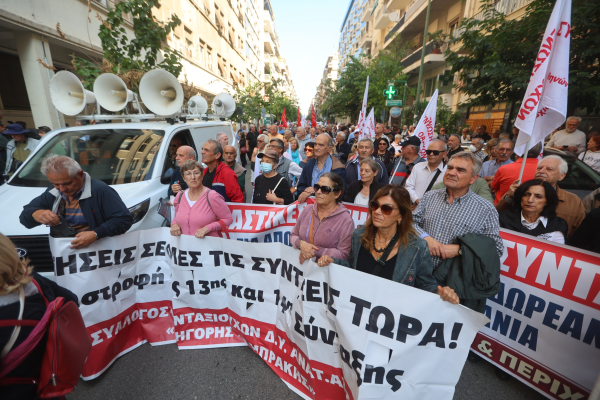

Greece is preparing to raise the amount of money shielded from tax-related bank account seizures, offering relief to thousands of indebted households as the government grapples with the growing strain of higher living costs and persistent personal debt.
Under a measure announced by Finance Minister Kyriakos Pierrakakis, the seizure-protected threshold on bank deposits will increase to €1,600 from €1,250, allowing a larger share of workers’ wages and retirees’ pensions to remain beyond the reach of tax authorities.
The change comes at a sensitive moment for many Greek households. While the country's economy has recovered strongly from the sovereign debt crisis that dominated the previous decade, tax collection remains aggressive, and authorities continue to rely heavily on bank account garnishments and asset seizures to recover unpaid debts. Thousands of taxpayers with overdue obligations to the state face collection measures every year, including freezes on bank accounts.
ΔΙΑΒΑΣΤΕ ΕΠΙΣΗΣ



The higher threshold is designed to protect a greater portion of monthly income deposited into a designated bank account that taxpayers register with Greece’s Independent Authority for Public Revenue. Under current rules, only €1,250 per month is protected from seizure. Once the new measure takes effect, that amount will rise by €350.
For employees earning between €1,250 and €1,600 a month, the change could be particularly meaningful. Many workers in that income bracket currently risk seeing part of their salary exposed to collection measures if they have outstanding debts. Under the new framework, their entire monthly pay could remain protected, provided it is deposited into a registered account.
Retirees stand to benefit as well. Those whose combined pension income falls between the current and proposed thresholds will be able to retain a larger share of their monthly payments without fear of garnishment. The measure is also expected to help recipients of retroactive wage or pension payments, which Greek courts and existing legal interpretations generally require banks to assess according to the period the income was earned, rather than treating it as a single lump-sum payment.
Yet the government's move is far from a blanket safeguard for all debtors.
Protection applies only to a single account formally declared as seizure-protected. Taxpayers who fail to register such an account will remain vulnerable to account freezes regardless of the balance involved. Likewise, deposits held in additional accounts or at other financial institutions will not benefit from the protection.
Joint accounts present another complication. Under Greek law, the protection can apply separately to each account holder, but only if all co-holders have designated the same account as protected. If they have not, part of the balance may still be subject to seizure. In practice, this means that a pension deposited into a shared account could become partially exposed if one of the account holders has outstanding tax debts.
The increase also leaves intact broader rules governing wage and pension garnishments. Income above certain thresholds can still be subject to withholding or seizure depending on the amount earned and the nature of the debt. A worker earning €1,900 a month, for example, would see the first €1,600 protected, while the remainder could still be vulnerable to enforcement measures.
The reform reflects a broader recognition by policymakers that protections introduced years ago no longer correspond to current economic realities. Inflation and rising household expenses have eroded the value of the existing threshold, leaving many middle-income workers and retirees with less financial breathing room.
Whether the measure delivers meaningful relief will depend largely on its implementation. Banks will be expected to apply the new limits consistently and correctly identify protected income streams, while tax authorities will face pressure to ensure that registered accounts are exempted from collection actions up to the statutory limit.