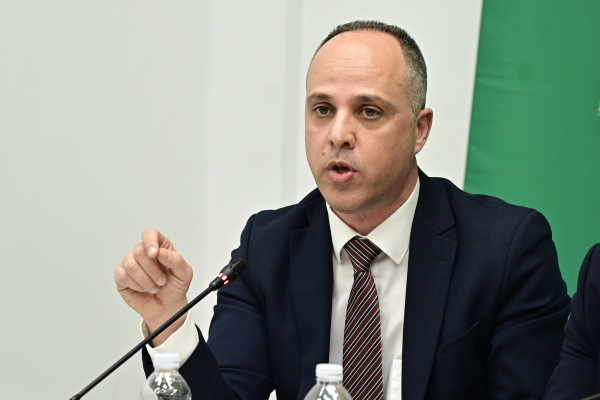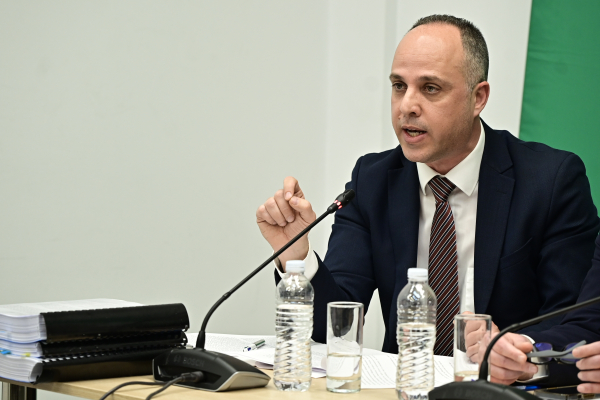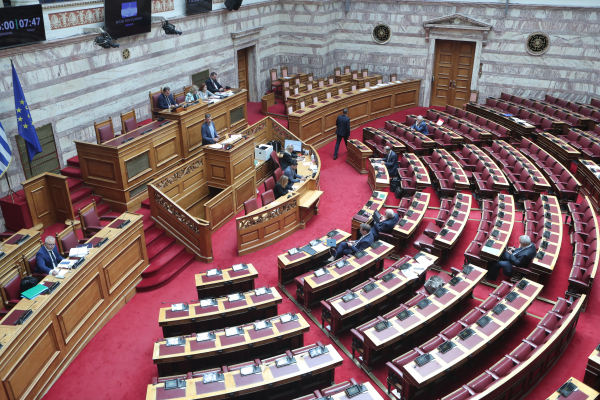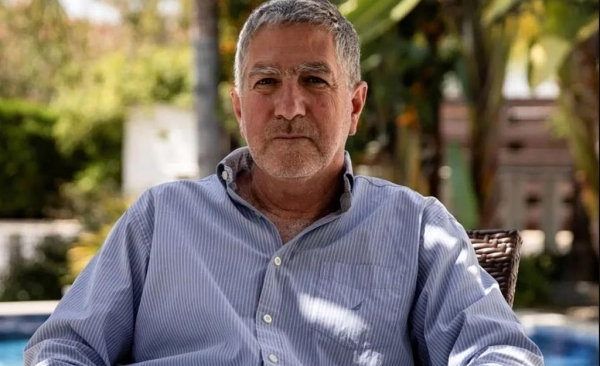
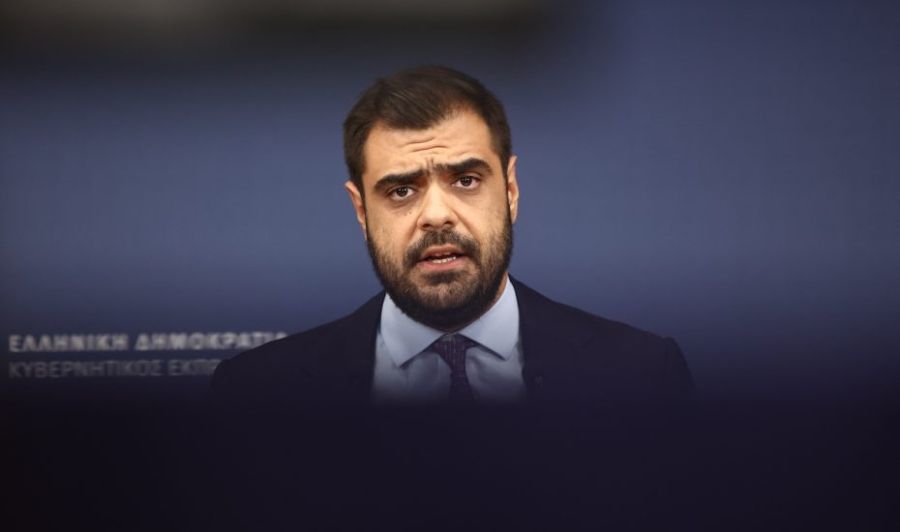
The Greek government spokesman Pavlos Marinakis on Monday firmly rejected claims that recent statements by businessman Tal Dilian — which appeared to suggest involvement by Greece’s National Intelligence Service and the Prime Minister’s office in the Predator spyware scandal — amounted to blackmail against the government. He also declined to comment on reported ties between businessman Giannis Lavranos and political figures within the government, during a press briefing that once again focused heavily on the ongoing wiretapping scandal and the company Krikel.
Responding to questions about Dilian’s remarks, Marinakis said there was no issue of the government being blackmailed, arguing that such interpretations were being made by third parties and did not reflect reality. He insisted that the government could not be blackmailed and that the claims being circulated were political interpretations rather than factual developments.
Marinakis also pointed out that Dilian has been convicted at first instance and has appealed the decision, meaning the case will be judged again in a higher court. He stressed that court cases are decided in courtrooms, not in press briefings or the media, and said it is not the role of the government to conduct trials before the judiciary does. Every defendant, he said, has the right to present their arguments in court, which will ultimately decide on the validity of the claims.
The government spokesman noted that the wiretapping affair has been a major public issue in Greece for about four years and said that the government had already provided answers at the time through the Prime Minister and government officials. He said political initiatives had been taken, resignations had occurred, and legislation had been introduced to change the framework governing surveillance and to ban illegal monitoring software.
According to Marinakis, these legislative changes were recognized by European institutions, while court rulings had found no liability on the part of state officials, leading instead to private individuals being referred to trial. He added that the government believes there are no outstanding questions or suspicions in the case and accused the opposition of trying to turn the country into what he described as “a vast courtroom” for political reasons.
When asked about comparisons being made with former U.S. President Richard Nixon, who resigned after the Watergate scandal, and whether such comparisons were aimed at the Greek Prime Minister, Marinakis said the government would not interpret statements made by others and insisted that the government’s position on the matter has been clear.
Asked to comment on Krikel, a company linked to businessman Giannis Lavranos and reportedly involved in the Predator case, as well as on tax issues involving the businessman — who has been convicted at first instance and is reported to have personal ties with senior government officials — Marinakis said that the fact authorities are investigating cases and freezing assets demonstrates that institutions are functioning properly. He said it is up to the courts, not the government or journalists, to decide whether someone is guilty or innocent. He added that he was not aware of the specific tax case concerning Krikel and said it is not his role to comment on cases under investigation.
He also argued that the uncovering of tax evasion or other criminal activity should be credited to the government because it shows that state authorities are operating effectively. He refused to comment on personal relationships, saying the press briefing was not an interrogation and that he would not discuss personal connections or acquaintances. He added that people should not be subjected to suspicion because of possible personal relationships and that if any wrongdoing exists in relation to Krikel or any other case, it will ultimately be determined by the justice system.