New details about the relationship between the Greek security firm Krikel and the spyware consortium Intellexa emerged on Friday during a hearing at the Athens Misdemeanor Court, offering further insight into Greece’s wiretapping scandal for an international audience unfamiliar with the domestic context.
The trial centers on the alleged development and use of the Predator surveillance system, a sophisticated piece of spyware that has been linked to the illegal monitoring of politicians, journalists, and other public figures in Greece, and to exports to authoritarian regimes abroad. Four business figures are at the heart of the case: Yiannis Lavranos, described by prosecutors as the true power behind Krikel, along with Felix Bitzios, Tal Dilian, and Sara Hamou of Intellexa, the consortium associated with Predator.
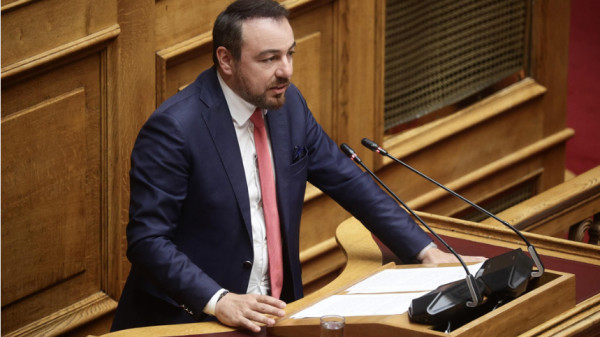
During Friday’s session, the court indicated that criminal charges could potentially be brought against a close associate of Lavranos following testimony by Sotiris Dallas, a former senior executive at Krikel. Dallas, who served as the company’s technical director, gave evidence that was repeatedly inconsistent, frequently claiming that he could not remember key events or did not know the answers to critical questions. His testimony prompted an unusually blunt intervention by the presiding judge, who stated that the witness had not been fully truthful and warned that his statements would be assessed alongside other evidence to determine whether a separate case should be opened against him for perjury.
The case forms part of a broader investigation into unlawful surveillance practices in Greece, which has drawn international scrutiny and raised concerns about how advanced monitoring technologies can be misused with the involvement of private companies. Krikel occupies a central position in the proceedings, as it supplied the Greek police with a secure digital radio communications system known as TETRA, a key piece of national security infrastructure.
Dallas told the court that his responsibilities at Krikel extended beyond purely technical matters, yet he denied that Lavranos exercised any control over the company. This account directly contradicted earlier testimony by another witness, Stamatis Trimpalis, who said he had acted only as a nominal executive while Lavranos was effectively running the firm from behind the scenes.
Much of Dallas’s testimony was punctuated by statements such as “I don’t remember” and “I don’t know,” particularly when prosecutors questioned him about meetings with Lavranos, internal company communications, and preparations for parliamentary scrutiny of the wiretapping affair. These responses appeared to test the patience of both the court and the lawyers supporting the prosecution.
A key moment in the hearing concerned text messages exchanged between Dallas and Trimpalis around the time Trimpalis testified before a parliamentary committee investigating the scandal. Trimpalis has previously claimed that he was given prepared answers in advance of his testimony and later reassured that he had performed well. When shown the messages, Dallas acknowledged that they originated from his phone but initially said he had no recollection of them, later arguing that his comments were based on what he had read in the media and reflected general concern for the company.
Further questions were raised about a meeting held at Lavranos’s private residence shortly before the parliamentary testimony. Despite maintaining that Lavranos had no formal role in Krikel, Dallas said he could not remember why such a meeting had taken place.
The court also examined inconsistencies regarding Dallas’s official position within the company. While he described himself as technical director, documents presented in court showed him signing at least one document as managing director, a discrepancy he attributed to an administrative error.
On technical matters, Dallas strongly defended the TETRA communications system supplied to the Greek police, rejecting claims by other witnesses that it suffered from serious vulnerabilities. He acknowledged that there had been early operational problems but blamed them on outdated police infrastructure rather than on flaws in the system itself. Once again, he denied that Lavranos had any involvement in the project, contradicting other testimony heard by the court.
Judges also reviewed reports suggesting that Krikel covered company expenses with large cash payments at a time when its bank accounts were allegedly frozen. These payments were linked to a consulting firm known as Media Naranja. Dallas said he was unaware of any frozen accounts and claimed he could not explain why another executive was alleged to have collected tens of thousands of euros in cash, insisting that Media Naranja provided legitimate consultancy services.
When questioned about Krikel’s cooperation with Intellexa, including alleged financial transactions, requests for export licenses submitted to the Greek foreign ministry on Intellexa’s behalf, and reports that Intellexa staff used Krikel’s premises for training activities in the spring of 2022, Dallas repeatedly responded that he had no memory or knowledge of such matters.
Additional inconsistencies emerged over the use of a Krikel company vehicle that was photographed at a secure technology facility linked to Greece’s intelligence services. Dallas confirmed that the vehicle belonged to Krikel but said he did not know who had used it or why it was there. He also claimed to have visited the facility in early 2020, a statement that appears to conflict with official records indicating that the site was established several months later.
The trial, which is being closely followed both in Greece and internationally, is set to resume on Monday, January 12, with the possibility that further legal developments could soon follow.