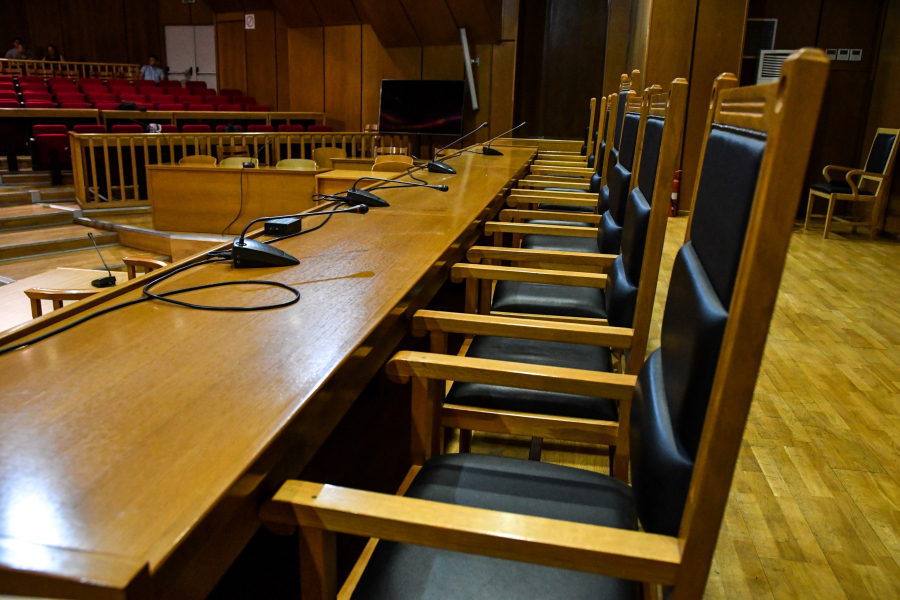

An Athens court has delivered a landmark judgment in Greece’s long-running ‘Predatorgate’ scandal, convicting four individuals linked to the spyware company Intellexa for unlawfully accessing private communication systems and data, and for breaching privacy and data-protection laws. The ruling represents one of the rare instances globally in which figures connected to the surveillance technology industry have faced criminal consequences.
Reacting to the decision, Rebecca White, a Security Lab Researcher at Amnesty International, said the convictions mark a long-overdue step toward accountability. Nearly four years after the scandal first emerged, she said, those responsible for abusing surveillance technology are finally facing consequences. White noted that Amnesty International and other organizations have repeatedly documented the use of Intellexa’s spyware in attacks against journalists, activists, academics and politicians in multiple countries.
She expressed hope that the ruling would signal the end of what has long been an era of impunity for the surveillance industry. However, she cautioned that serious questions remain about the role of the Greek state, which has consistently denied purchasing or using the Predator spyware. Transparency, she said, is a fundamental element of accountability, as is providing remedies for the many victims whose human rights were violated through the unlawful use of the technology.
The ‘Predatorgate’ scandal first came to public attention in March 2022, when Greek journalist Thanasis Koukakis revealed that his phone had been infected with Predator, an advanced spyware capable of covertly accessing communications and personal data. He also disclosed that he had been placed under wiretap by Greece’s National Intelligence Service. The case took on broader political significance several months later when Nikos Androulakis, then a Member of the European Parliament and leader of the opposition PASOK-KINAL party, announced that his phone had also been targeted with the same spyware.
The revelations triggered widespread public anger, parliamentary inquiries and criminal investigations, raising concerns in Greece and across Europe about the misuse of surveillance tools and the protection of democratic freedoms. Despite this, in July 2024 Greece’s Supreme Court cleared the country’s intelligence services and political officials of any wrongdoing in relation to the affair.
On 26 February 2026, the Athens court sentenced four men and women at the center of the case to prison terms of 126 years and eight months each. Those convicted were Tal Dilian, a former Israeli intelligence officer and founder of Intellexa; Sara Hamou, his business partner; Felix Bitzios, a former deputy administrator and shareholder of the company; and Yiannis Lavranos, owner of Kriel, the firm through which the Predator spyware was allegedly procured. The sentences have been suspended pending appeal.
Prosecutors have also called for a broader investigation into the four convicted individuals and at least eight others, citing possible espionage and the potential involvement of foreign state actors. The case continues to be closely watched internationally as a test of whether governments and courts are willing to rein in the largely unregulated global surveillance industry.