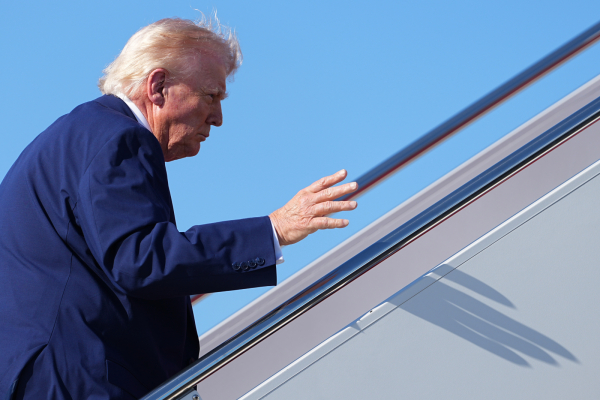
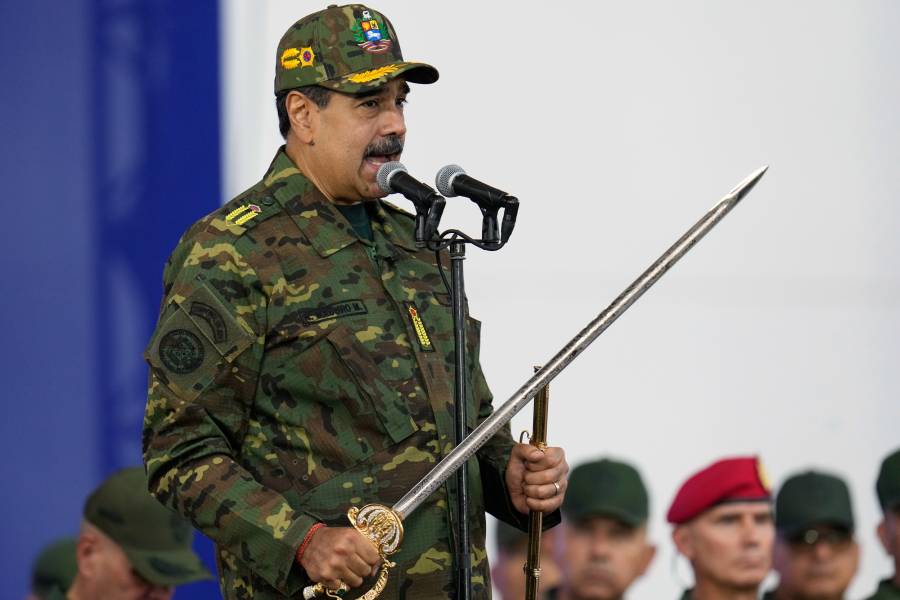

How does a dictator leave power? The question has returned forcefully to the international public debate following reports about a U.S. operation aimed at arresting Nicolás Maduro. The discussion quickly spilled over into Greece as well, with some voices arguing even more aggressively than Washington itself in favor of a decision attributed to Donald Trump to intervene in Venezuela.
From the standpoint of international law, the arrest of a sitting head of state by a foreign power - as in the case of Maduro - is not permissible, regardless of the nature of the regime or the accusations involved. The core reason is the principle of state sovereignty enshrined in the Charter of the United Nations, which prohibits one state from exercising criminal jurisdiction on the territory of another without consent. In addition, international law grants sitting heads of state full personal immunity from prosecution by other states, in order to safeguard the smooth functioning of international relations. This immunity does not amount to impunity, but rather to a suspension of prosecution for the duration of the term in office. The only institutional exception concerns international courts, such as the International Criminal Court, and even then only under strict conditions.
Yet as public debate intensifies over whether Trump’s interventionist approach was right or wrong, the argument increasingly takes on ideological overtones. Supporters of a «hard line» describe themselves as realists, while dismissing those who insist that the removal of dictators must comply with international law as naïve or overly sensitive. In this polarized climate, it is worth shifting the discussion away from slogans and toward empirical evidence.
Such evidence is provided by the Geddes-Wright-Frantz Dataset, the most comprehensive source on how dictatorships have collapsed worldwide since World War II. Covering all types of authoritarian regimes and the causes of their fall between 1946 and 2022, the dataset is widely regarded as the gold standard for studying authoritarian breakdowns and is used extensively by political scientists, international organizations, and research institutes.
The project was launched by political scientist Barbara Geddes and later expanded by Joseph Wright and Erica Frantz. It documents more than 330 authoritarian regimes and dozens of distinct power transitions. Its central conclusion is striking: dictatorships rarely fall through a single dramatic or «heroic» act. Instead, collapse typically results from institutional cracks, elite infighting, and gradual loss of legitimacy.
According to the data, nearly half of the dictatorships that collapsed between 1946 and 2022 did not fall through violent overthrow, but through negotiated transitions or controlled electoral processes. In many cases, authoritarian rulers attempted to preserve part of their power by allowing limited political opening - a gamble that ultimately led to a complete loss of control. Such transitions were especially common in Latin America and Southern Europe from the 1970s through the early 1990s.
The second most common cause of authoritarian collapse is mass popular mobilization. Roughly one quarter of regimes fell after sustained protests, strikes, and campaigns of civil resistance. These episodes were not always peaceful, but they rarely escalated into prolonged civil wars. More often, popular pressure coincided with splits among elites, triggering regime collapse from within.
One of the dataset’s most revealing findings concerns coups. Although coups dominate the public imagination, they account for only about 15% of dictatorship collapses. Even rarer are cases in which regimes fell due to foreign military intervention or defeat in war - a fact that challenges the assumption that authoritarian governments are primarily toppled by external force.
Here, the data speak directly to proponents of the Trump-style approach. Only about 8-10% of authoritarian regimes collapsed as a result of external military intervention, the lowest share among all recorded pathways. These cases include scenarios in which a regime was militarily defeated by a foreign power or directly overthrown through invasion, without a prior internal political transition. Even then, the dataset shows that external intervention usually acted as a catalyst applied to already weakened regimes, rather than as the sole cause of collapse.
So how does a dictator leave power? The historical record of the past 75 years points to a clear answer: authoritarian rule is most often undermined gradually, through political erosion, social pressure, and internal fragmentation. Understanding these mechanisms is essential for making sense of contemporary political developments, at a time when new forms of authoritarianism are emerging across the globe - often cloaked in democratic rhetoric.