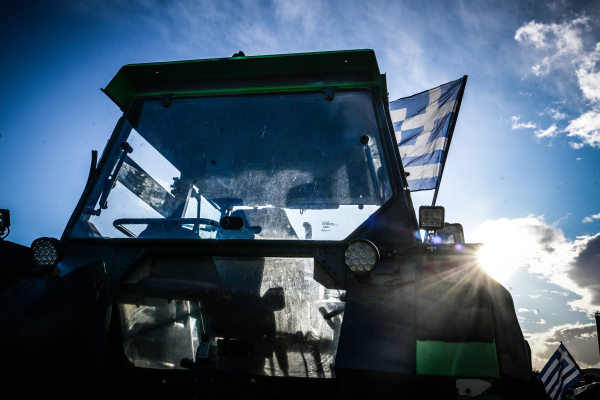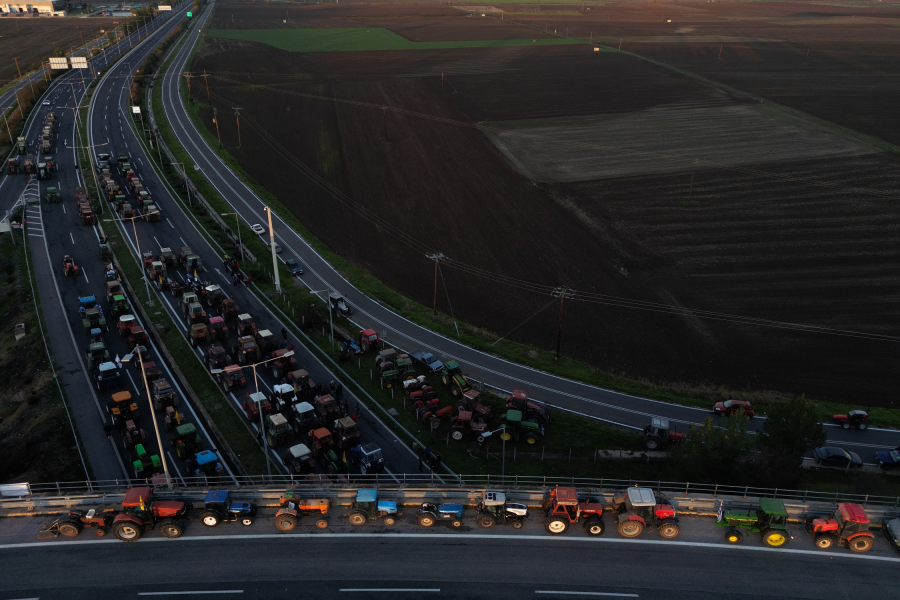
Tensions ran high across Greece on Sunday as the first major wave of farmers’ roadblocks erupted into clashes, effectively splitting the country in two. By late afternoon on 30 November, the Athens–Thessaloniki National Highway — Greece’s main north–south artery — had been shut down in both directions after farmers broke through police lines at the Nikaia and Platikampos junctions and moved their tractors onto the motorway.
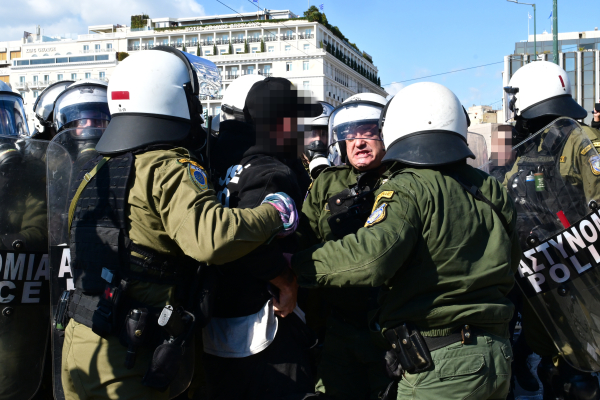
The confrontation had been building for hours. Earlier in the day, farmers gathering at two separate meeting points in Nikaia and Platikampos tried to push police buses aside in order to reach the highway. Riot police responded with heavy use of tear gas and flashbang grenades. Two farmers, including a prominent union leader, Mr. Sidiropoulos, were taken to hospital after they reportedly were struck by officers; a police officer was also injured and hospitalised.
Convoys of tractors had been arriving at the Nikaia junction since midday, coming from agricultural communities across the region. Similar scenes unfolded in Platikampos, where farmers attempted to access the national road and were again pushed back with chemical irritants. Local reports also noted at least one detention. Witnesses described chaotic moments as more protesters reached the area on foot, attempting to bypass police cordons. The atmosphere grew more charged when members of the Larissa Labour Centre joined the demonstration, voicing solidarity with farmers and other primary-sector workers and chanting slogans calling for unity.
The unrest extended beyond Larissa. Across Thessaly, two major blockades had been set up on the national highway — one at Nikaia and another near the city of Karditsa. The mobilisation spread further, with farmers in Ioannina preparing to block the road toward Kalpaki later in the day, while producers in the northern region of Rodopi readied a similar blockade between Komotini and Xanthi.
In Karditsa, hundreds of farmers clashed with police as they tried to move their tractors onto the E65 motorway. Despite a heavy police presence, they managed to break through and occupy the road with a long line of agricultural vehicles. Speaking at the scene, Kostas Tzellas, president of the local federation of farming associations, blamed the government for allowing tensions to escalate. He said farmers were waging “a battle for survival,” pointing to unpaid subsidies, soaring production costs, low market prices imposed by large buyers and a long-standing lack of infrastructure.