Delegates representing agricultural roadblocks from across the country agreed unanimously on further escalation, while setting a midweek deadline for the government to address their demands.
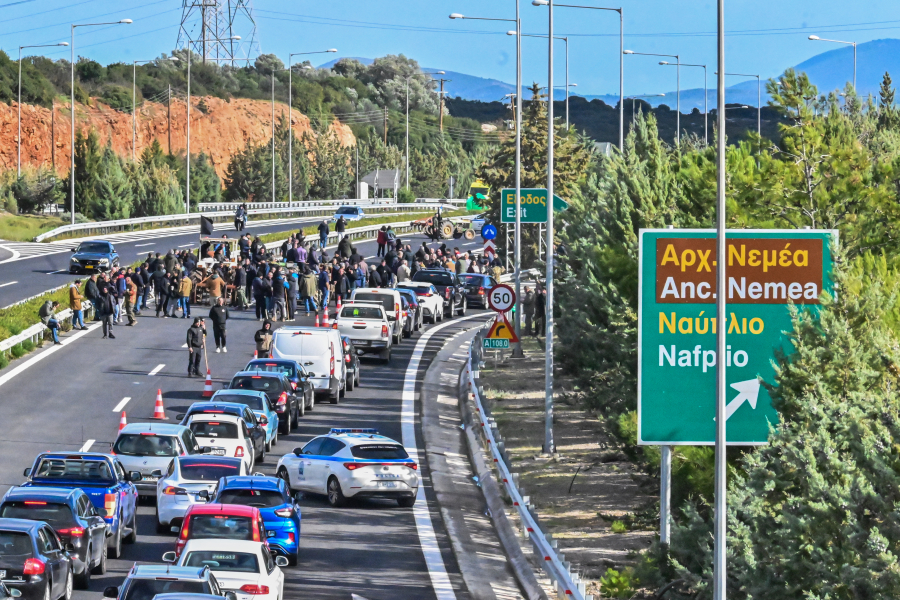
The planned actions are expected to cause widespread disruption to road transport. Farmers intend to block key highways and junctions linking northern and southern Greece, as well as routes connecting the mainland with the Peloponnese. Closures are planned along major east–west corridors, near strategic mountain passes in central Greece, at major toll stations, and at transport hubs serving agricultural regions. In Malgara, protesters plan to shut down the main motorway linking Athens and Thessaloniki, Greece’s two largest cities, while keeping service roads open to ensure access for nearby communities.
From later in the week, farmers are preparing a coordinated 48-hour shutdown of national roads and secondary routes, marking a significant escalation compared with earlier, more limited blockades. Organisers say the aim is to increase pressure on the government by highlighting the scale of discontent within the agricultural sector and the broader economic impact of continued inaction.
A central issue driving the protests is opposition to the proposed European Union trade agreement with Mercosur. Greek farmers argue that the deal would expose them to competition from agricultural imports produced under different regulatory and cost conditions, threatening the viability of domestic farming. The agreement has become a rallying point not only for farmers but also for other groups active in the primary sector.
Beyond trade policy, participants at the Malgara meeting raised concerns about delayed payments, subsidy complications linked to land registration and monitoring systems, and rising production costs. These issues, they argue, have compounded financial pressures on farms of all sizes.
Technical concerns about the broader impact of Mercosur on European agriculture were also highlighted during the discussions, with warnings that the agreement could effectively introduce a large external agricultural market into the EU without equivalent obligations.